Category Archives: plants

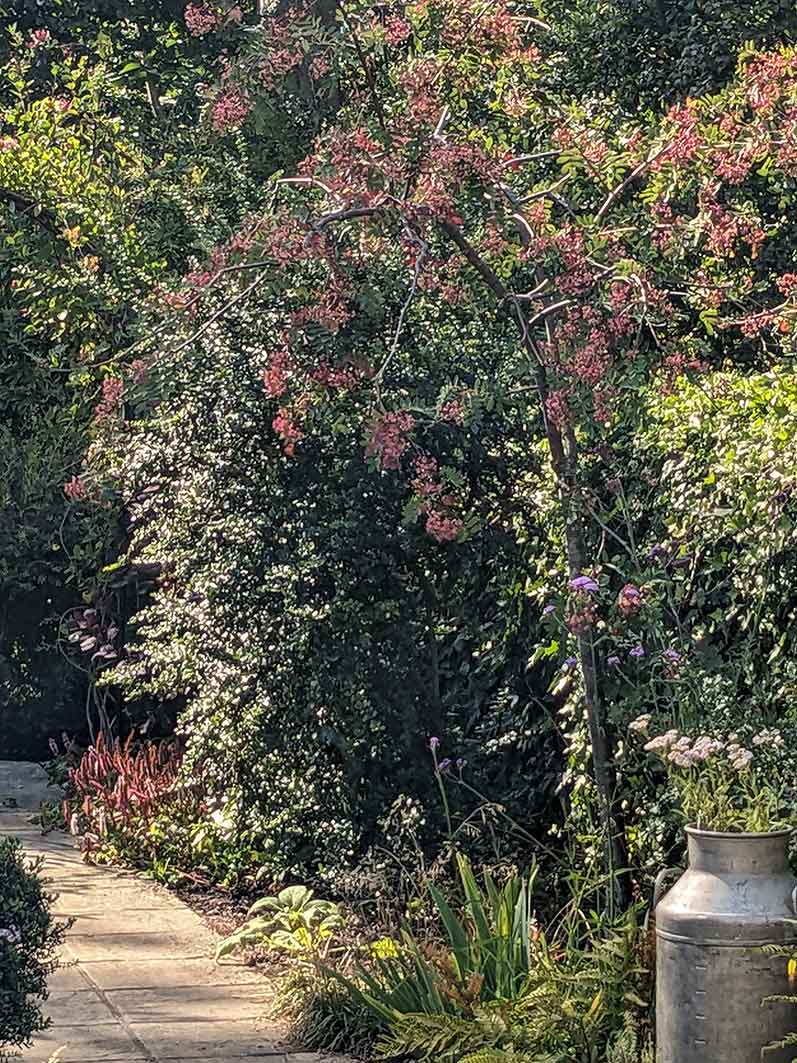
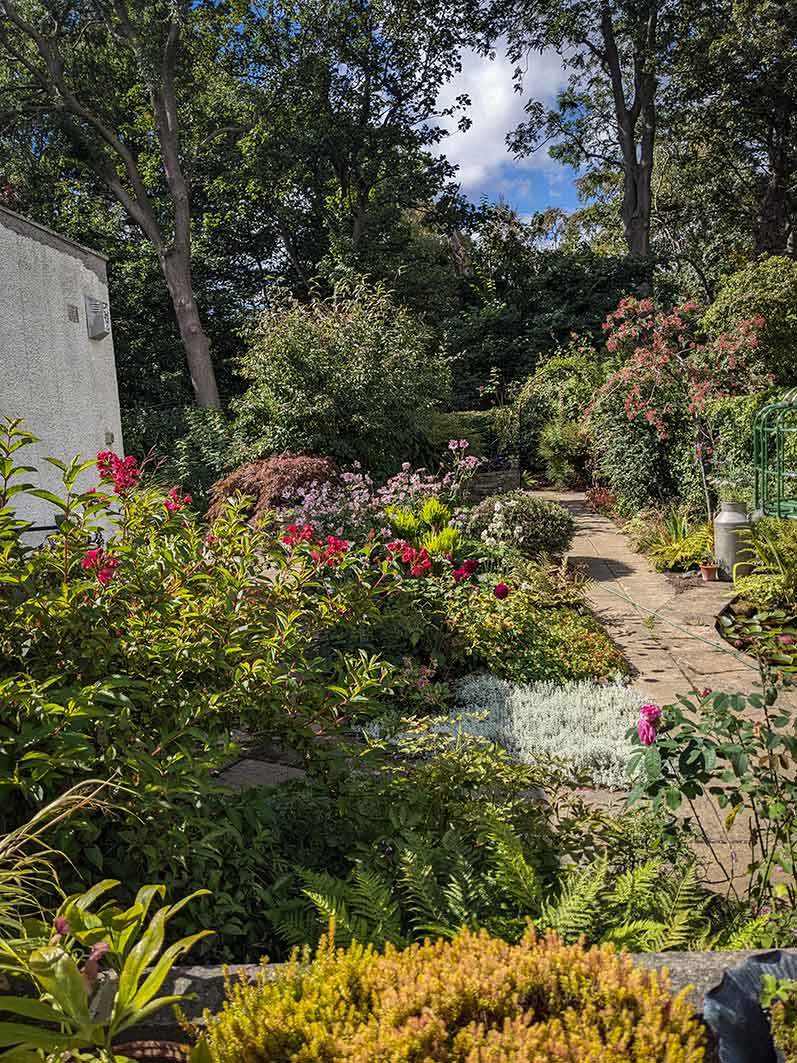
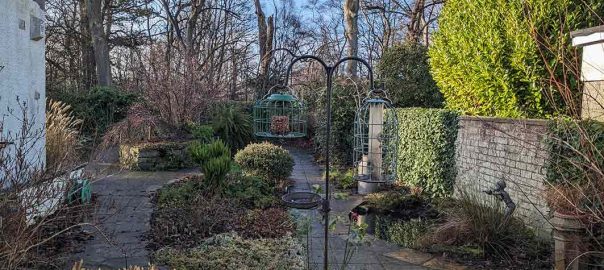
View of the garden at the end of January 2026 shows some evergreen shrubs and ivy and a wild life pond.

End of Jan 2026 in the garden.

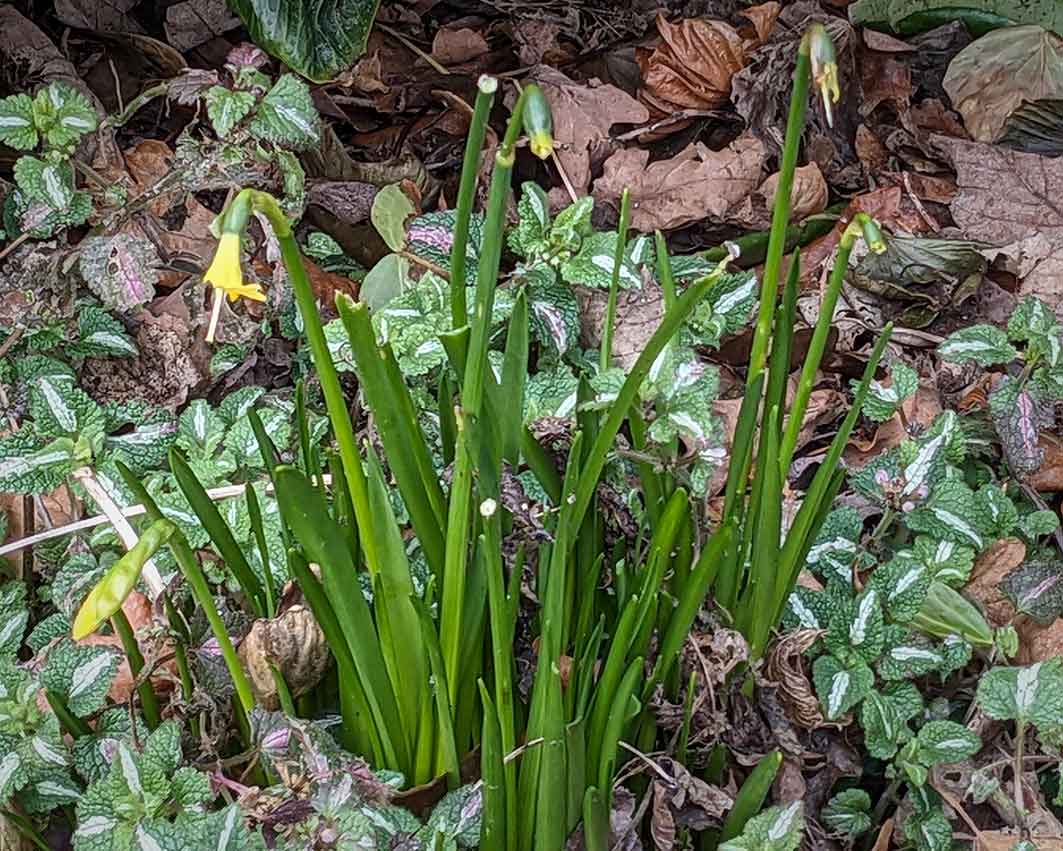
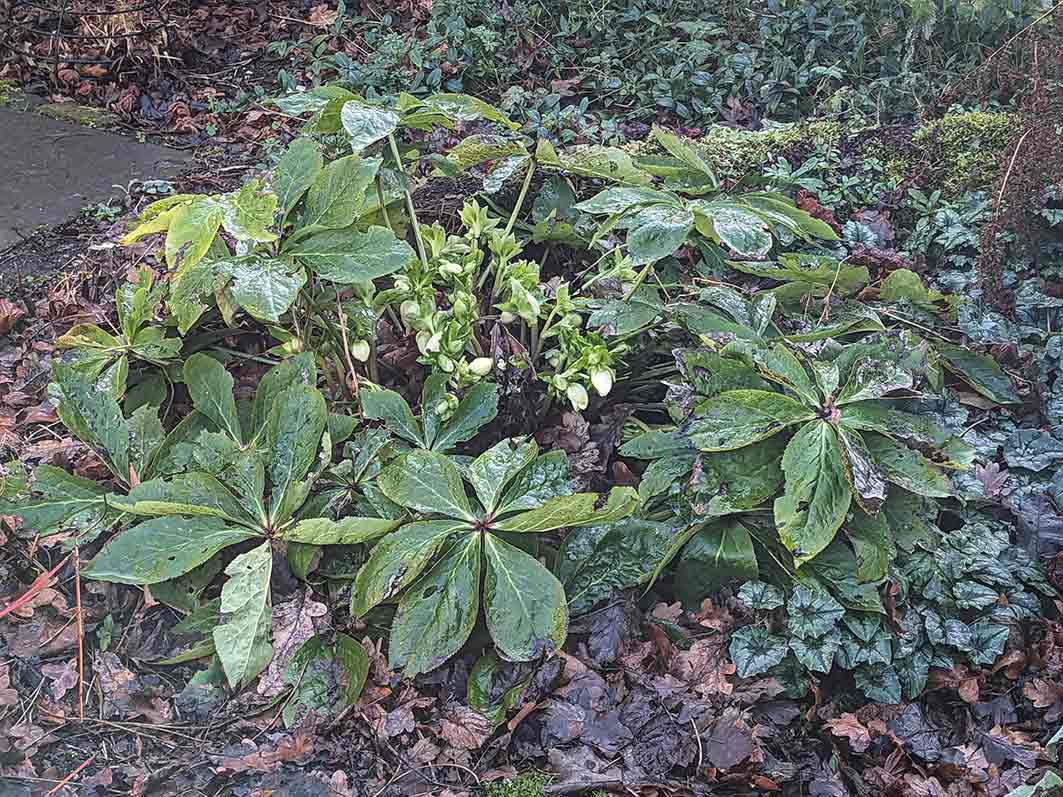
Moan, moan ,moan, yet another cold and soggy winter.   We finally got a short spell of sunshine the other day so I nipped out into the garden to see what had started to come through.  The usual snowdrops, narcissi, a few crocus, hellebores, and yellow erythronium are just coming up.  Some of the hellebores have buds, some have a couple of open flowers and others only have leaves.  The old leaves need to come off as they are pretty manky looking and new leaves will pop up soon.
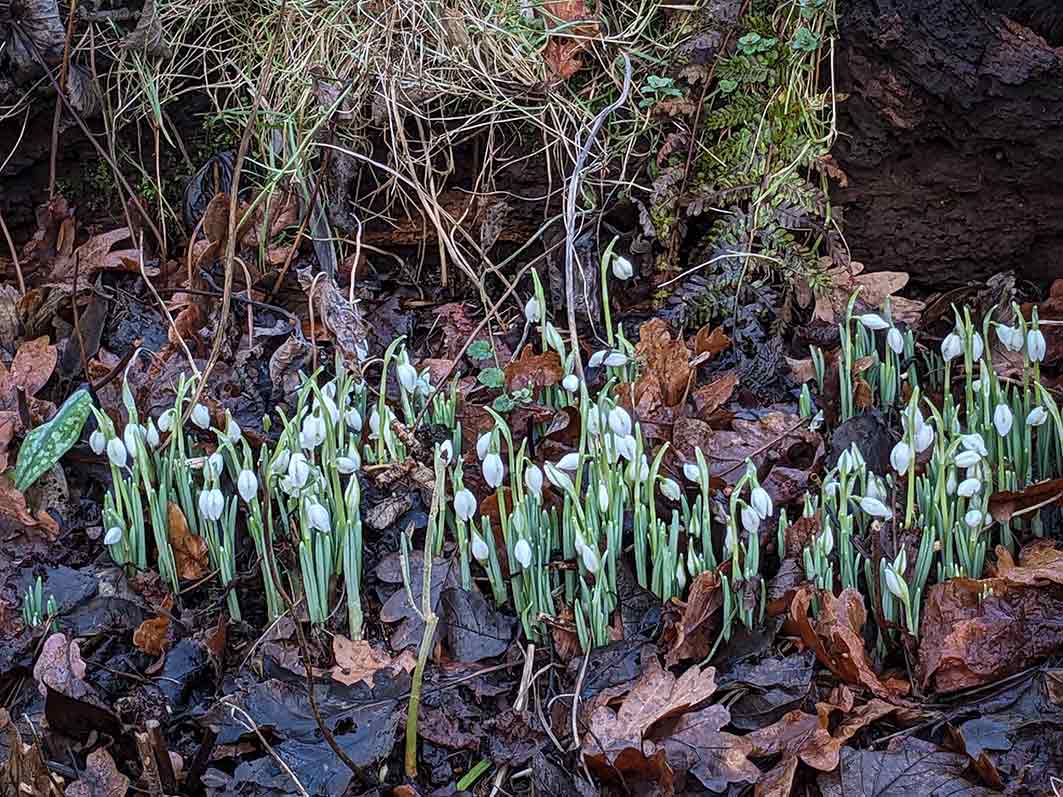
White snowdrops in bud on a carpet of wet, brown leaves.  Mossy log behind them.
Budding snowdrops.
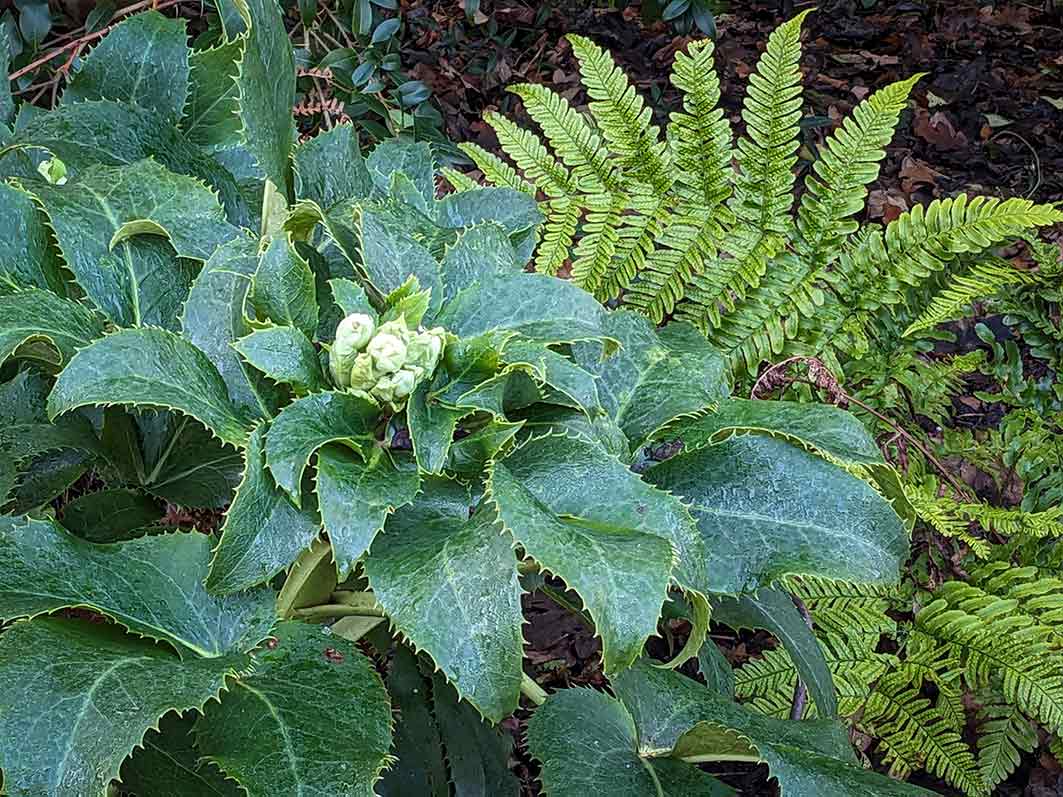
White hellebore buds surrounded by manky leaves.
White hellebore buds.
Pale green buds of hellebore argutifolius.
Hellebore argutifolious buds.
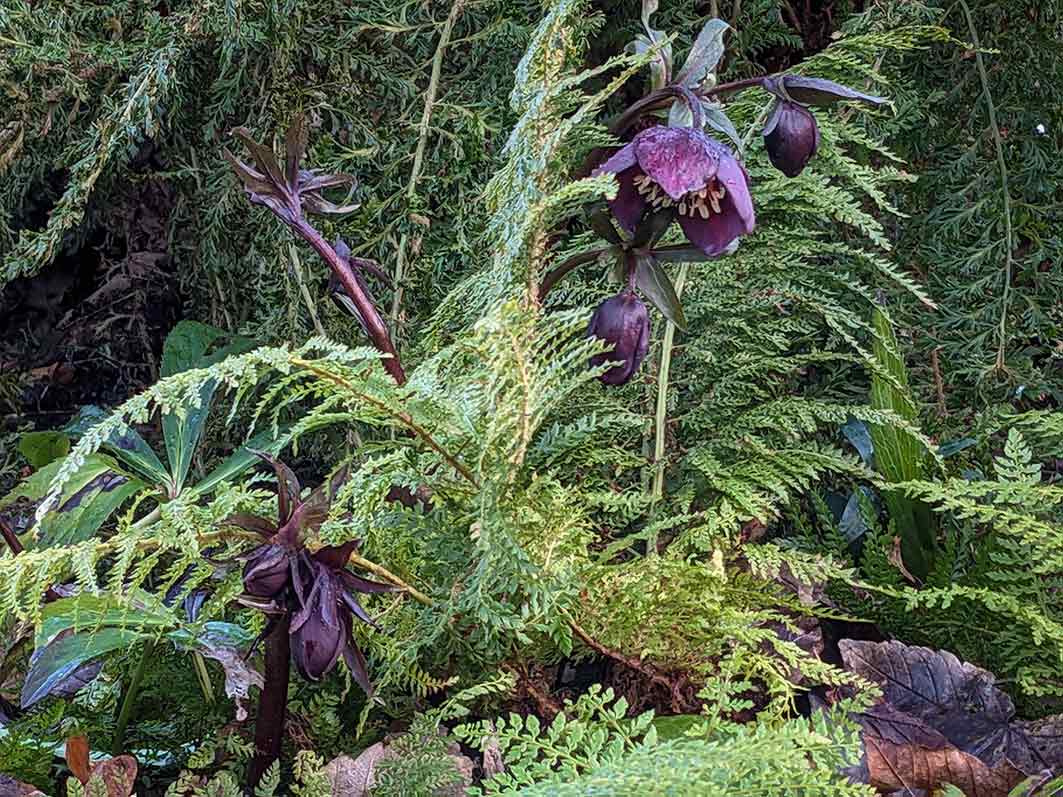
Deep purple hellebore buds and young flower with a fern growing through the plant.
Deep purple hellebore.

The rhododendron and the pieris have promising buds and hopefully (if I can keep the pigeons off) the choiysia will have some buds too.  The sarcococca has a few buds on, the lonicera fragrantissima (winter flowering honeysuckle) only has a few flowers so far, but it did get a prune in autumn as the branches were overhanging the path. The corkscrew hazel has a few catkins on but the witch hazel only has a few brown wizened leaves on it.  It usually has beautiful spidery orangey-red flowers on by now.  I do hope it is ok. This is what it looked like this time last year.   I have asked around and some people think it may not have had enough water during the summer (well I was on bed rest most of the summer) while others think it may be wind scorch.  It may well be dead but I have tried the scrape the bark test shown here Is my tree dying?   and just can’t make up my mind if it is or isn’t so I will just leave it alone and see what happens. The leaves did put on a bit of an autumn show but then just went very dark brown and didn’t really fall off.  There are some buds but they look small and skinny so I am a bit perplexed as it has been in that position for 12 years now and was only 3 meters away before that – we moved it when we got rid of the greenhouse and made the stumpery.
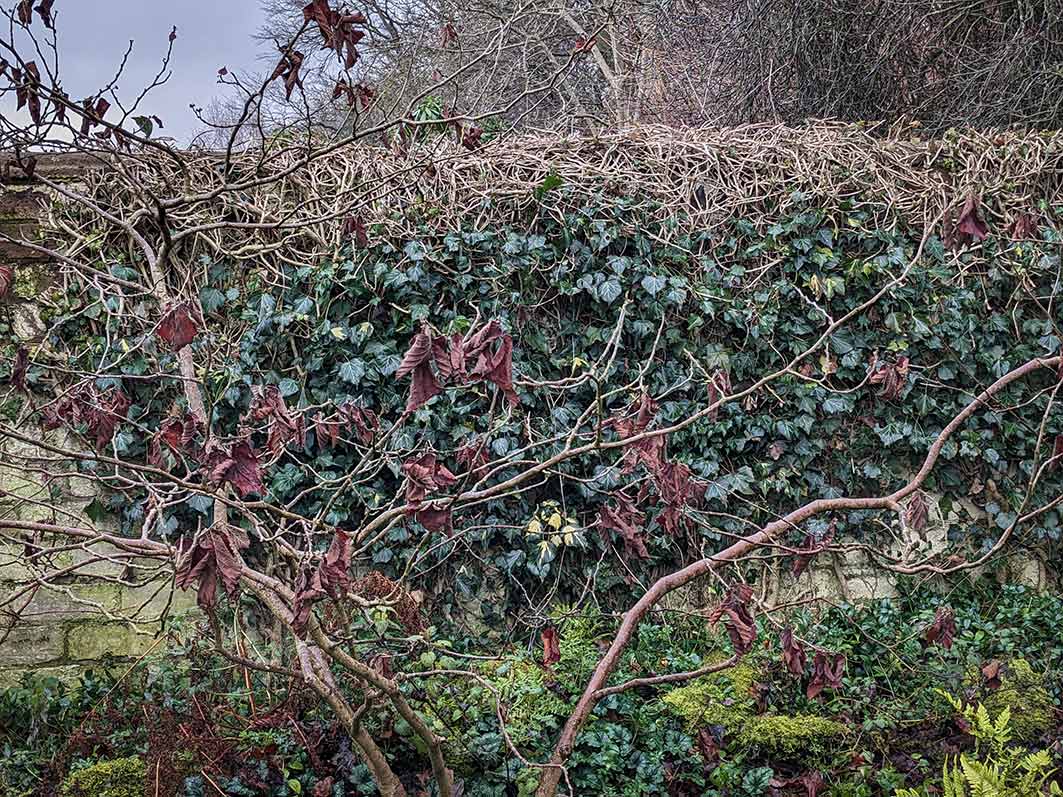
Brown leaves on a dead looking witch hazel shrub.
Dead looking witch hazel.

The hebe Pink paradise always has a few sporadic flowers on it as does the viburnum Bodnantense Dawn.  I took out a lot of the golden Japanese rush (Acornus Ogon) as it was creeping everywhere and getting in amongst the roots of other plants but it is a nice golden colour in a winter garden when potted up in a window box.  However it needs a bit of TLC now.    It lives under the bird feeder, behind a the rose Gertrude Jekyll,  as it not only helps prevent the seeds from the feeder getting into the bed, but also stops the rush getting out and spreading through the bed.
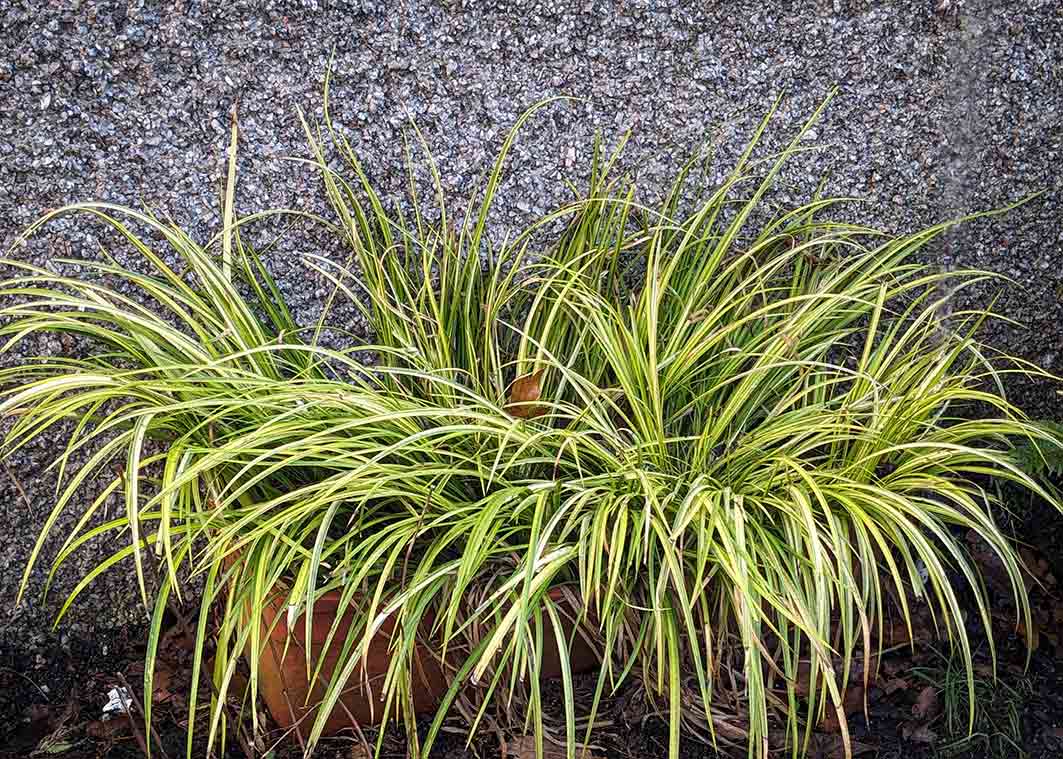
Golden green Acornus Ogon rush in a window box.
Acornus Ogon

There are loads of evergreen to see in all parts of the garden to break up the browns and greys of winter.  A lot of ivy and ferns, cyclamen, heather, hebe, sarcoccoca, berberis, variegated holy, tree heath, epimedium, some grasses, and the saxifrages and succulents.  Even the young foxgloves and dead-nettles look ok during the winter.

At this time of year when the sun is still low we don’t get much sun sunshine in the garden.  I can see it flooding the golf course out the back and I can see it across the playing field out the front, but not much gets into the garden.
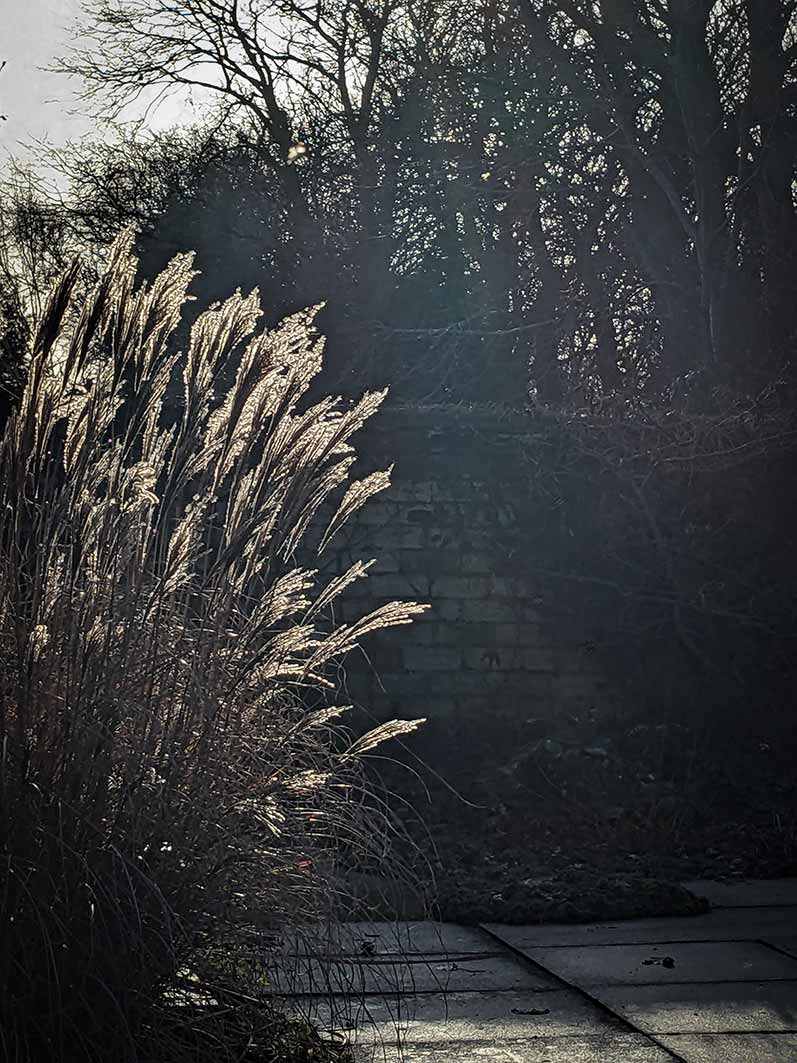
Old miscanthus grass seed heads back lit in the suns rays.
Miscanthus in the winter sun.

The conservatory gets a little bit more, but only for a short time and the patio only catches some rays on the table top through the conservatory window.

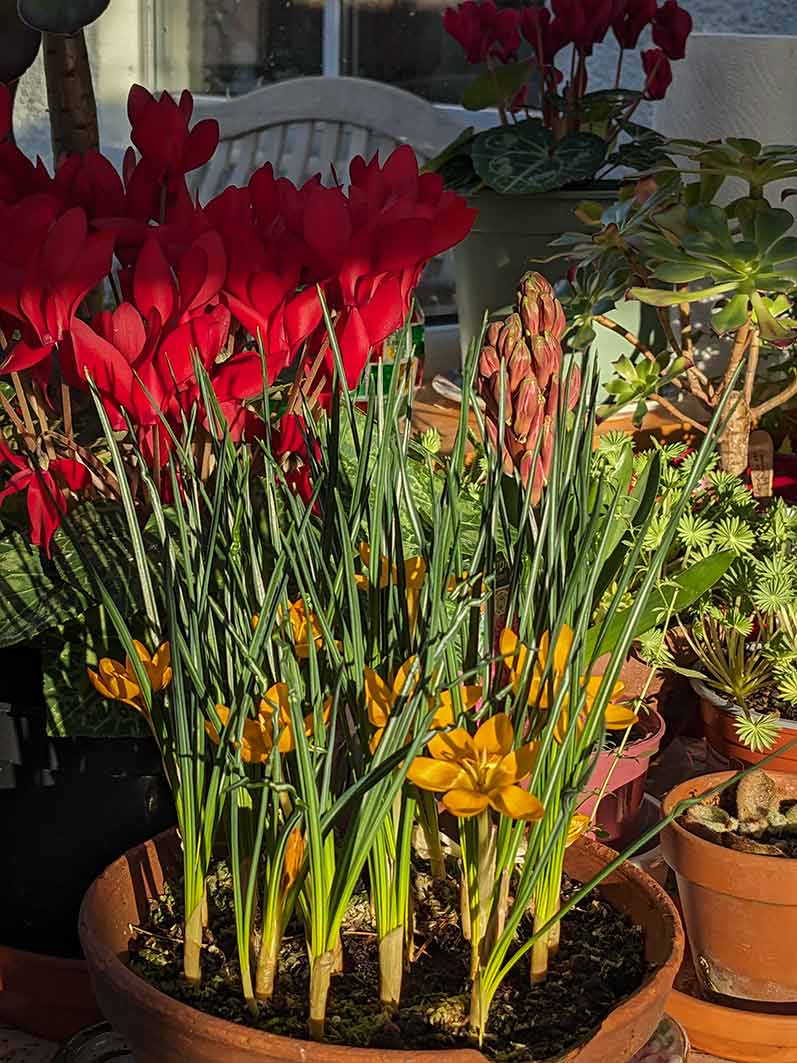
In the conservatory the crocuses have flowered as has the hyacinth and of course the cyclamen.  The oxalis palmifrons is still not showing any buds.  I did see some paler growth which I initially thought might be buds coming up but they were actually very young leaves that were not very green.  Everything needs a bit more sunshine – including me!
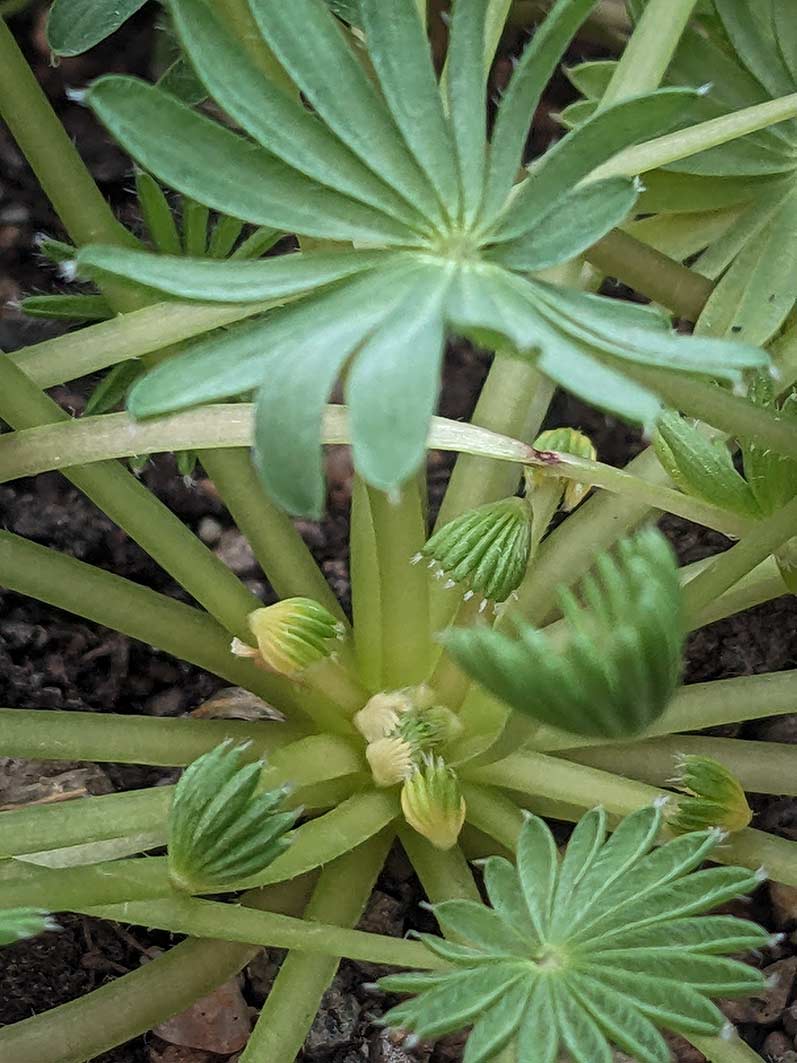
Pale young leaves on an oxalis palifrons.
Oxalis palmifrons young leaves looking a bit pale.
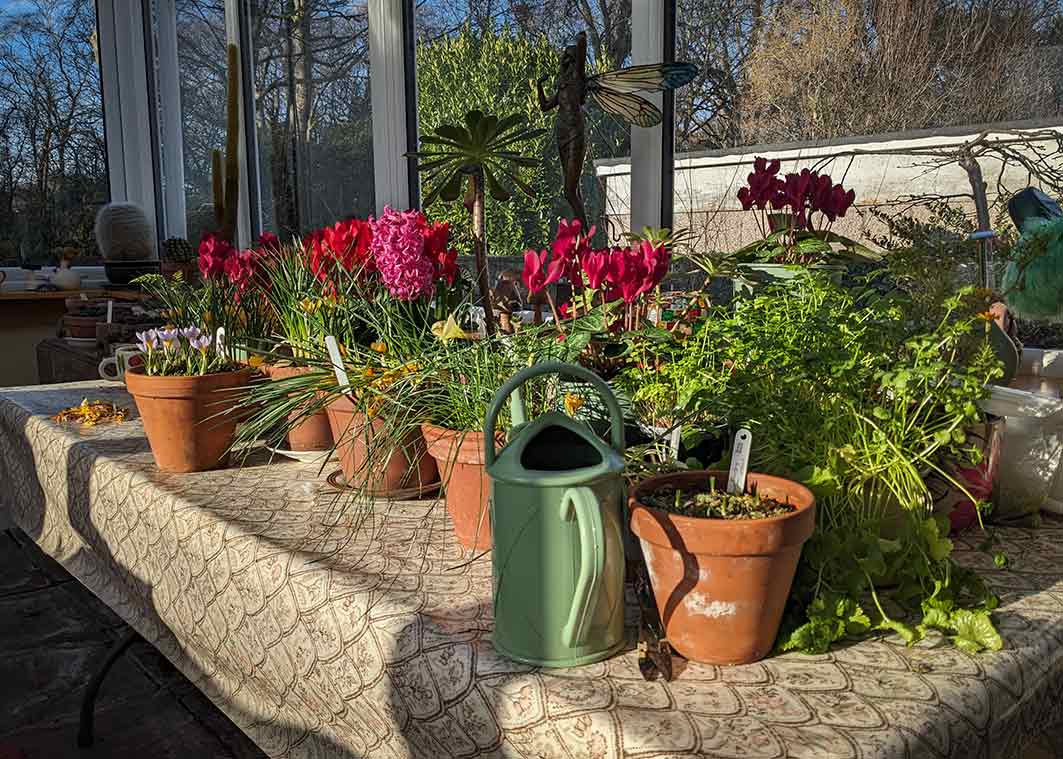
Glimmer of sunshine on the potted bulbs on the conservatory table.
Bulbs on the table in the sunshine.
Colourful bulbs in pots.
Bulbs and cyclamen.
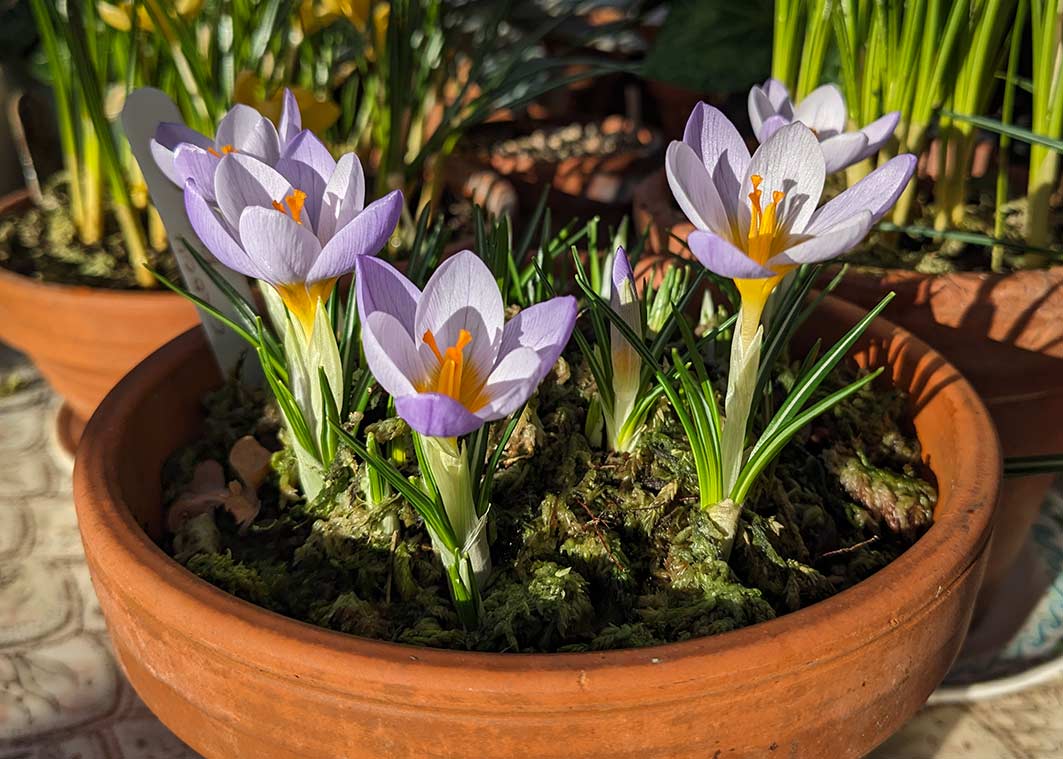
Pale purple Crocus sieberi ‘Firefly’with orange stamens.
Crocus sieberi ‘Firefly’

While I was deadheading the crocuses the spring on my Darlac cut-n-hold snips broke.  Darlac tools have what they call a ‘limited ‘’lifetime’’ guarantee’ so it is worth holding onto the packaging and write the date of purchase on it and keep your receipt.  I couldn’t find anywhere on their website about how to get a replacement spring.  Apparently they were taken over by Fothergill’s  but their website didn’t give any clue about how to obtain a replacement spring either so I phoned the Darlac customer services and they took my details and said that Fothergill’s would send one out to me.  I use quite a few different tools from Darlac – check out some of my favourite tools.  Thank you Darlac.
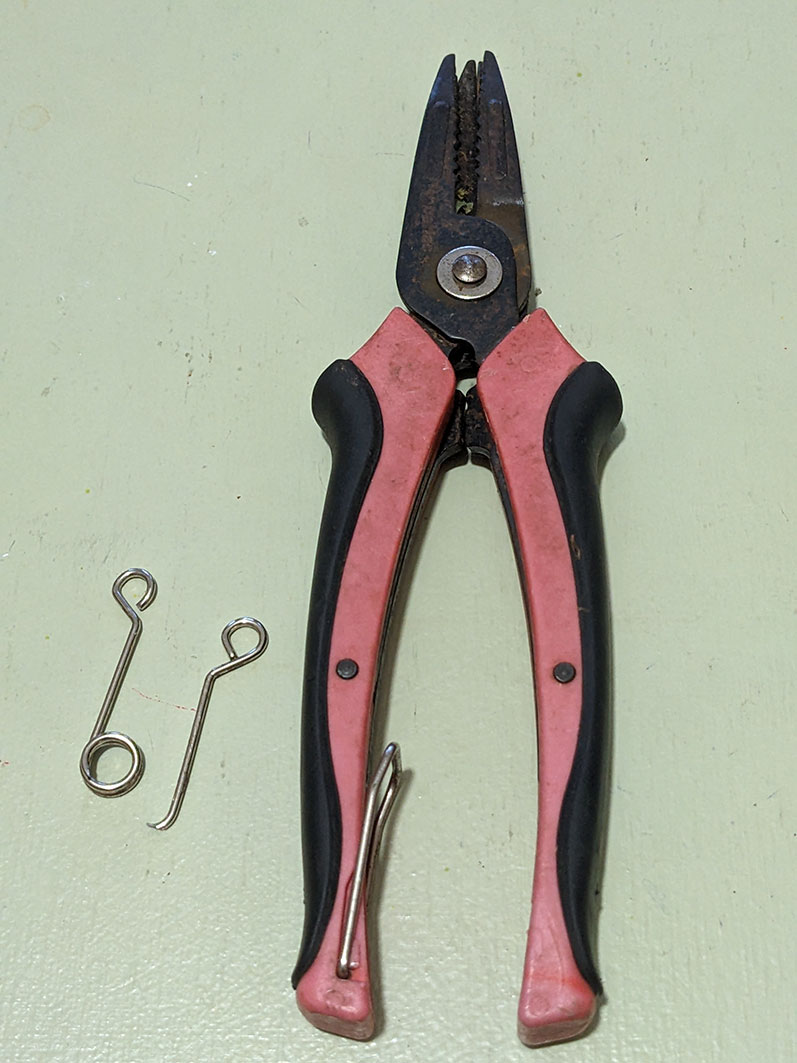
broken spring  of Darlac cut-n-hold snips.
Darlac broken spring.

So the end of January – beginning of February looks very cold, wet and grey still but there is so much coming through that the garden will soon be full of colour again.
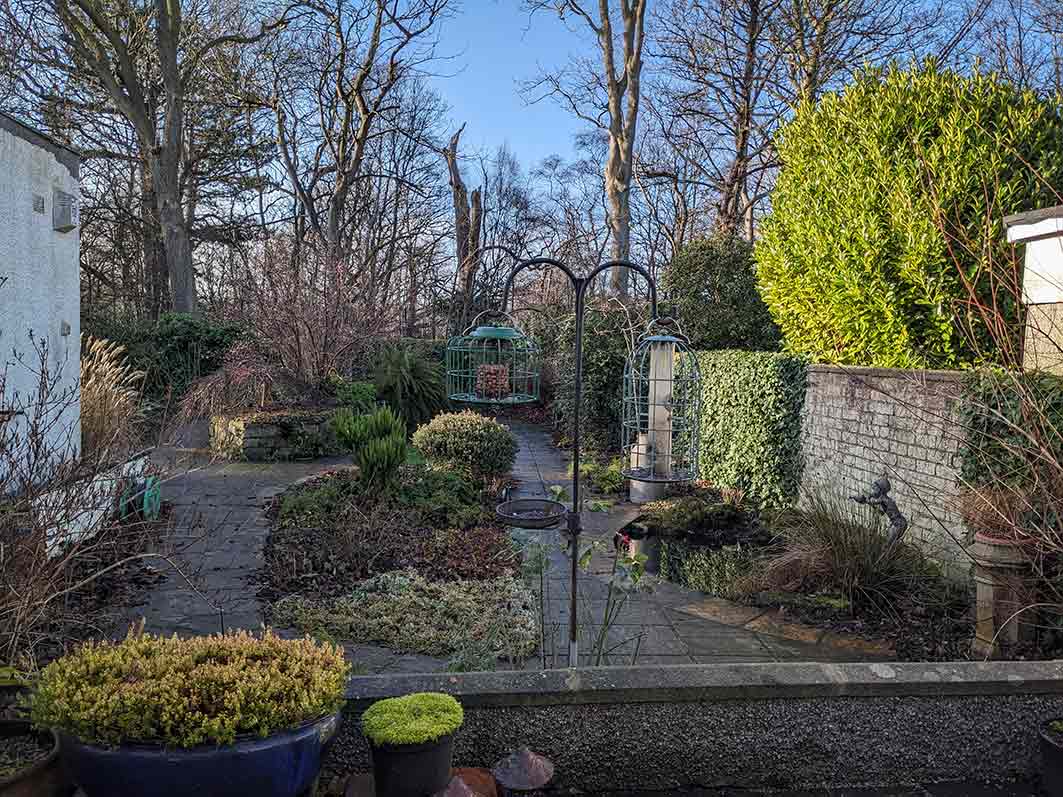
View of the garden at the end of January 2026 shows some evergreen shrubs and ivy and a wild life pond.
End of January 2026
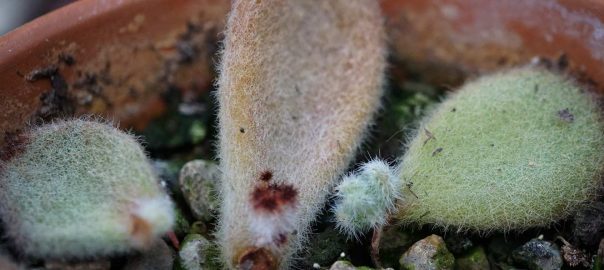
Furry leaves of Kalanchoe tomentosa 'Dorothy Brown' with tiny baby leaves appearing.

Wet November 2025

And the wheelchair saga continues…

So, I got the repaired wheelchair back – ok so far, except it has devolved a creak on the left hand side.  I did not get that ‘pressure mapping’ of my cushion done (despite being promised twice) and it was because the OT at wheelchair services ‘doesn’t believe in it’.  Then a few days after my so-called assessment the cushion deflated at the right back quadrant with a slow puncture!  That is the area where my right ischium sits by the way- you know – the bone I had the pressure sore on.  I ordered a new cushion and wheelchair services delivered one a few days later (which is great service).  I was on an old spare one until it was delivered and that too has a slow puncture in exactly the same place.  This is all soooooo frustrating.

We had a few very cold days following a whole lot of rain so I haven’t been doing much outdoors.  Amy put some mulch down around the rhododendrons and cut back some anemones and other plants that have gone over, and pruned a few shrubs.  The crocuses and irises that I potted up are poking through so I must keep them from getting waterlogged so they are still under the table for now.  There is only so much room under the table so I have tipped a few other pots onto their sides to try and prevent them getting waterlogged too.  I have cuttings of various plants (that should be outside) sheltering on the conservatory sofa trying to dry out.

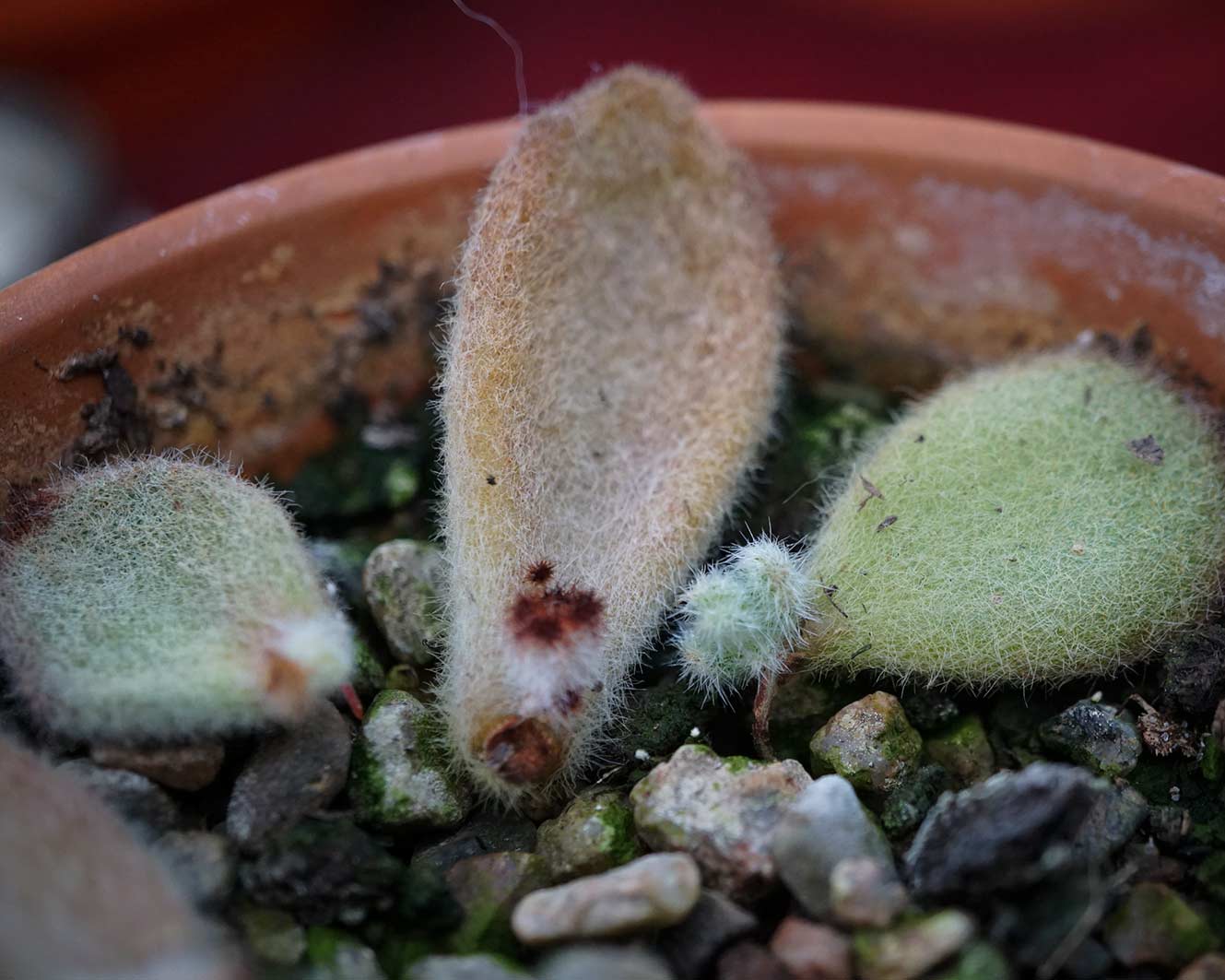
In the conservatory the cyclamen are just starting to flower.  The aeoniums are losing their lovely deep red colouration and are taking on more of a green tone now.  The cuttings of the chunkier hare’s foot fern are doing ok although they are very slow.  One cutting has one frond and another cutting only has new growth bumps appearing underneath the root cutting so at least it hasn’t died. Any leaves that fell from the Kalanchoe tomentosa ‘Dorothy Brown’ I left on the top of some soil in a small pot to see if they would take root.  A few of them have grown tiny new pups (or at least leaves) on top of the fallen leaves and one has developed roots.

Furry leaves of Kalanchoe tomentosa 'Dorothy Brown' with tiny baby leaves appearing.
Kalanchoe tomentosa ‘Dorothy Brown’ leaf cutting pups.

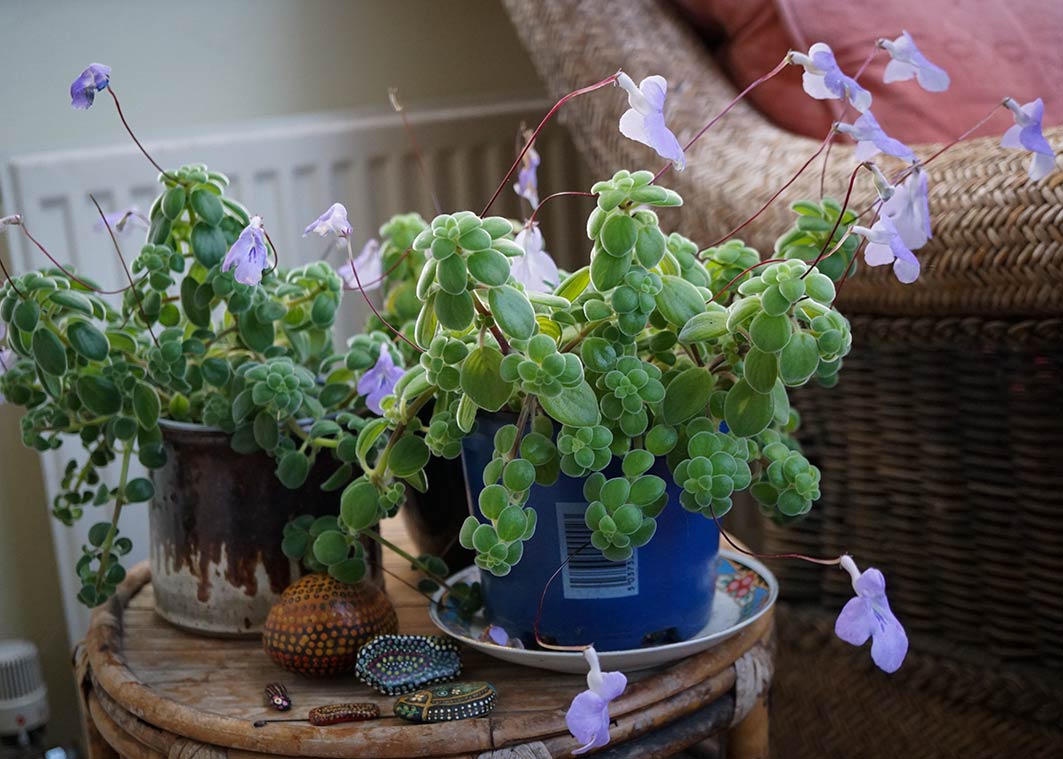
My oxalis palmifrons has produced lots of lovely leaves but has had only one flower so far this year. They need lots of light to flower but the conservatory gets very cold and even though these are hardy I think they would flower better if they were kept in a warmer room.  The trouble is the house is cold and none of the rooms have enough light for them. The streptocarpus saxorum cuttings are flowering away – they have such dainty little flowers on wiry stems. I think the parent plant died due to me not giving them adequate water – ha- I usually over water plants at this time of year.

Cuttings from Streptocarpus saxorum with dainty purple flowers on wiry stems.
Streptocarpus saxorum cuttings flowering.

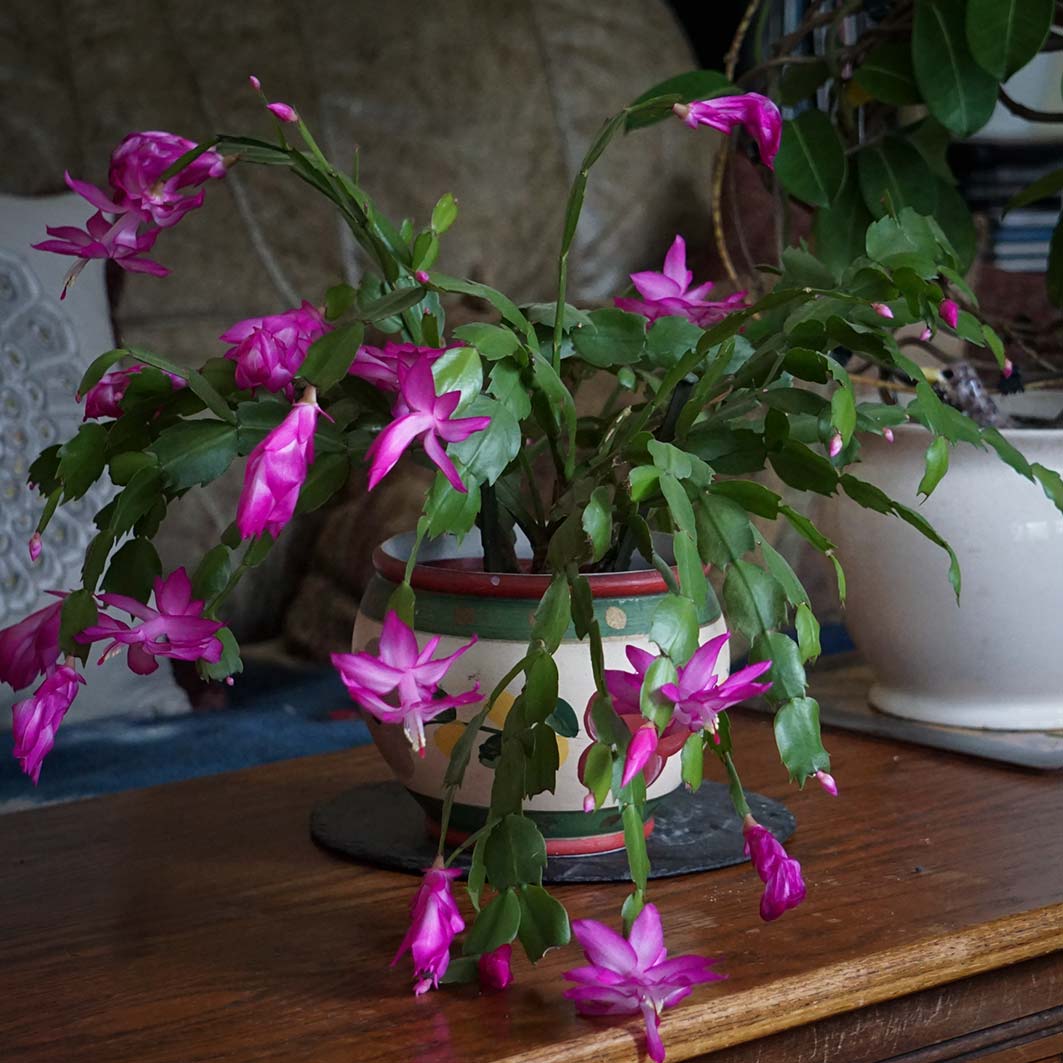
The Christmas cactus is flowering now and adding some much needed colour into this drab weather.  All of the pots of crocus are outside this year but I may bring a few in now to see if they will come into flower soon.

Bright pink flowers on Christmas cactus plant.
Schlumbergera truncate

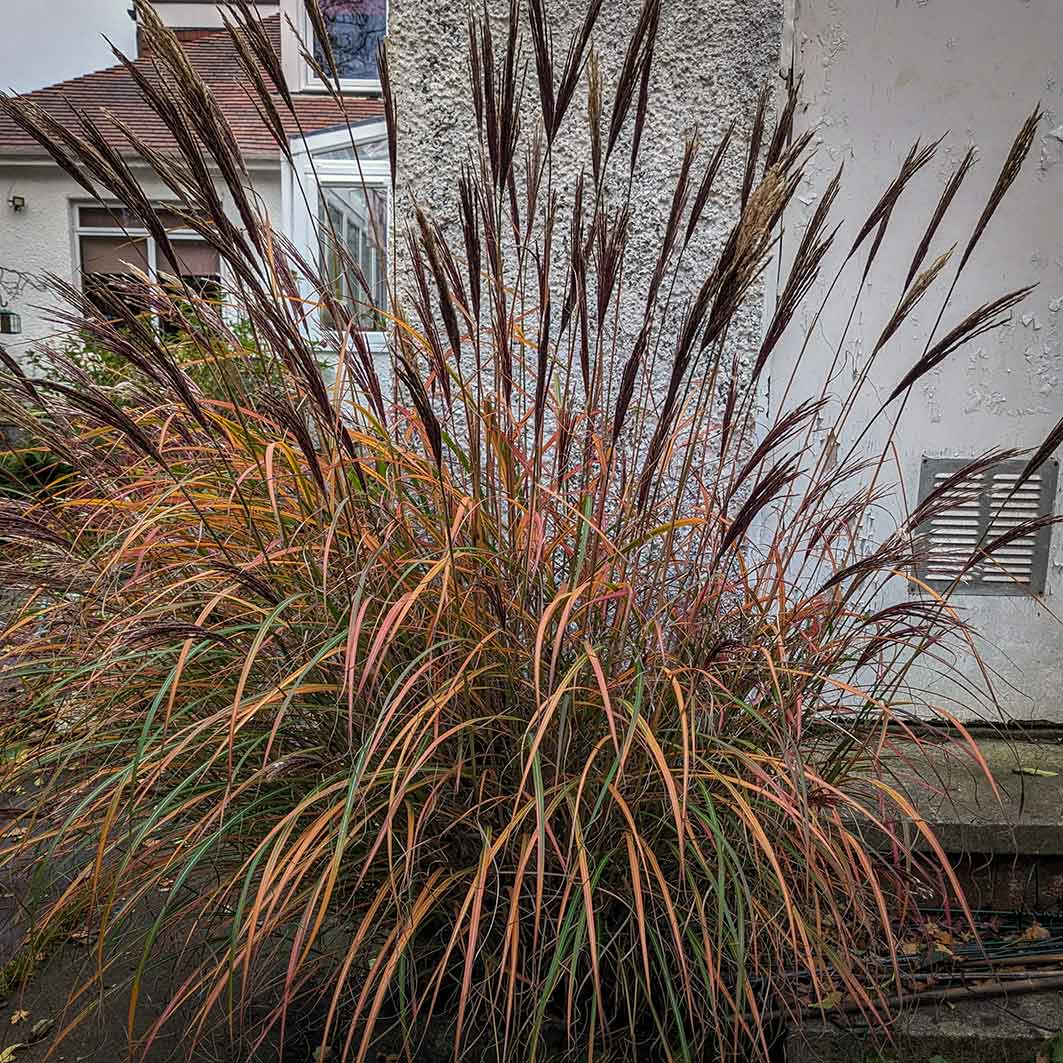
Most of the leaves have now been shed from the deciduous trees but there is loads of green still from the ivy clad walls and the evergreen shrubs.  The pigeons have had most of the rowan berries but the blackbirds got some too.  The fabulous red seed heads of the miscanthus ‘Red chief’ grass  are now   a mucky brown colour but the leaves gave a final flourish of autumnal colours before turning straw coloured.

Autumnal colours of miscanthus red chief grass.
Miscanthus ‘Red chief’ autumnal colours.

For now I am just trying stay warm and keep as many plants as possible from getting waterlogged.

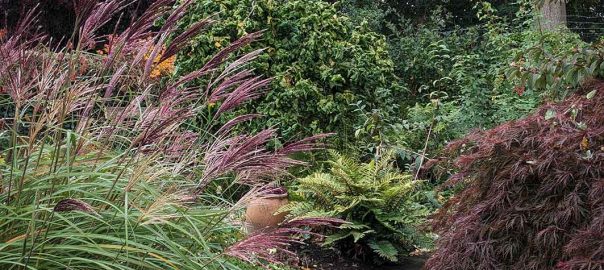
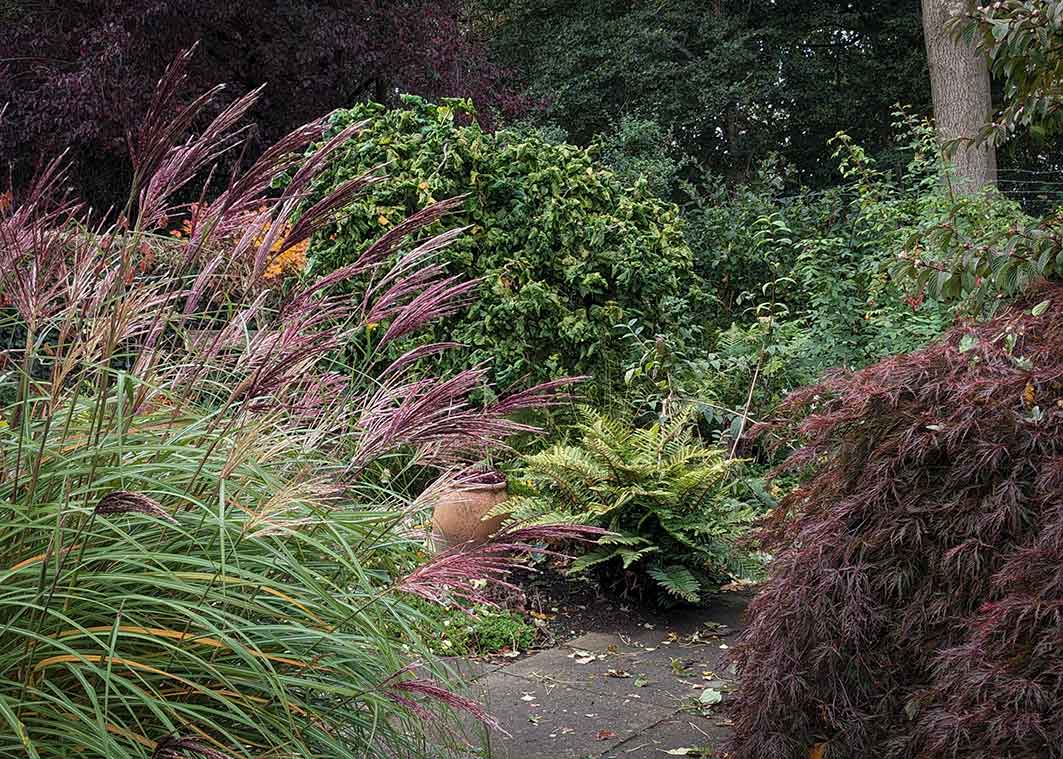
Colour combination of deep red grass flowers, purple acer leaves, green foliage and large purple tree in the backgrond

Chilly Mid October 2025

Well my relief at my healed pressure sore on my right ischium was short lived – as a few weeks later the skin broke down again and I was back on bed rest. I hadn’t been doing too much and I was really looking after my skin but, it did what it did.  It is soooo frustrating.  My fixed wheelchair was dropped off on the 15th October (finally!!) so now I have to wait to be  ‘pressure mapped’ at  a wheelchair assessment  to make sure  my wheelchair cushion is actually doing the job of relieving pressure on my butt, and to check that the wheelchair is  set up right for me.  I have already had to drop the footplates by 1.5cm.

Harry did the vine weevil nematode application and I now have Amy (gardener) to help with the garden.  Hopefully my skin will toughen up soon and I can get back outside again. All I have managed to do these last few months is keep the patio watered and the houseplants alive.  I did have time when I was up to pot-up some crocus and narcissi.
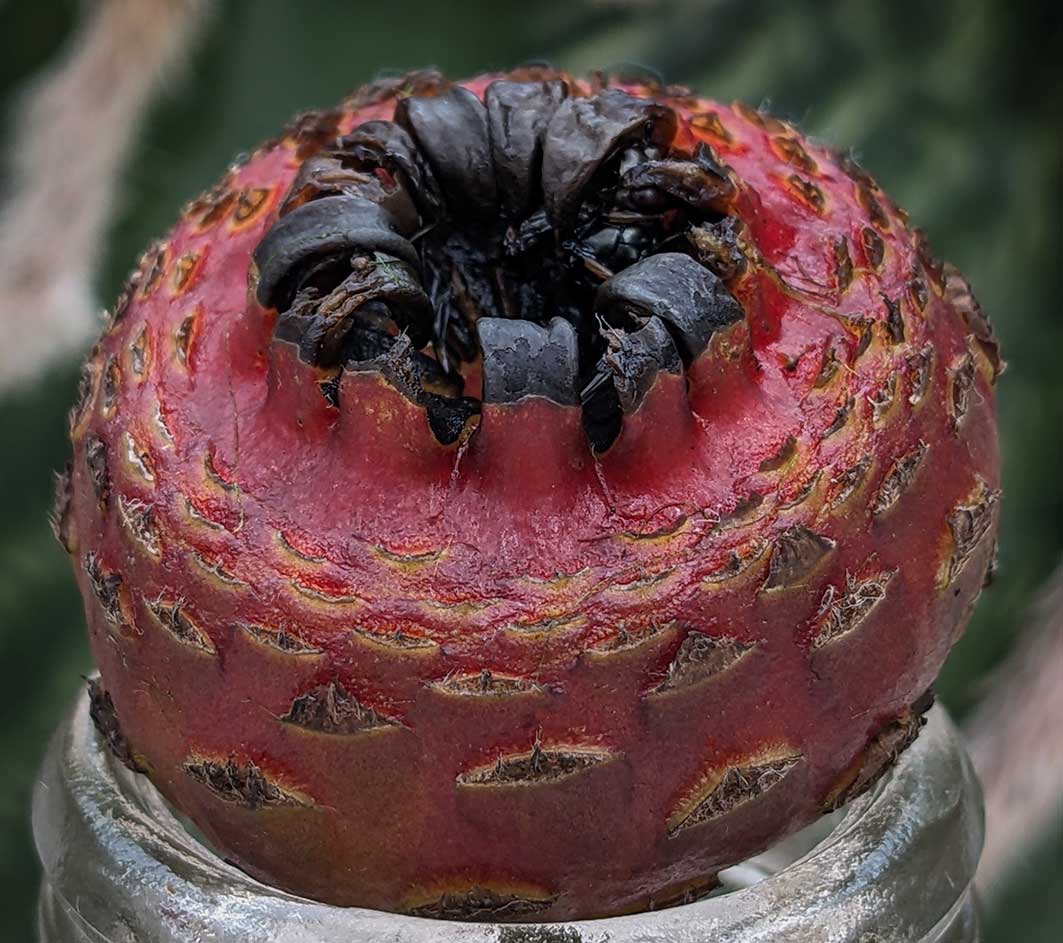
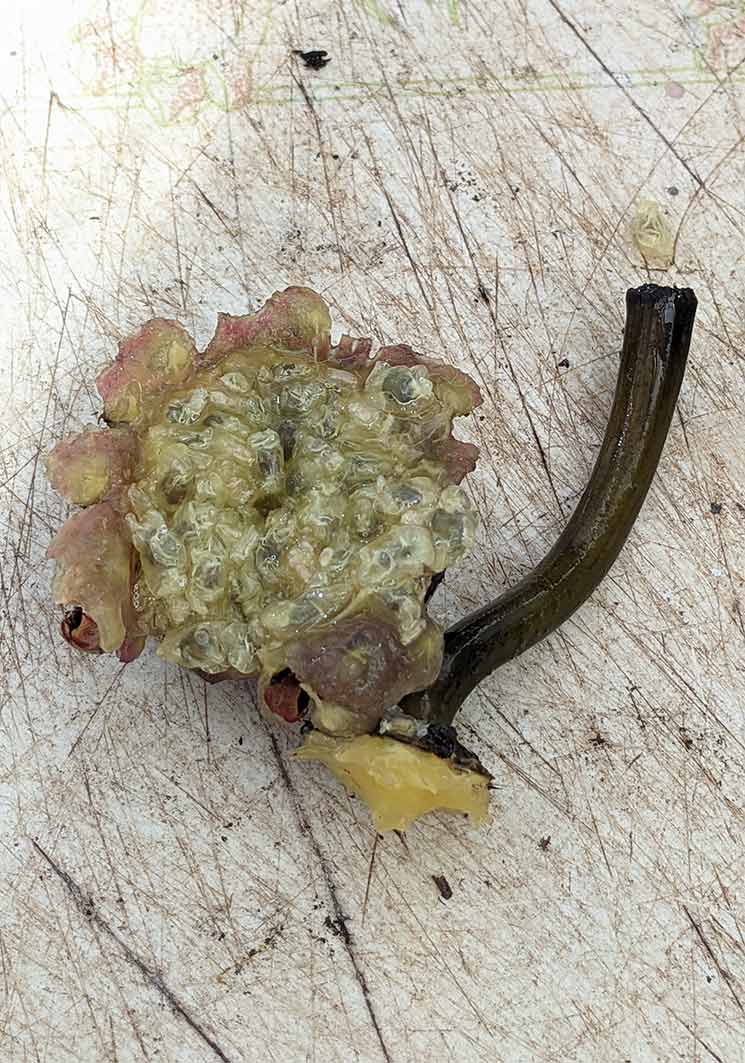
At the end of September I noticed in the pond some weird looking thing so I fished it out to see what it was.  It turned out to be a fruiting body of a water lily.  I have never seen one before so I chopped it off and brought it into the conservatory and kept it under water.  It turned into a gelatinous mass within the red casing.   The gel dissolved away to reveal the seeds.  It was very smelly so I just threw it out (I don’t need any more water lilies anyway).

red capsule of water lily fruiting body
Water lily fruiting body.
gelatinous material with water lily seeds in it
Water lily seeds surrounded in gelatinous material.

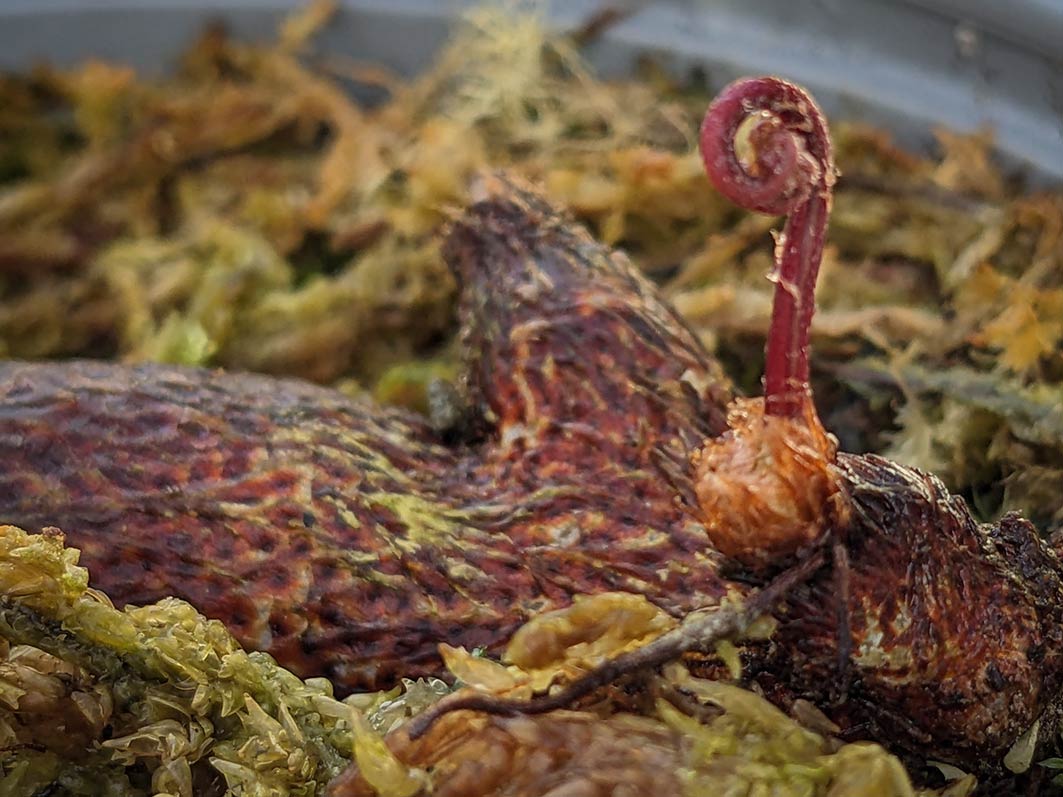
Back in March this year I went along to a talk about ferns by Heather McHaffie and she very kindly gave out a few cuttings from a hare’s foot fern.  I got a couple of cuttings and it is only now starting  to grow fronds.  Boy do you have to be patient with these things.  I do have a more dainty version of hare’s foot fern so I am so pleased that this is growing quite happily now.

Hairy rhizome cutting from Hare's foot fern with a tiny new frond or crozier growing.
Hare’s foot fern rhizome cutting.

There is still plenty of colour in the garden: still flowering are the Japanese anemones, verbena, geranium (Rosanne), persicaria, guara, fuchsia, cyclamen, erigeron, a few roses, viburnum, and even a few verbascum.

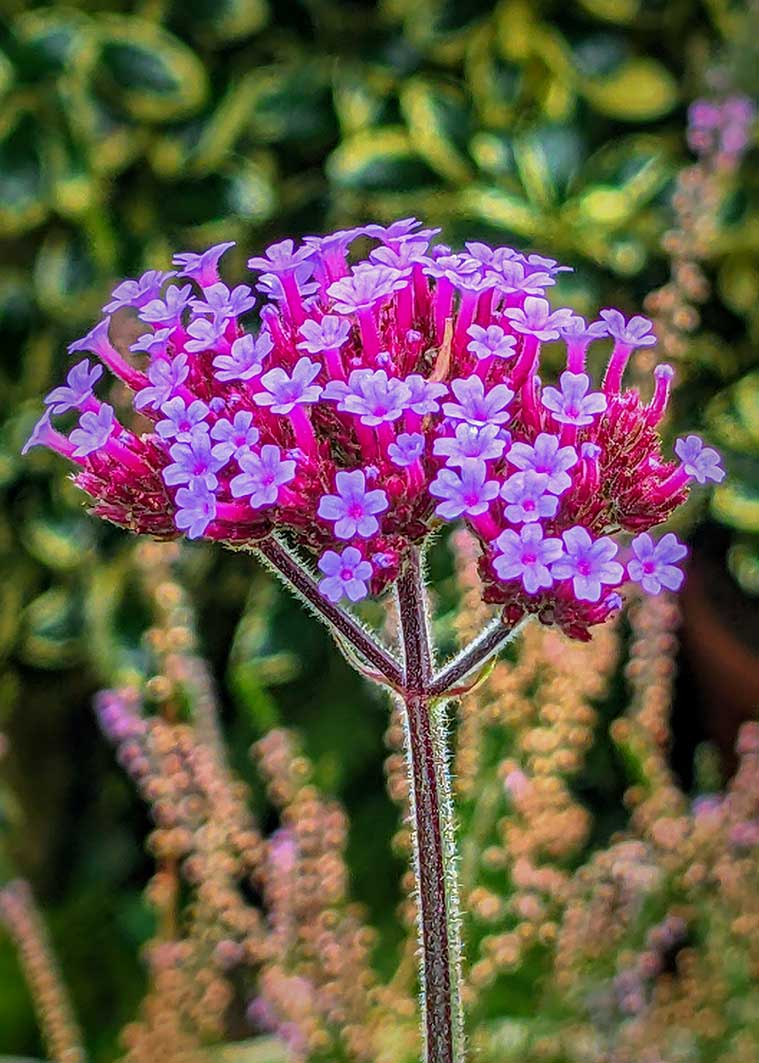
Tiny purple flower cluster of the Verbena bonariensis.
Verbena bonariensis

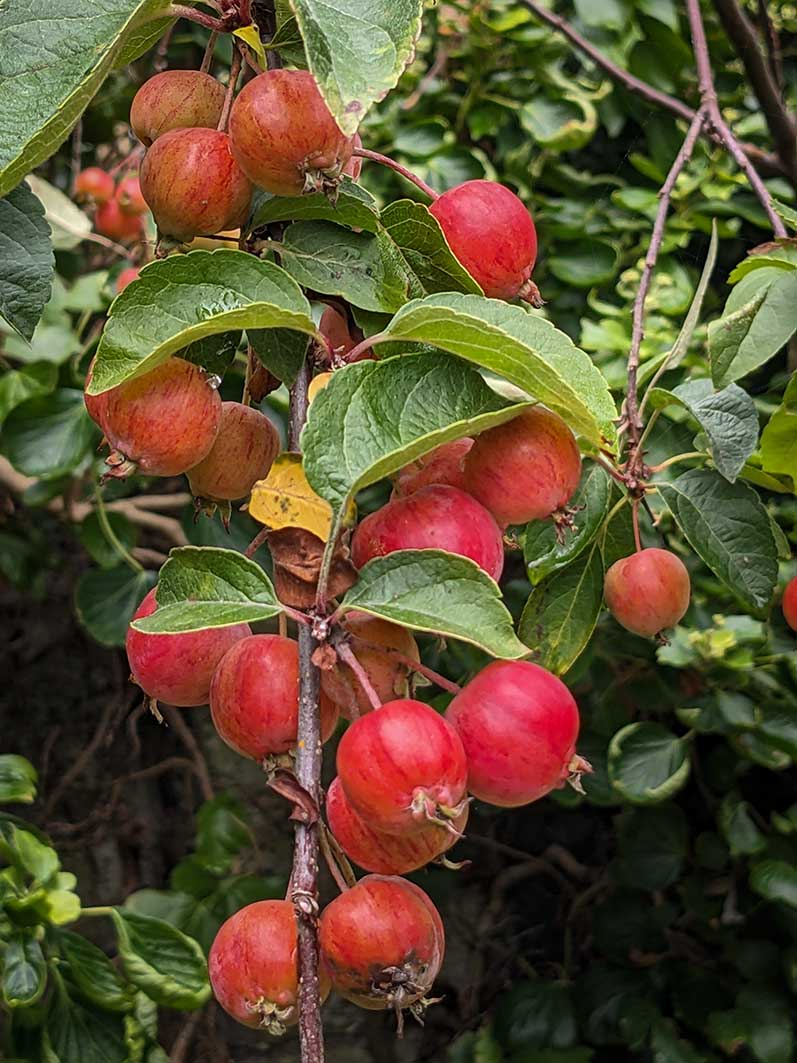
There are loads of pink berries on the rowan (Pink pagoda), bright orange crab apples (Everest), and the deep purples of the acer and heucheras are looking great as are the red seed heads of the miscanthus (Red chief).

Small bright orange/red crab apples (Everest).
Crab apples (Everest).
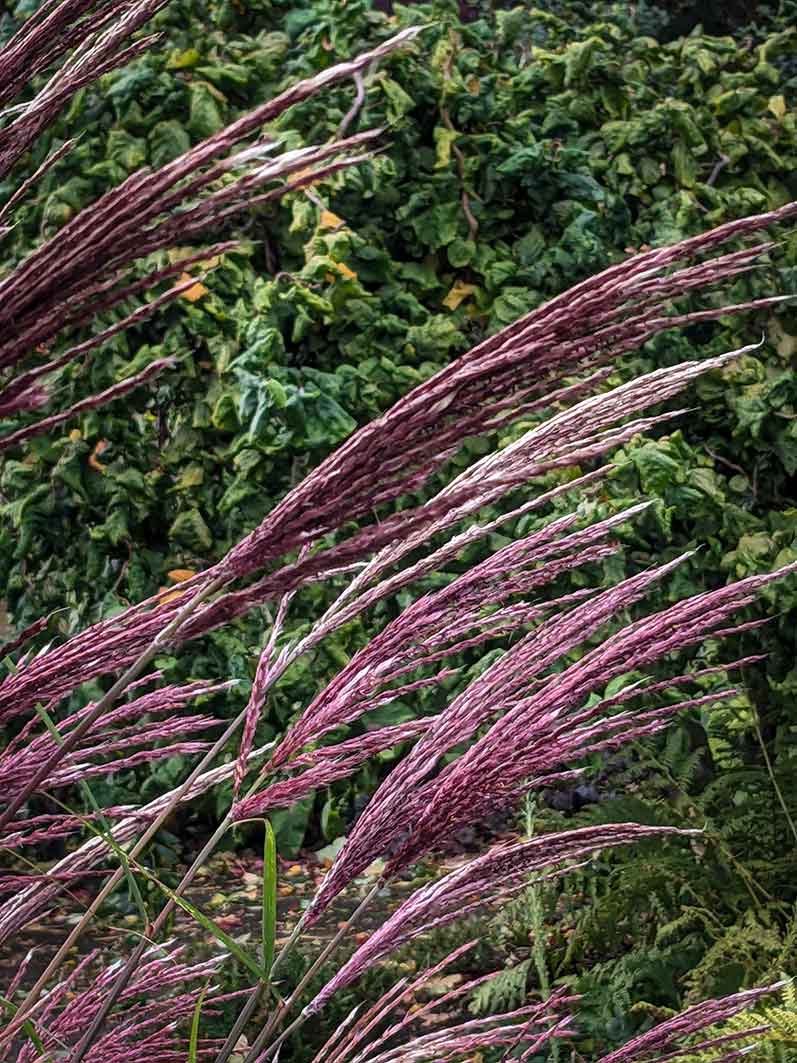
Large grass with red flowers. Miscanthus Red Chief.
Miscanthus (Red chief)
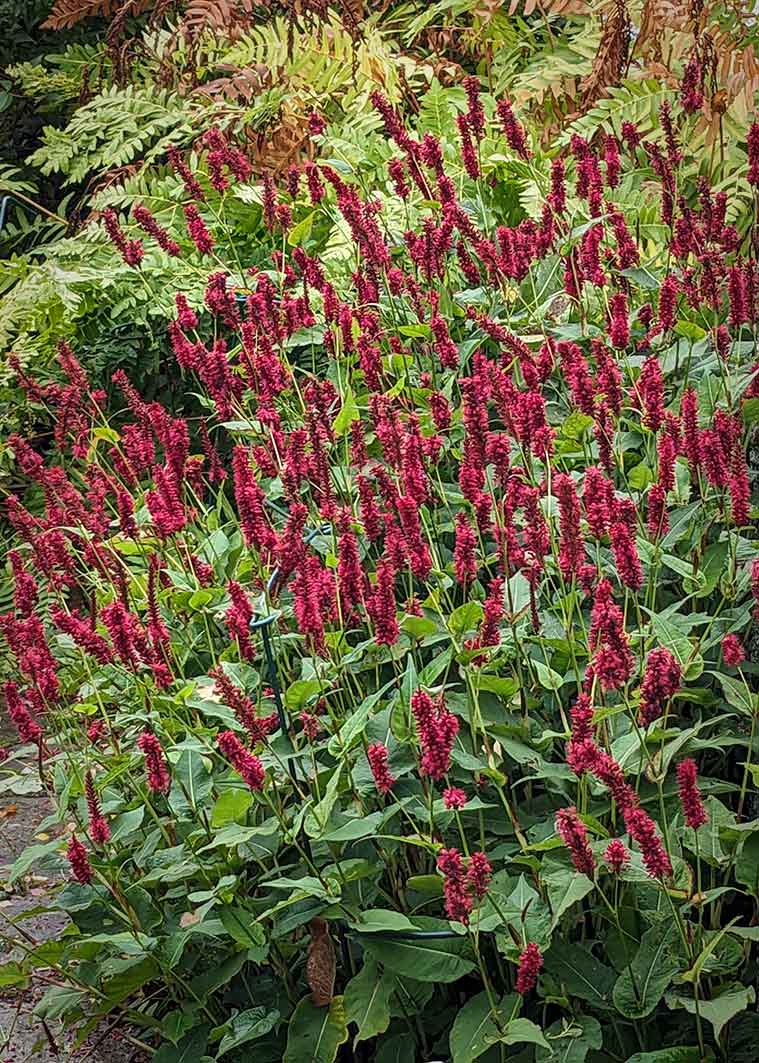
Red flowers of Persicaria amplex (Blackfield).
Persicaria amplex {Blackfield).
Colour combination of deep red grass flowers, purple acer leaves, green foliage and large purple tree in the backgrond
Purples, greens and splash of gold.

Some gold foliage of some ferns and the hakenechloa grass bring some bright as well as the silvery foliage of the snow in summer.  On the patio the marigolds are still flowering and the pink buds are developing on the skimmia (Rubella) although the leaves are looking a bit yellow so probably needs an ericaceous feed.

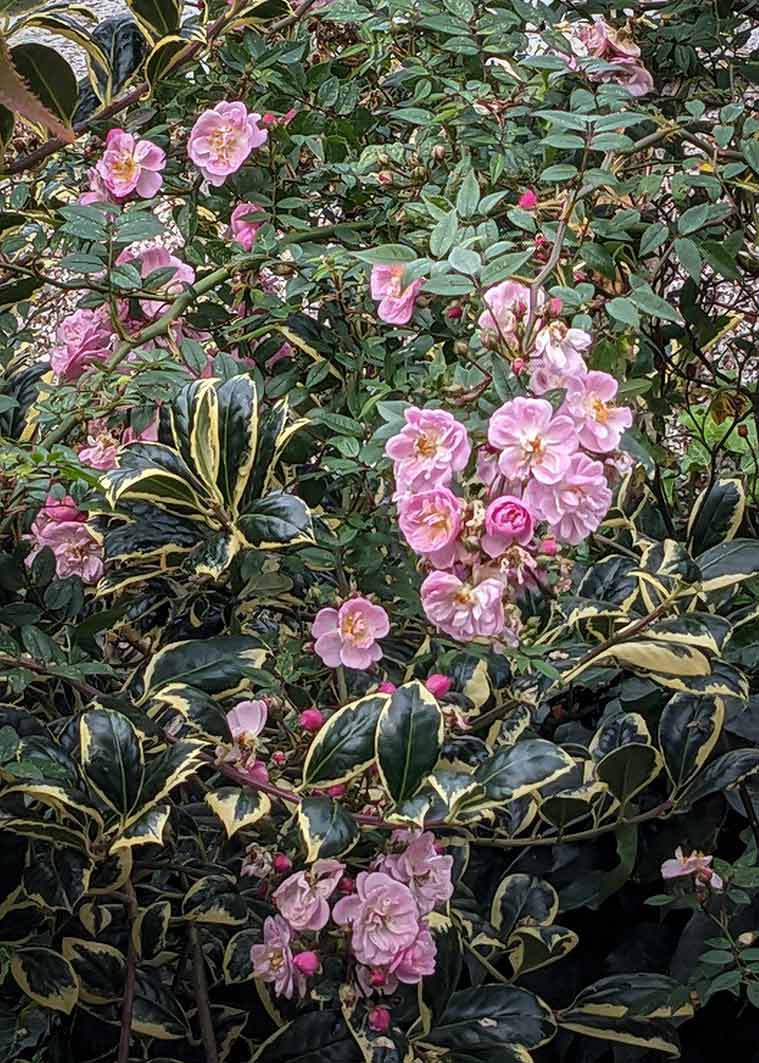
Small pink roses on a rambling patio rose.
Rambling patio rose.
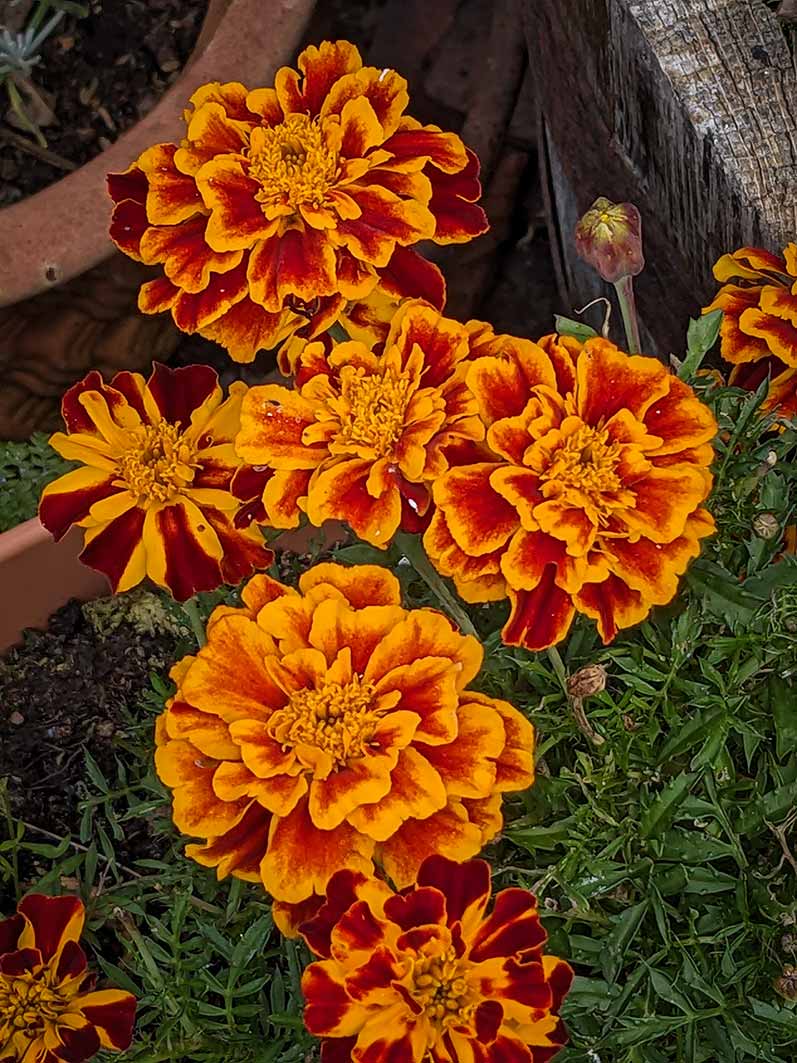
Two toned orange marigold flowers.
Marigold.

Storm Amy came along and happily only one large branch crashed down and flew over the garden up to the end of the patio but nothing was squashed.  The top part of the clematis support came down but the clematis itself clung on so another job to sort out.


Woo-hoo I am back out into the garden again – end of August 2025

Up-date on the wheelchair issue – the NHS has supplied me with a temporary wheelchair for now and has ordered a new frame for the NEW broken one.  I can use it but it isn’t great (I won’t go into details) but it does mean that I can now get back into the garden woo-hoo! Lots of weeding and dead-heading but mostly trying to keep it watered as we have had no rain for weeks.  A couple of tiny drizzly showers do not count as rain as it didn’t even wet the paths.  I also found out that the very leaky hose gun was the cause of my increasing right shoulder pain that spread from upper traps, up my neck and also across my collar bone to my SC joint.  The reason for this was that I was trying to use the hose without getting soaked so this meant having my right arm out at awkward angles and turning my hand inwards to prevent the water running up my sleeves.  Couple that with the weight of the hose and you get lots of pain.  One new hose gun later and most of the pain on that side has diminished.
I do have to be more mindful when performing any gardening procedures as I am right handed I tend to lean over to that side, and it was my right ischium that had the pressure sore. I do try to use my left hand more for doing tasks but I am so much quicker and better with my right.

At this time of year a lot of summer flowering plants are going over (verbascum, geums, hardy geraniums, lavender, and honeysuckle).  There are still plenty of flowering plants here at the end of August though:  cyclamen flowers have appeared before the leaves, persicaria (I have white, pink and deep red varieties), Japanese anemones, verbena, some hellebores, gaura, agastache, mint, roses(especially Munstead wood and Gertrude Jekyll), eupatorium, selinum wallichianum, fuchsia, erigeron, miscanthus red chief, and some heathers.  Some have just a few sporadic flowers such as weigela, hebe and viburnum.   And there is plenty of colour from the pink rowan berries (the berries of Sorbus hupehensis Pink pagoda are almost the same shade of the Persicaria affinis superba flowers that have gone over), bright red honeysuckle berries, black elder berries and orangey coloured crab apples, foliage from all of the different coloured ferns and heucheras, succulents like sempervivum chocolate kiss and the deep purple – almost black aeonium voodoo, the garnet coloured acer and the brightness of the silvery white ground cover of snow in summer.

Pink rowan berries in garden almost the same colour as the persicaria flowers going over.
Pink rowan berries and persicaria.

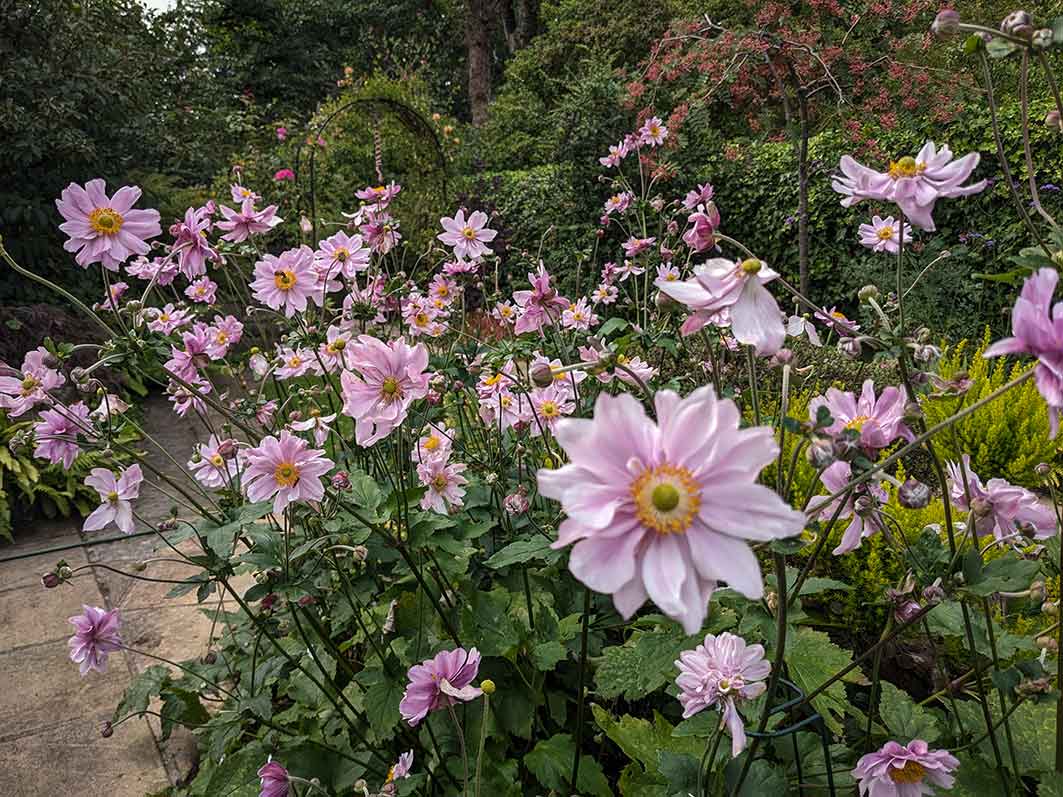
The Japanese anemones Montrose are looking great.  There are white ones on the other side of this bed (Whirlwind) that are slightly smaller than these.

Pink flowers of Japanese anemones 'Montrose'
Japanese anemones ‘Montrose’

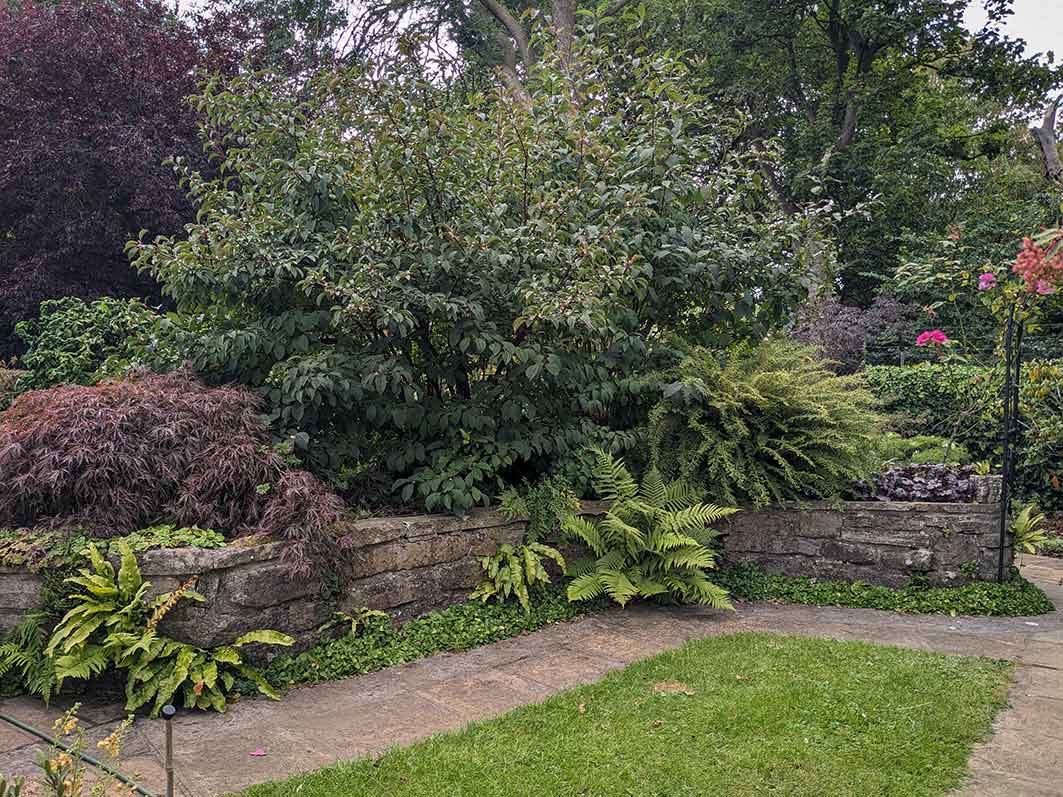
The cool, shady side of the raised bed is mainly different shades of green at this time of year along with the garnet acer.

Different shades of green plants in a raised bed.
Cool shades of green and calming.
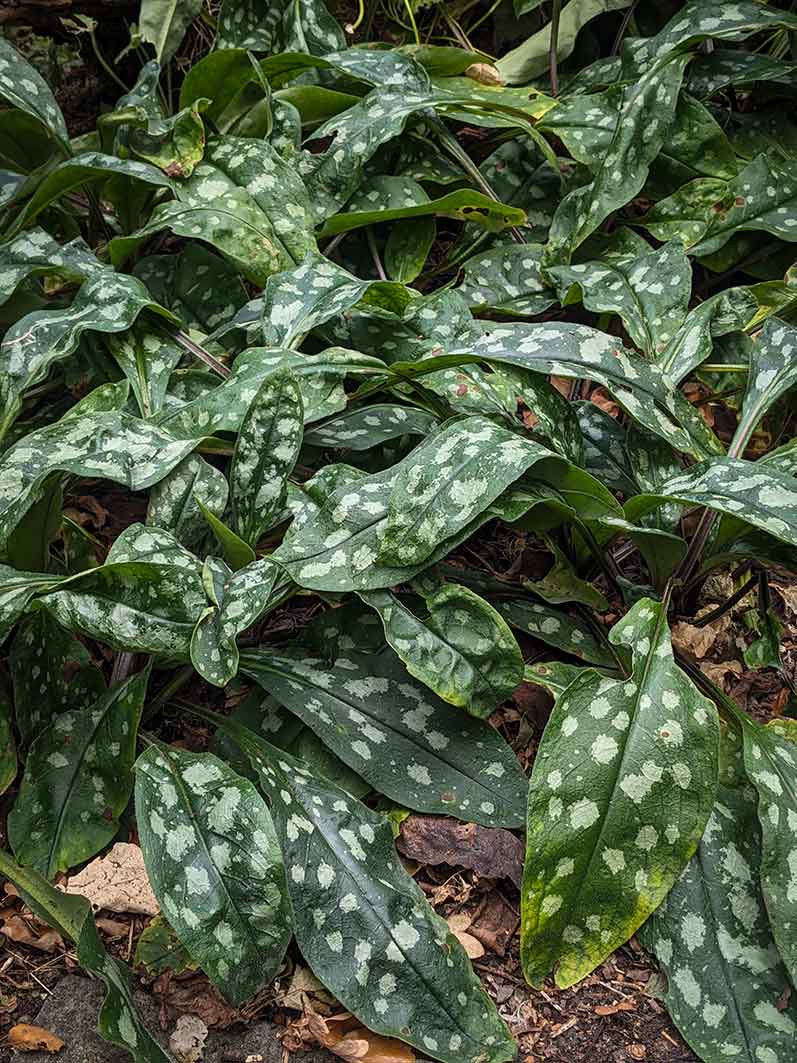
Green leaves with white splotches on them of the plant Pulmonaria.
Pulmonaria ‘Lewis Palmer’ spotty leaves.

In the stumpery the spotty foliage of the Pulmonaria ‘Lewis Palmer’ is still looking good.  That has been over the whole spring and summer and it is just starting to look a bit tired now.

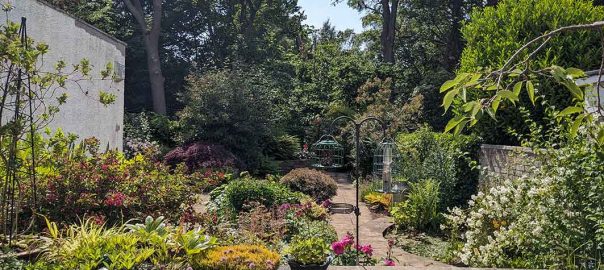
View from the patio of a long garden.
Garden at the end of August 2025

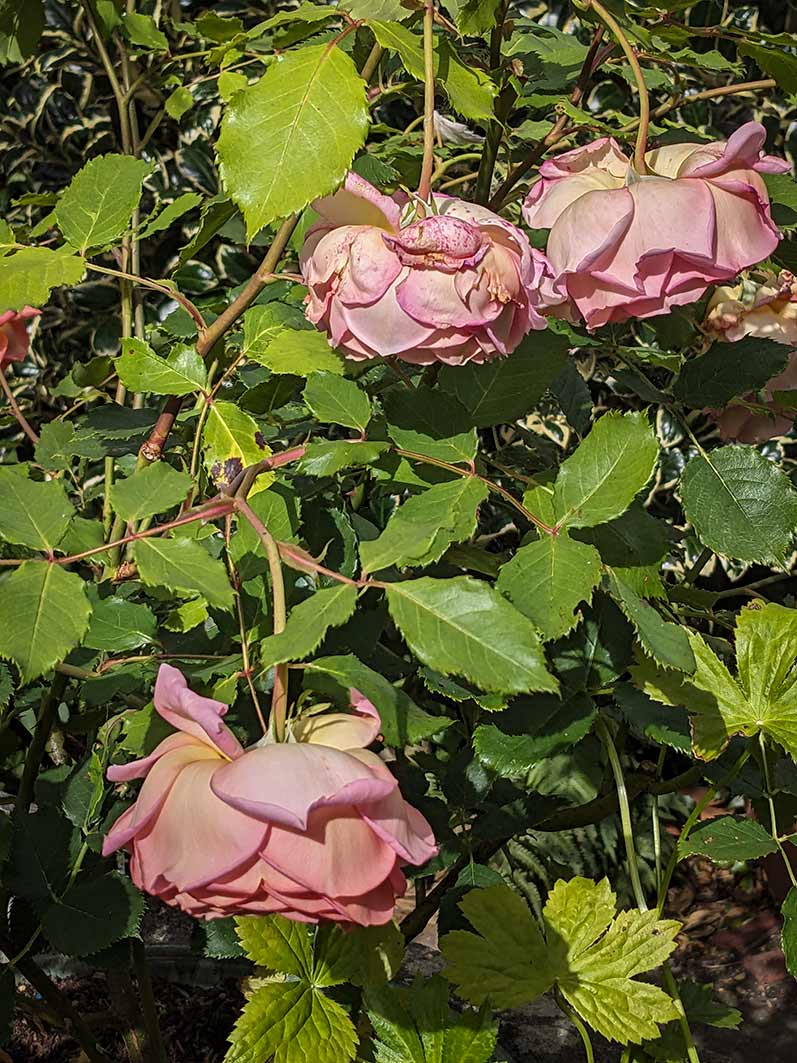
Right now I am moving pots around on the patio so plants that have gone over can have a rest while the ones still in flower can show off.  I am removing any annual plants from the pots to free them up for the bulb planting come September.  It will be mostly narcissi and crocus.  Any plant going to seed I will collect the seeds from just in case they don’t survive the winter.  I can store the plants under the bench that way they shouldn’t get too much rain during the winter.  I am still not sure about the rose ‘Jubilee celebration’  on the patio as it has very  droopy roses on it.  They look great when they first open and are facing upward but then they just droop.  I had put it in a large pot and it is kept well watered so it is just the nature of that rose.

Peachy pink rose 'Jubilee celebration' flowers drooping.
Droopy rose ‘Jubilee celebration’.

On my rounds of watering in the garden I noticed some plants are just not thriving in certain situations.  Our next door neighbours took at a couple of trees which has led to more sunshine on one side of the stumpery but I had planted some things that liked shade so I really must move them to a more suitable place.  The corkscrew hazel is creating an umbrella affect and the plants underneath are not getting enough rain water (it is also using up water as it has longer roots).  The primulas will have to be moved.

Dry area with thirsty primula plants.
Dry thirsty primulas.

I have checked my bulbs and only 2 were duds – they were soft – so the rest are ready to plant once the pots are washed.

view of the garden from the patio with trees in the background.

Scent in the garden mid June 2025

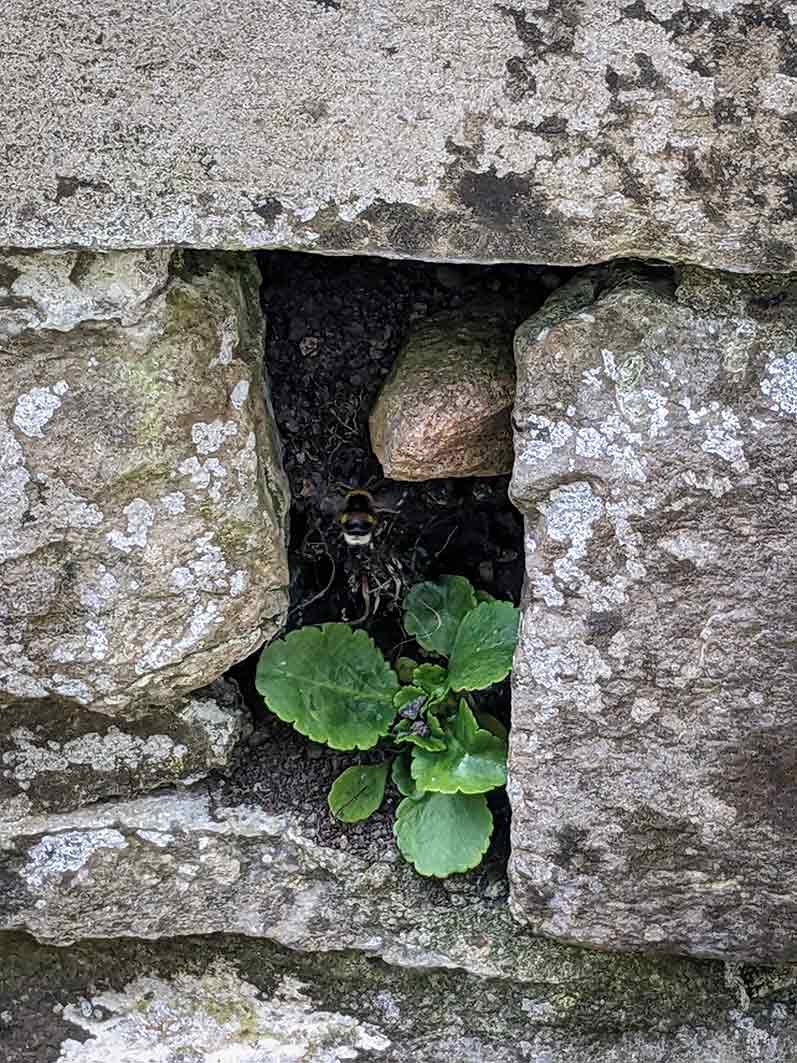
You can smell the scent from almost anywhere in the garden and I am sure it has enticed the bees.  Last month I mentioned that I hadn’t seen that many bees about but I am glad to say there are loads around now!  I do try to have something in flower each month for our pollinators and there are usually flowers in abundance in June for them.  They are all over the lavender, deutzia, elder, philadelphus, weigelia, primroses, honeysuckle, syringia, hardy geraniums, erigeron, foxgloves, astrantias,  geums and some of the roses.     In fact I was watching bees going in and out from one of the holes in the raised bed wall.

a bee flying into a hole in a wall
Bee flying into the hole in the wall.

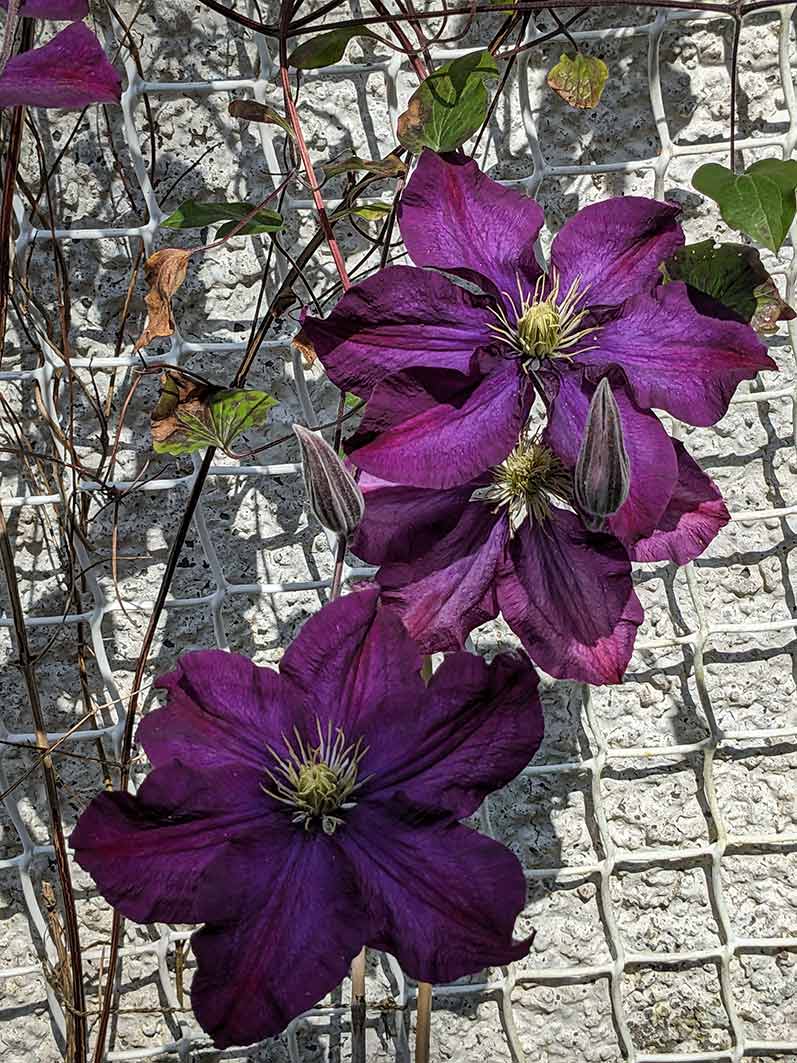
Clematis Montana is over but the large purple flowered warszawski Nike  is still in flower.

large purple clematis flowers
Clematis warszawski Nike
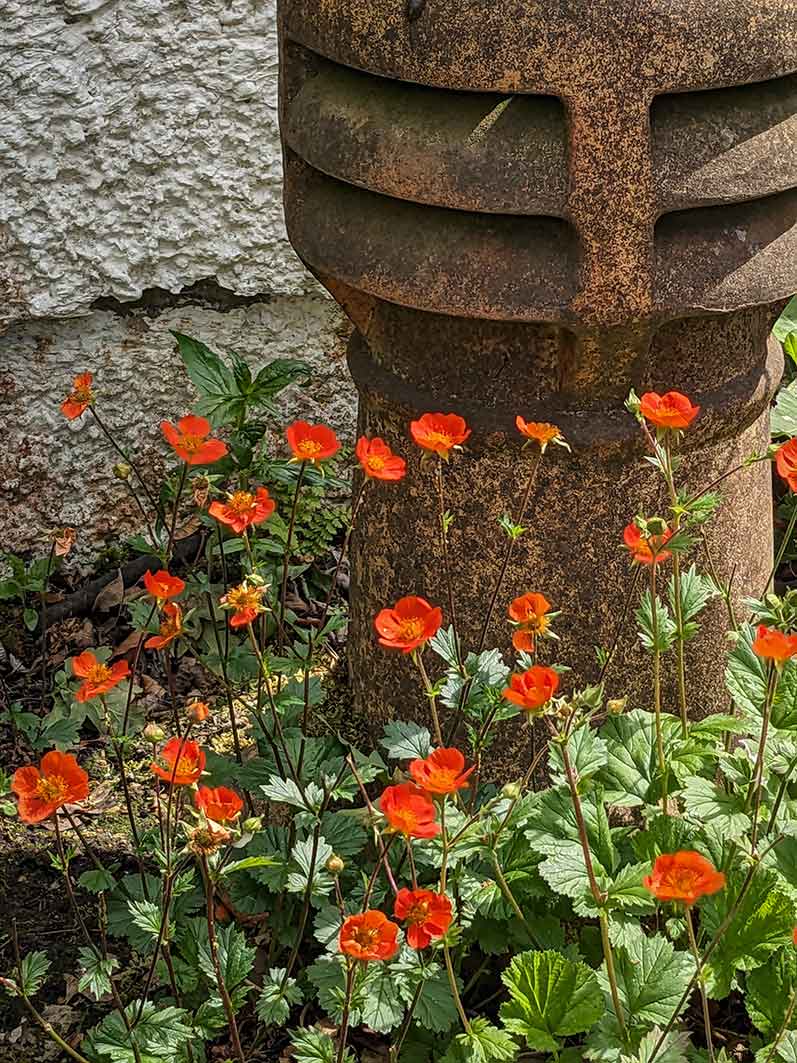
small orange flowers of a geum against a terracotta chimney pot.
Geums next to chimney pot.

The periwinkle, veronica  and syringia have just gone over as have the aquilegia and some of the primroses so I am in the process of cutting those back.

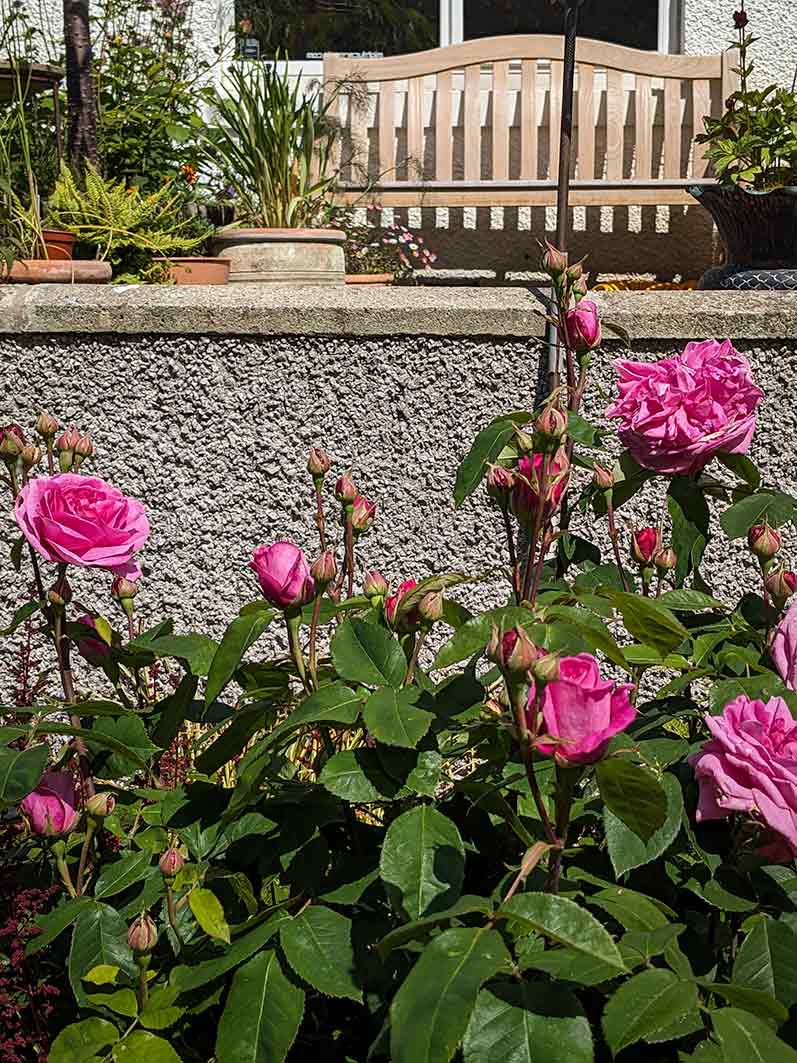
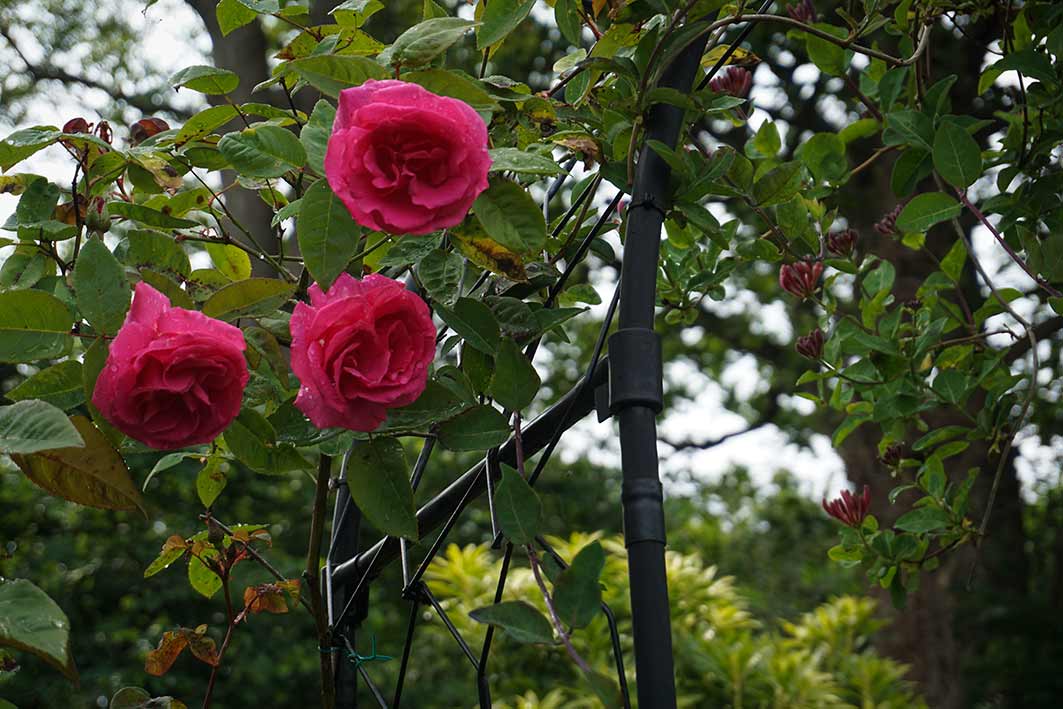
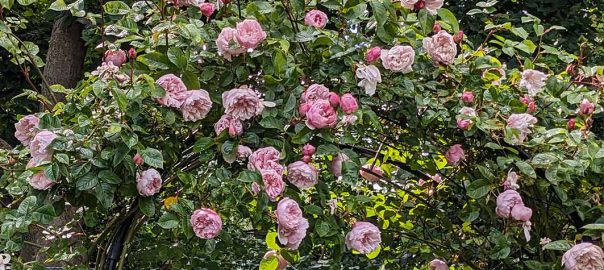
The ‘Generous gardener’ rose over the back arch is looking great especially beside the pink flowers and dark purple leaves of the elder.  ‘Zepharine drouhin ‘is still hanging on over the side arch – I keep saying I will just get rid of it as it has been pruned badly in the past and doesn’t look great.  ‘Gertrude Jekyll’ is looking very healthy and covered in blooms and buds as is the little pink rambling rose growing up an old post, and rose ‘Jubilee celebration’ is looking great too in the large pot.  The moss roses, ‘William Lobb’, have lots of buds on yet to open as well as ‘Munstead wood.’  They get a bit more shade than the others.

pink rose Gertrude Jekyll against a wall with patio above.
Gertrude Jekyll rose.
Dark pink rose Zephrine drouhin on an arch
Zephrine drouhin still hanging on.
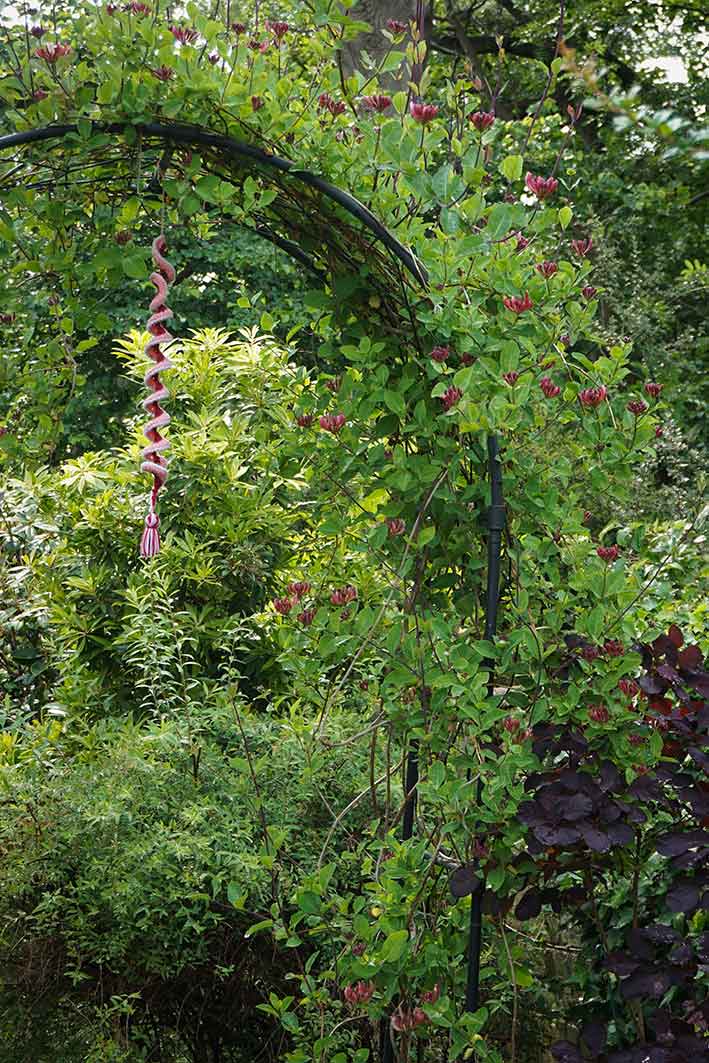
Honeysuckle flower buds about to open over an arch.
Honeysuckle on the arch.
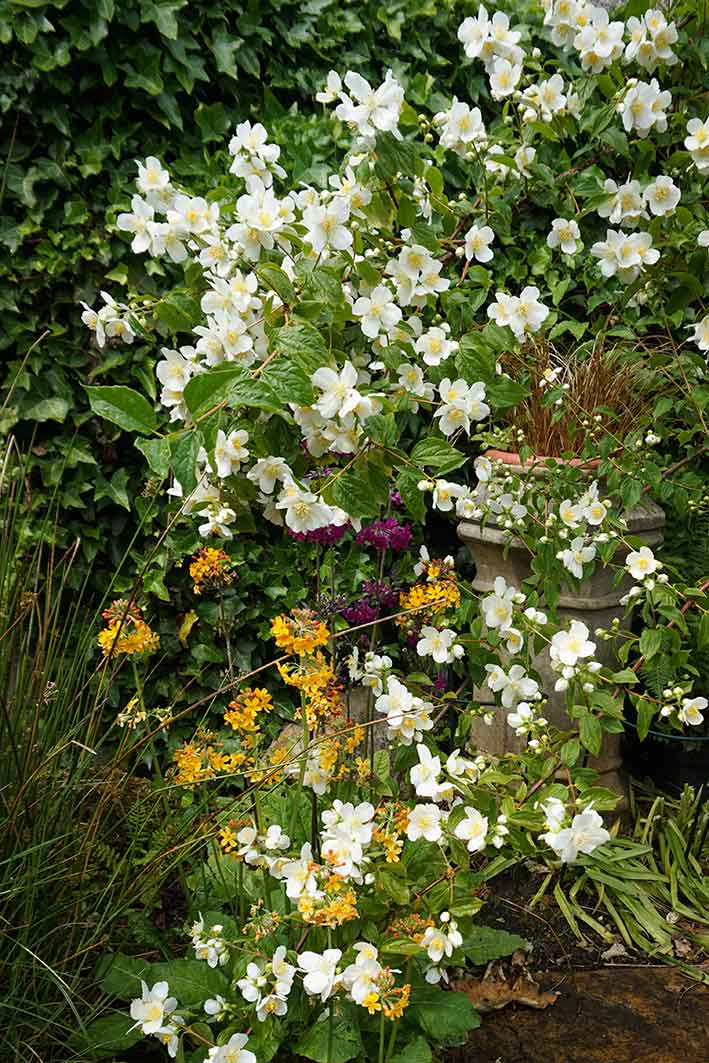
Pink and orange primula flowers next tp white philadelphus flowers
Primula and philadelphus.

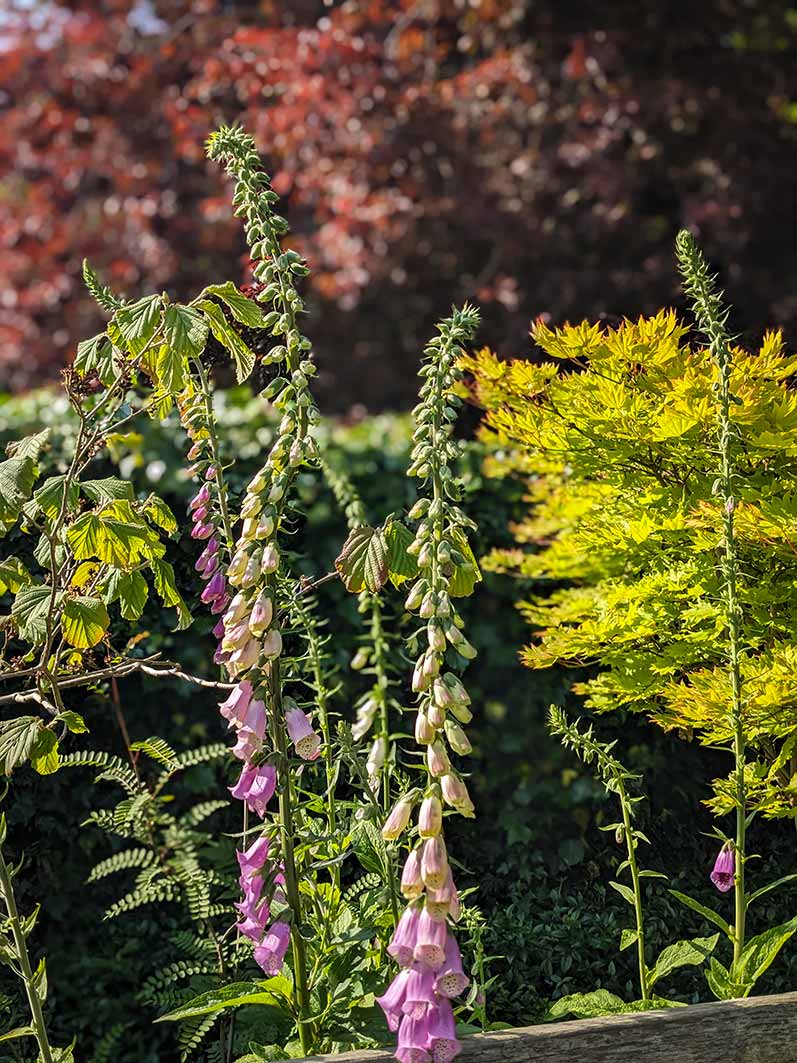
I love foxgloves in the garden and I have planted out some ‘Sutton’s apricot’ this year.  I know they will be rather promiscuous with the others I have but that is ok.  Just now I have a couple that have pale pink flowers at the bottom that look very pale yellow in bud.

Pretty pink and pale yellow foxgloves against trees.
Foxgloves with pale pink flowers and pale yellow buds.

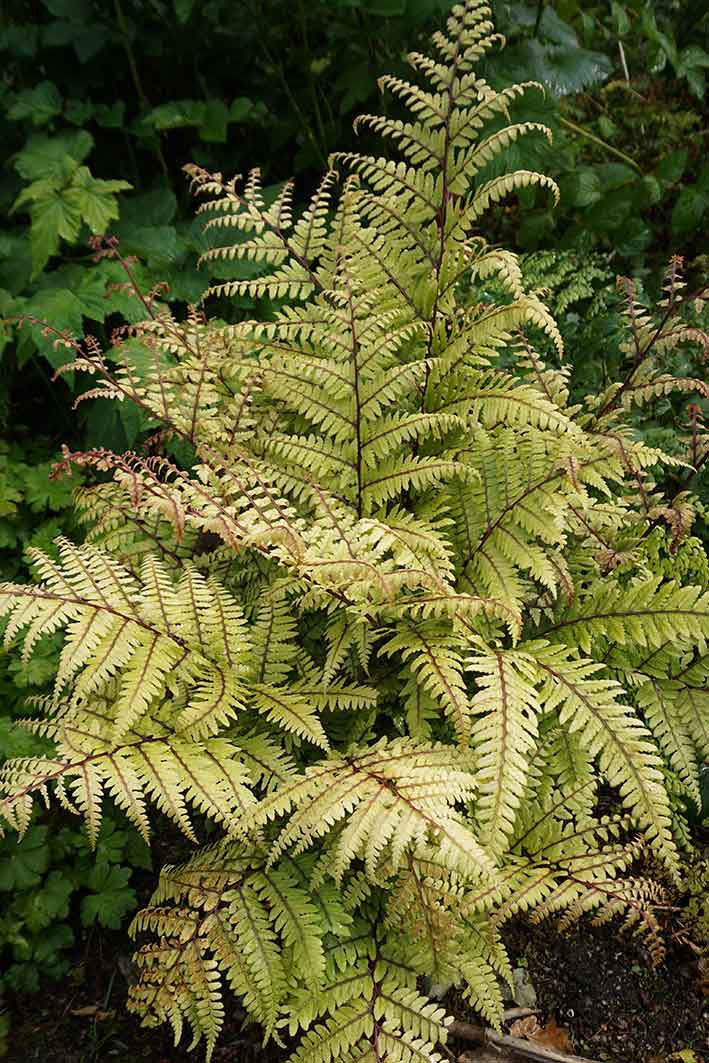
The ferns have all got going by now and are looking as fab as ever.  I have been trying to get rid of the Arisarum proboscoideum (mouse plant) in the raised bed as it is getting rather rampant and despite being sprayed half a dozen times it is still managing to grow?  It has escaped the raised bed and has got into the border and now it has popped up in amongst a geranium.

yellow green fern fronds with purple stems.
Athyrium otophorum okanum fern.
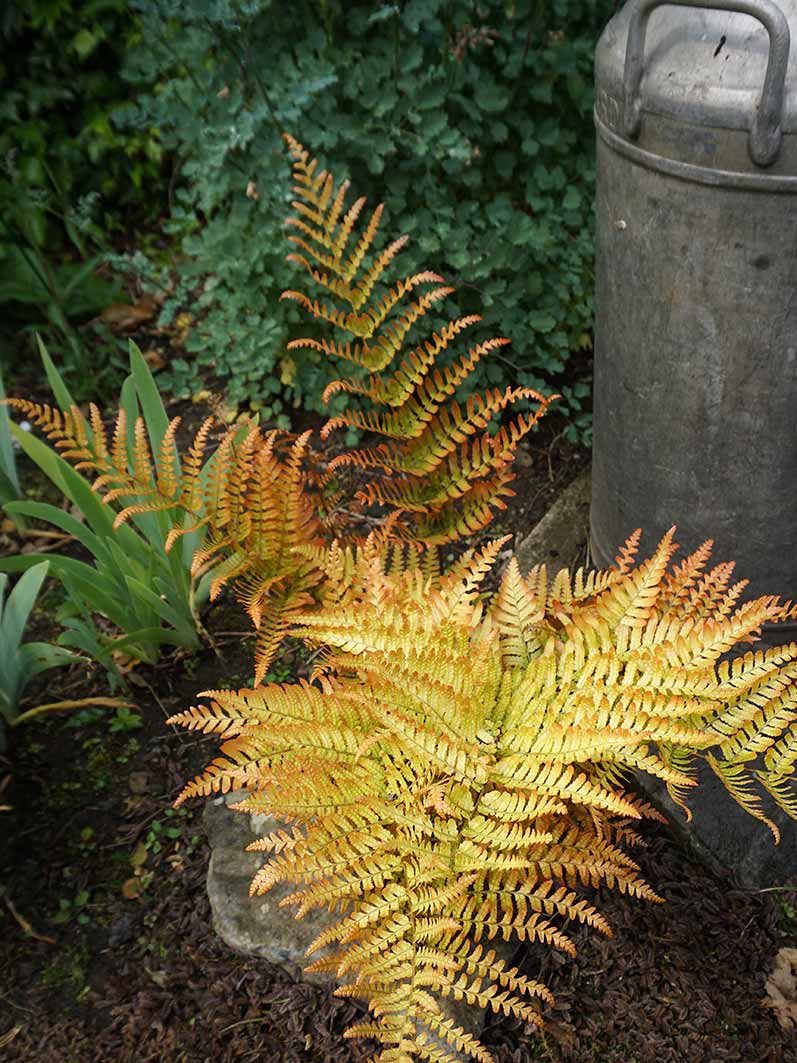
Dryopteris erythrosa orangey yellow fronds of fern.
Rosy Buckler fern.
Bright green fronds of polystichum fern against pink flowers of duetzia.
Polystichum setiferum plumosa and deutzia.

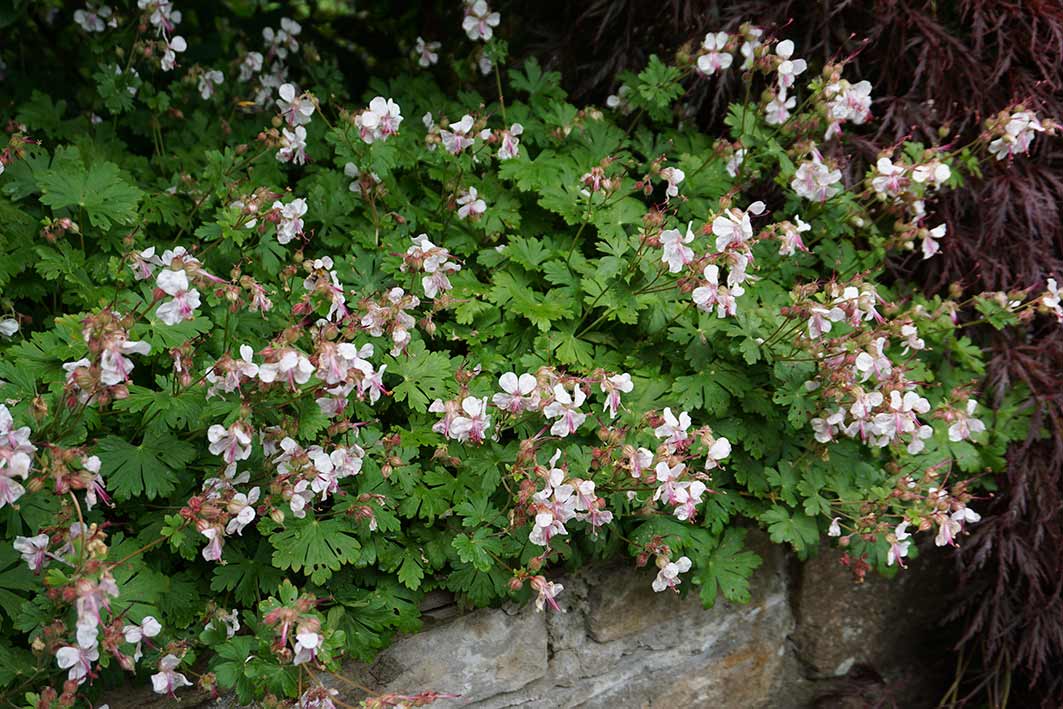
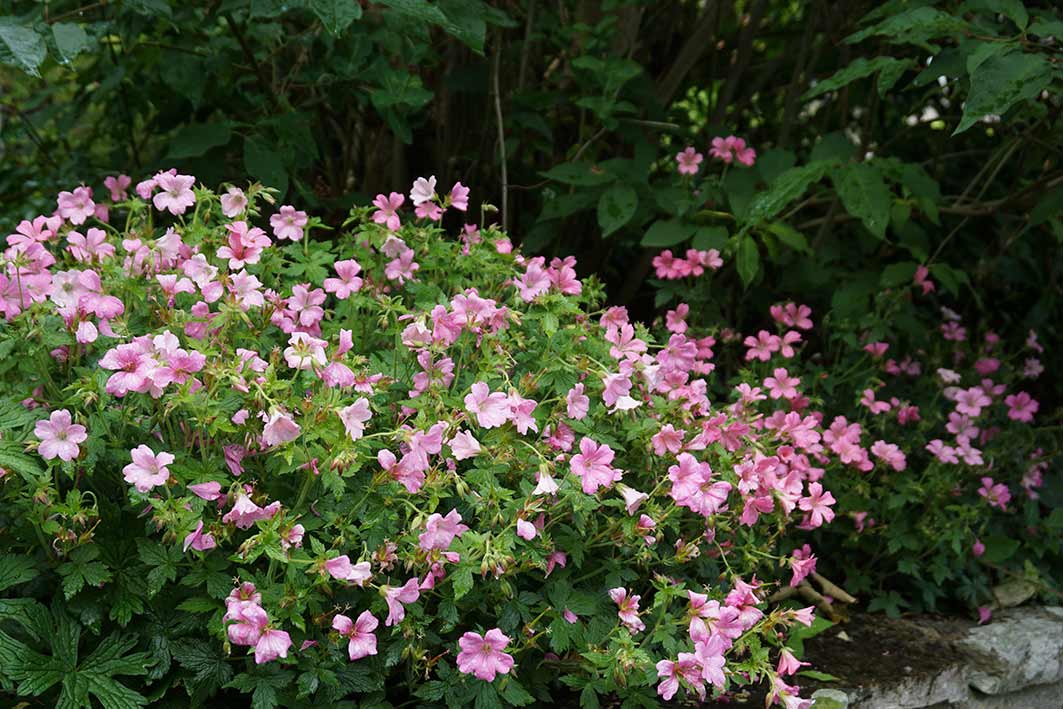
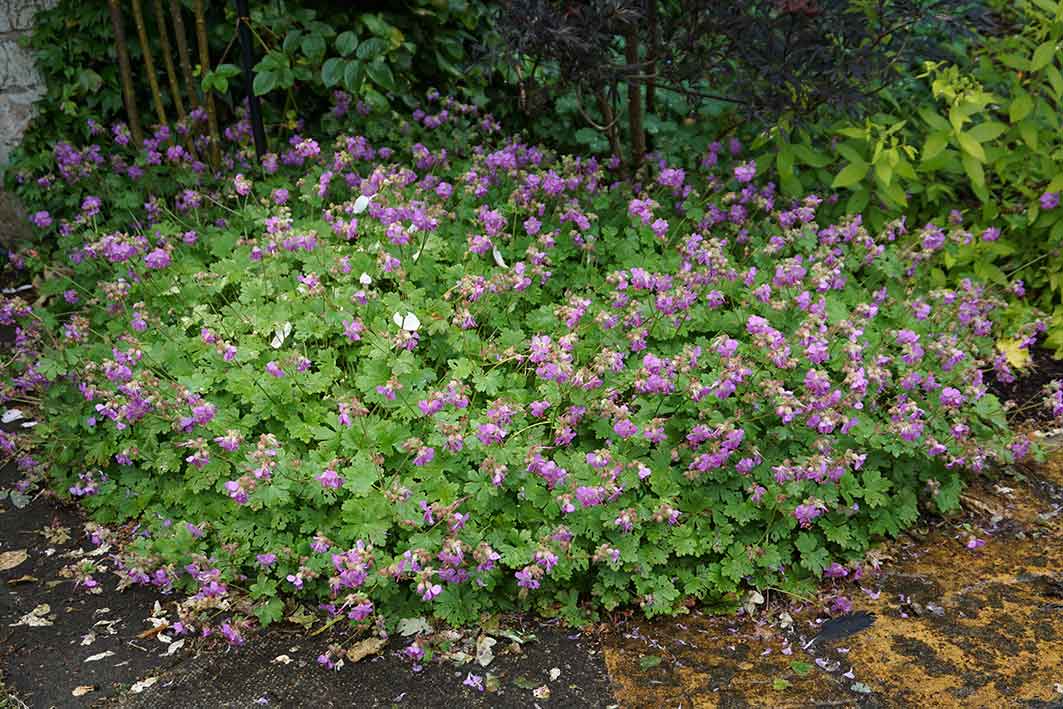
I love hardy geraniums as they can cope with almost anything and I have quite a few different varieties:’ Rozanne’, cantabrigiense ‘St Ola’, ‘Birch double’ (lilac),  cantabrigiense ‘Biokovo’, Himalayense  blue , ‘Wargrave pink’,  macrorrhizum ‘Bevan’s variety’, pratense ‘Midnight Reiter’, Geranium x riversleaianum ‘Mavis Simpson’, and my newest addition is ‘Vision’ light pink (after seeing it on Gardeners world).  Some of these have other names but that just confuses everything. Here are a few of them.

very pale pink/white flowers of hardy geranium Biokovo.
Geranium cantabrigiense Biokovo.
Pink flowers on geranium wargrave pink
Hardy geranium wargrave pink.
small pink flowers on geranium maccrorrhizum Bevan's variety.
Geranium maccrorhizum Bevan’s variety.
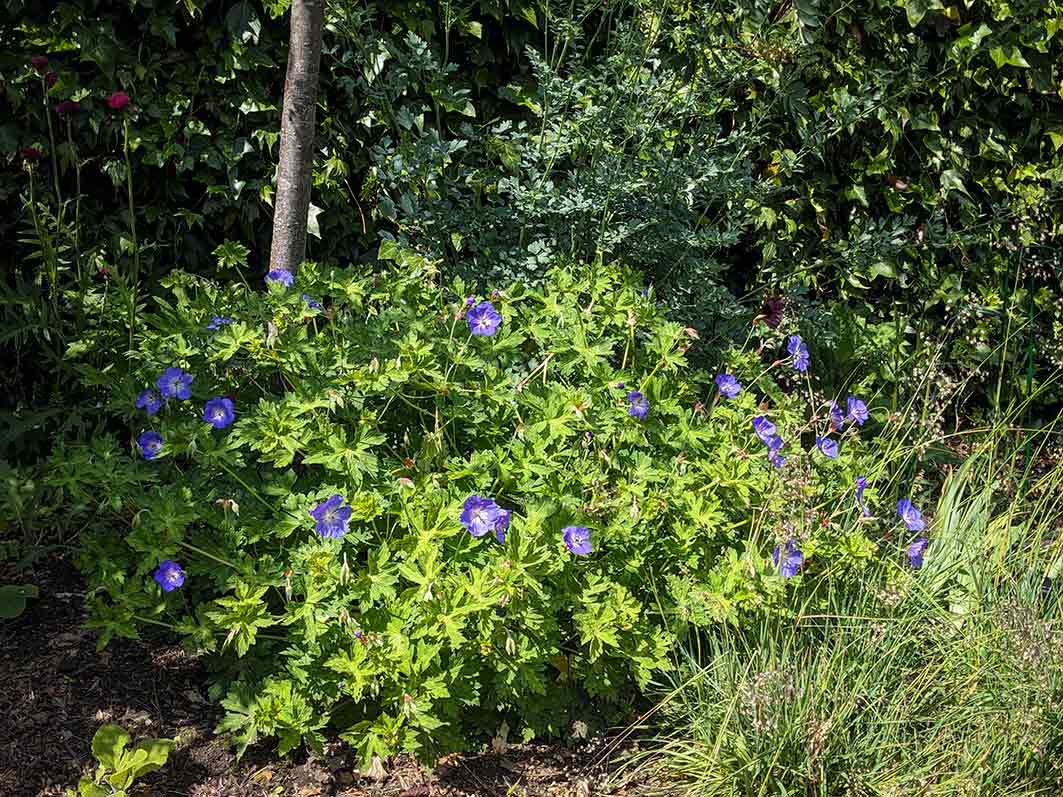
blue flowers on large geranium Rozanne.
Geranium Rozanne.
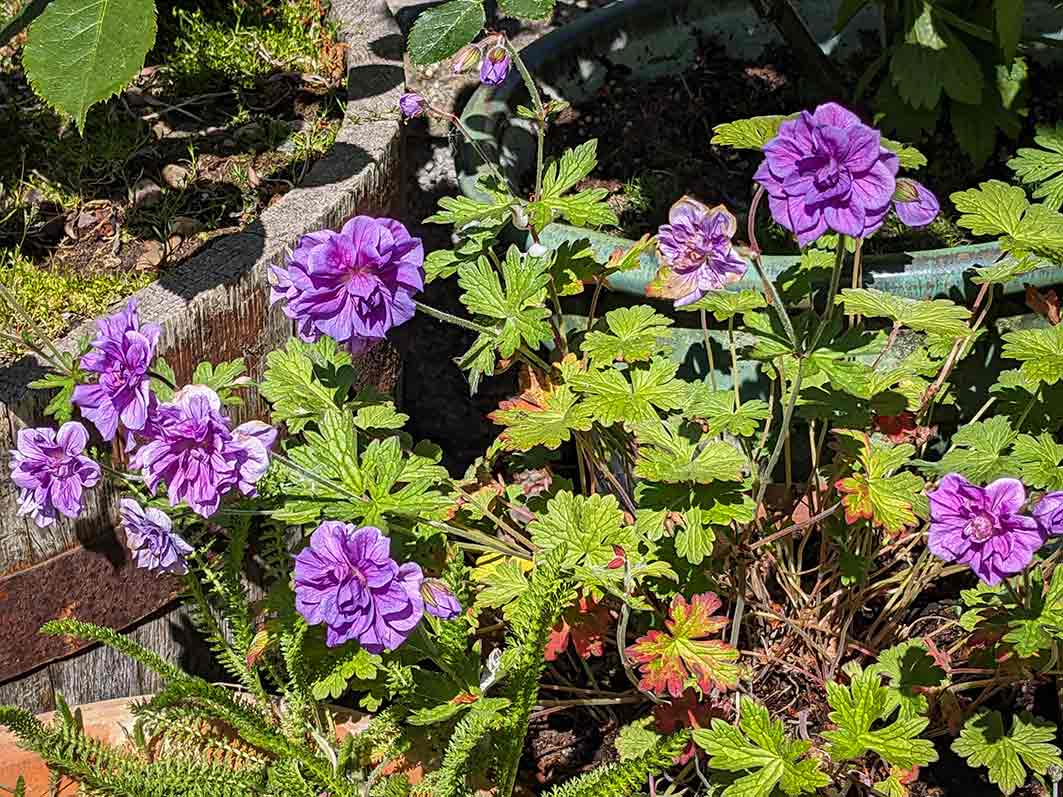
Double lilac flowers on geranium himalayense Birch's double.
Geranium himalayense Birch’s double.

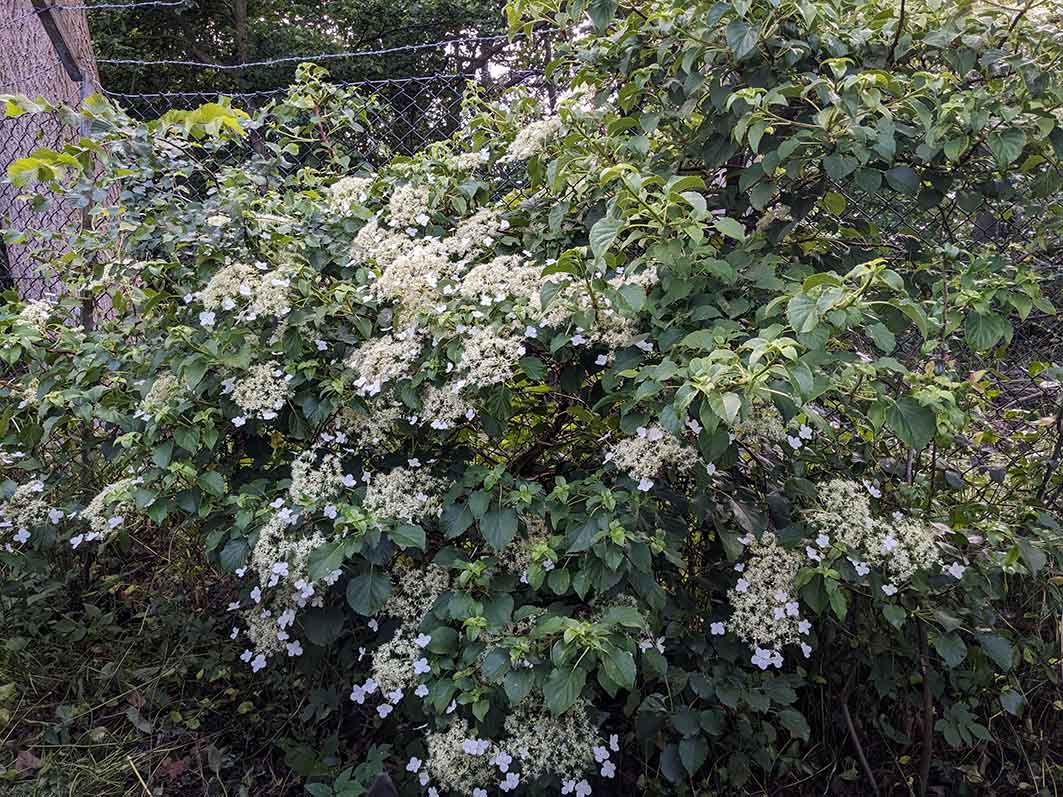
Years ago I planted a hydrangea petiolaris beyond the wall at the end on the garden, against the wire fence.  It gets very little in the way of maintenance and it has suddenly decided it likes it there and is thriving.  I am hoping to train it all the way along the fence eventually.  It might keep some of the weed seeds from the golf course out.

White flowers on climbing hydrangea petiolaris
Hydrangea petiolaris beyond the back wall.

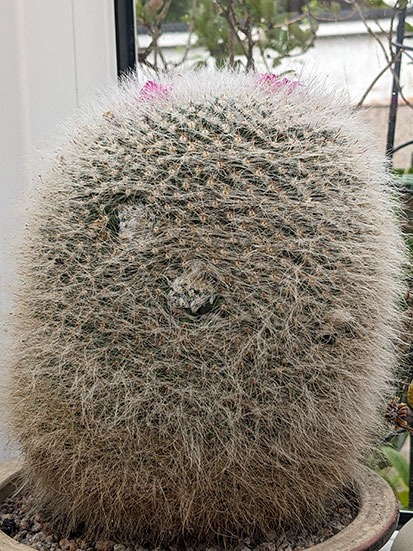
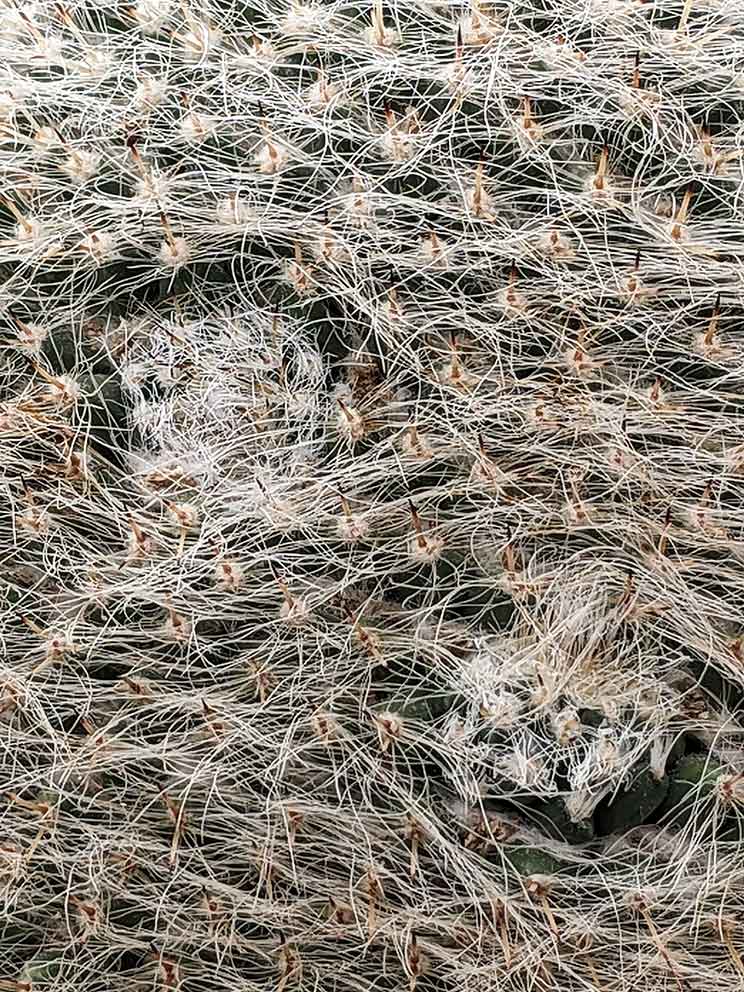
In the conservatory I noticed a few weird looking areas on my old lady cactus.  It may be about to produce pups – why now – I have had it for many years and I don’t think I have changed anything in its care routine?

Strange marks on old lady cactus look like whorls.
Strange whorls on old lady cactus – possibly pupping?
close-up photo of strange whorls on old lady cactus.
Close-up of whorls.

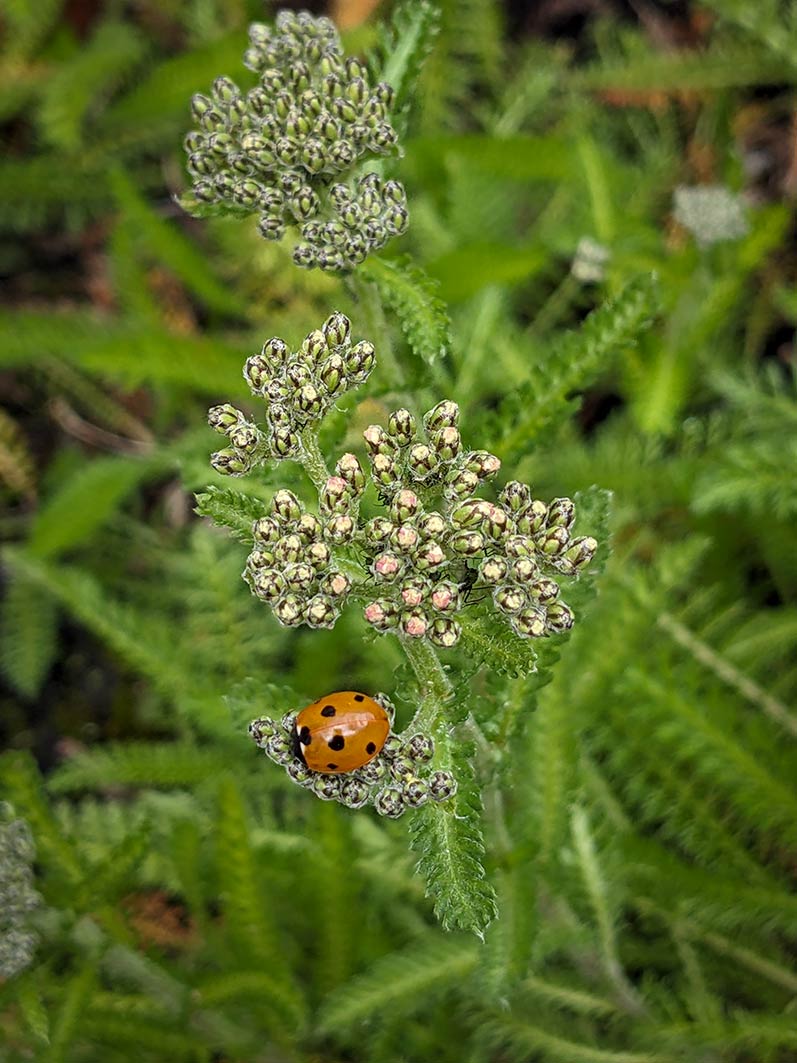
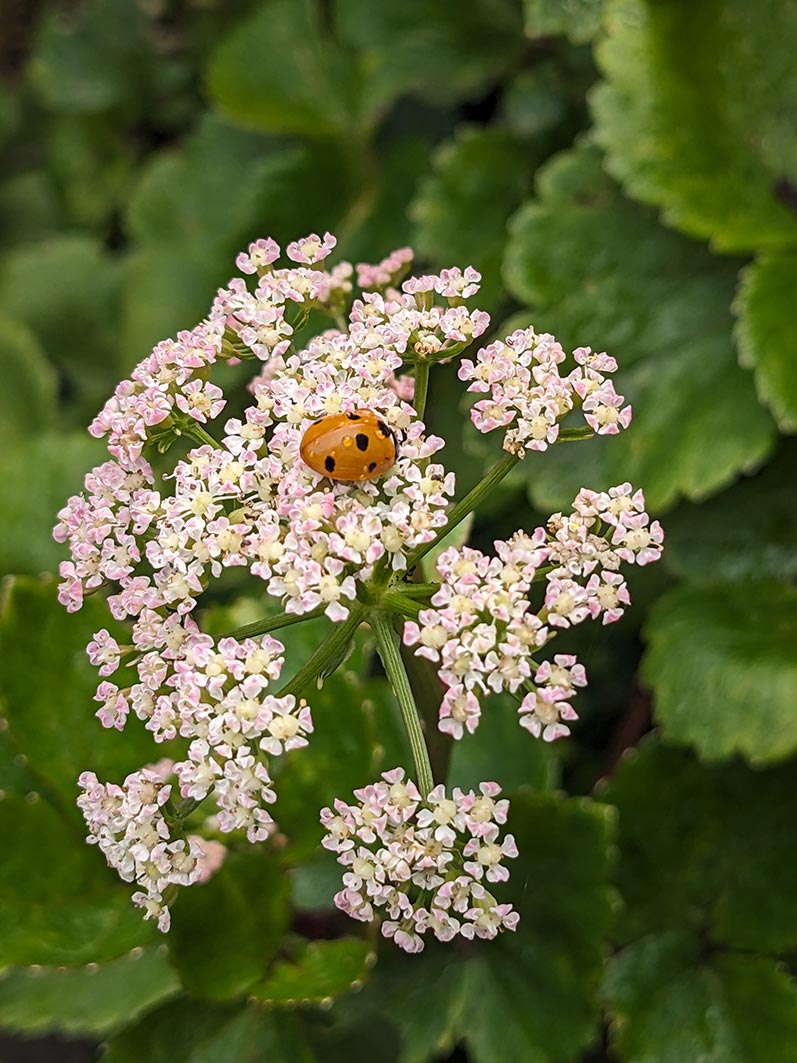
A couple of ladybirds and a butterfly from today.

Orange ladybird with black spots on an achillea plant.
Ladybird on achillea.
Orange ladybird with black spots on a pale pink flower.
Ladybird on ligusticum scoticum.
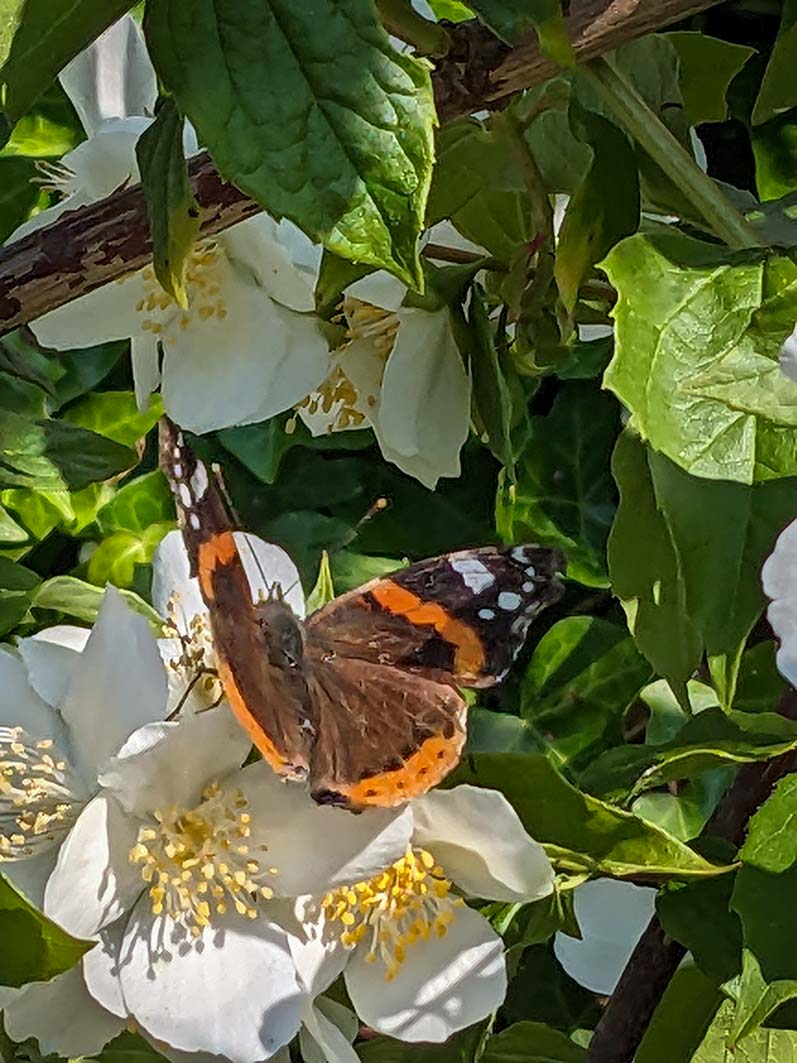
Red admiral butterfly on white flower of philadelphus.
Red admiral on philadelphus.

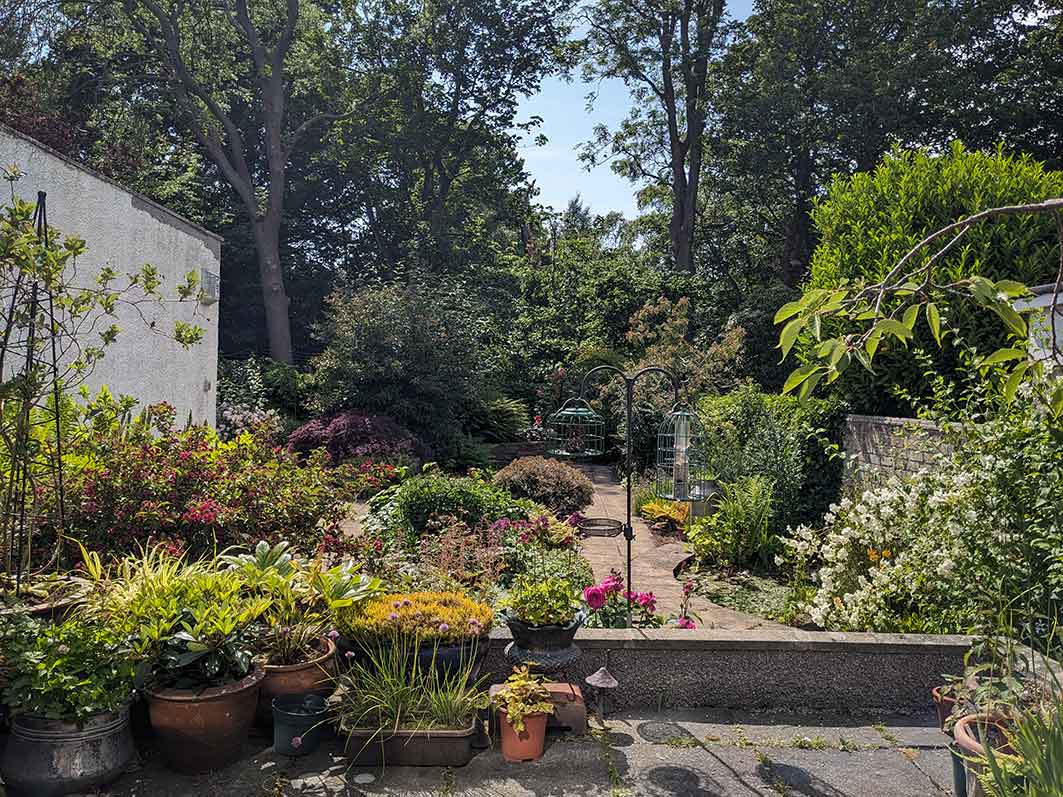
Right now it is sunny, muggy and windy but tomorrow is meant to be very different indeed.  Rain, thunder and lightning are predicted so I have moved a few more vulnerable plants under the table just in case.

view of the garden from the patio with trees in the background.
View of the garden from the patio.
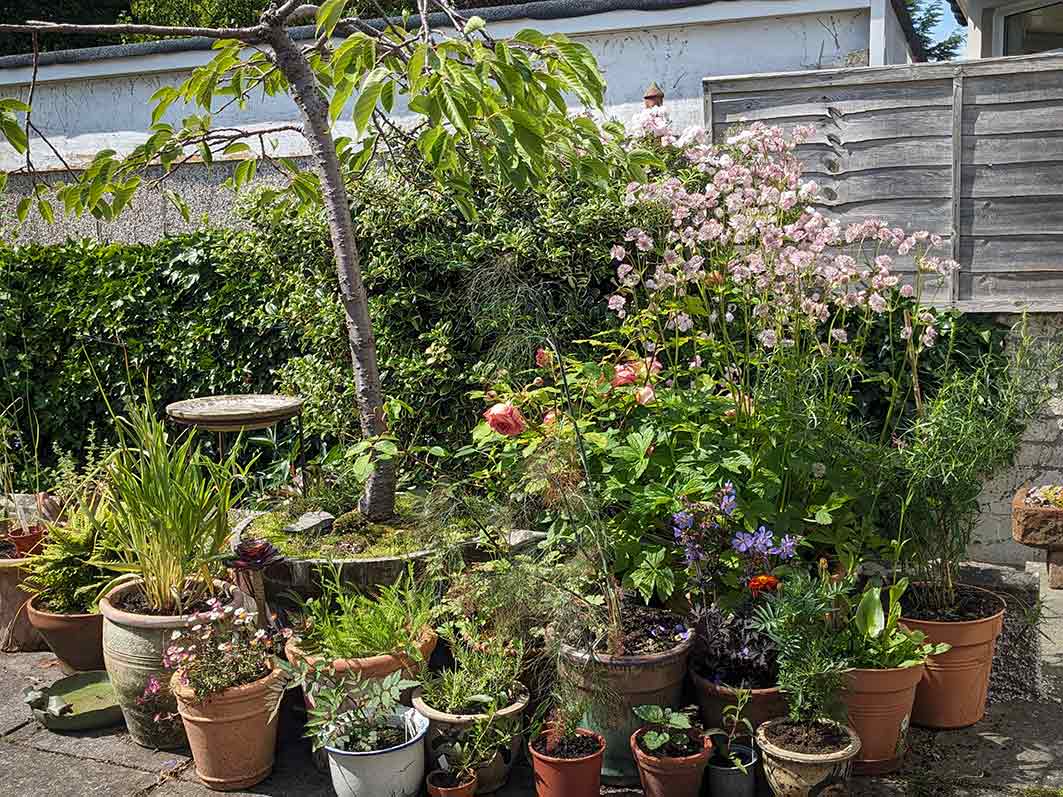
Collection of potted plants on the right side of the patio.
Right side of patio.
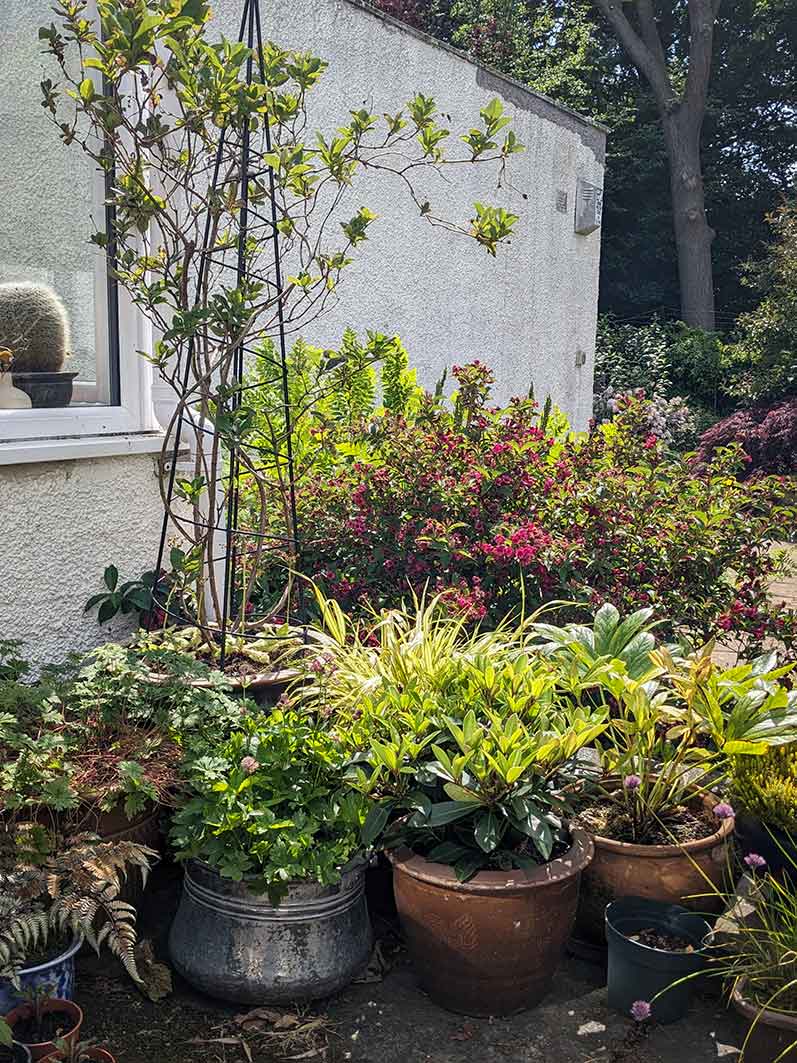
Left corner of patio with a small collection of potted plants.
Left corner of patio.
Crocuses indoors in pots on a table.

Mid March waiting for spring proper.

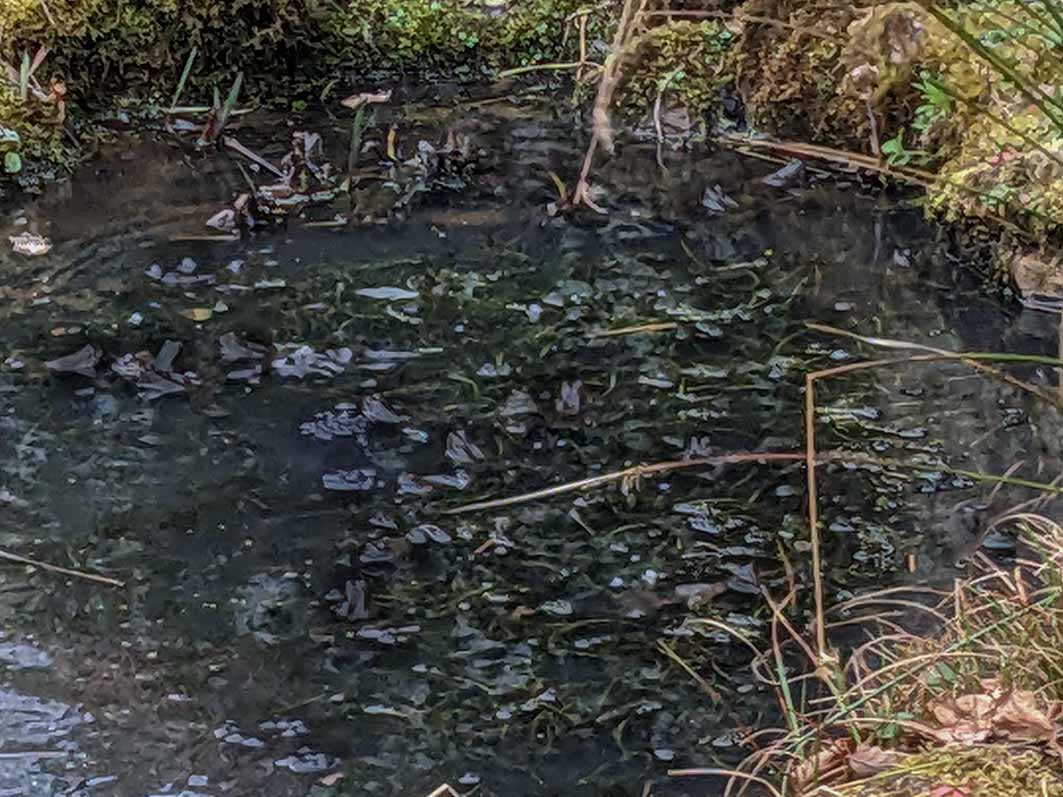
It is still very chilly out there with threats of frost.  We did have a couple of lovely mild, sunny days and it was so good to get back out in the garden.  We  chopped the pond lily in half as it was taking over the pond and we dug out half of the rush too as it was getting too big.  Just in time too as the frogs started to arrive – this year 8/3/25  I have been keeping a not over the last few years of when the first spawn appears in the pond:

22/3/18

27/2/19

05/2/20

15/3/21

18/3/22

13/3/23

19/3/24

08/3/25

The photo isn’t great but I counted about 20 frogs and can see about 8 or 9 dollops of frogspawn so am happy with that.  I haven’t spotted any newts this year yet.

frogs collecting in a small garden pond
Frogs in March

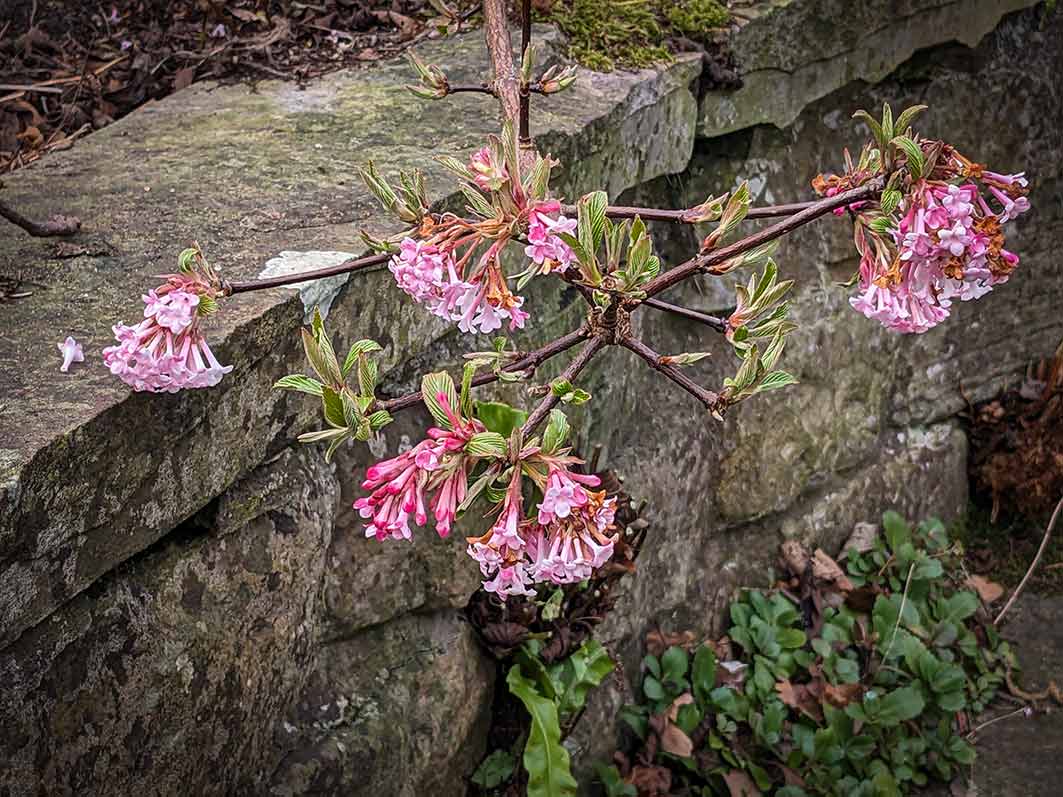
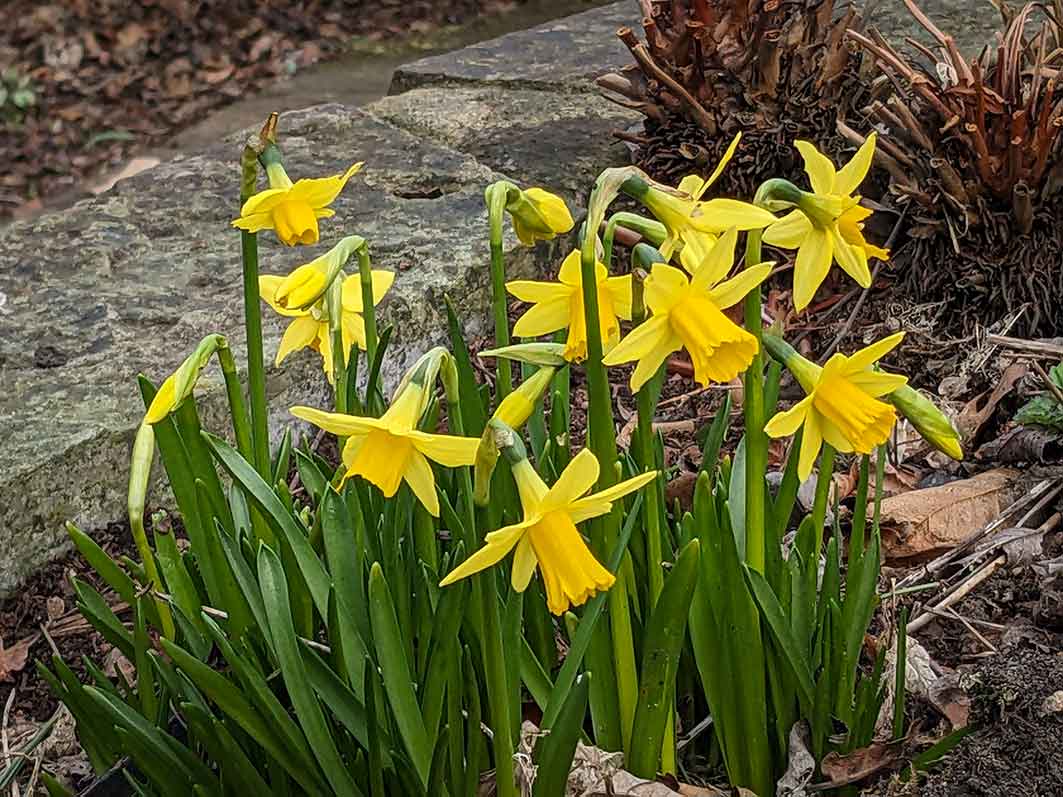
There are a few splashes of colour now mainly with the hellebores, some narcissi, crocuses and viburnum.  There are a few low branches of the viburnum with lovely scented flowers that are within my reach so I can really get a nice whiff going past. There are big yellow daffodils out the front but tiny yellow narcissi out the back.  The tiny ones are the Tete-a-tetes and the clump in the raised bed are doing well, whereas the clump just a metre or so away in the border has had the flower heads eaten.

Low branch of pink viburnum flowers over a wall.
Viburnum flowers on low branch.
small narcissi Tete-a-tete in a raised bed
Tete-a-tete in the raised bed.
small narcissi Tete-a-tete flower heads eaten.
Tete-a-tete flower heads eaten.

I am blaming the wood pigeons but it may actually be mice or slugs too.

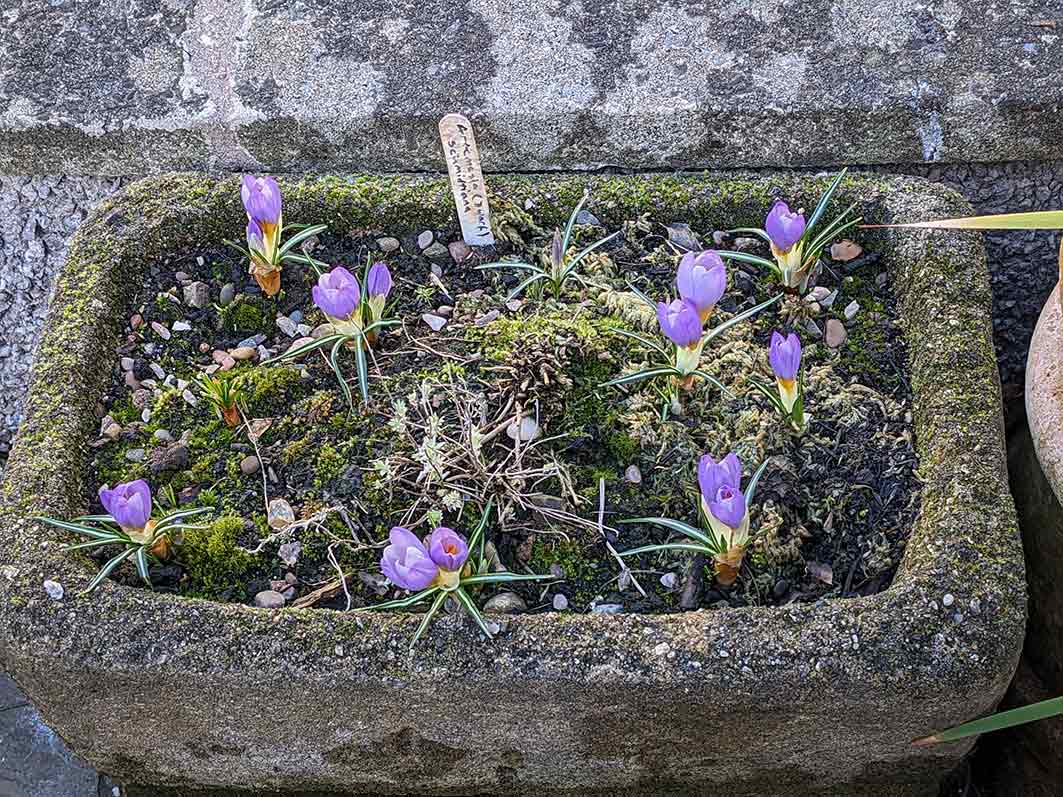
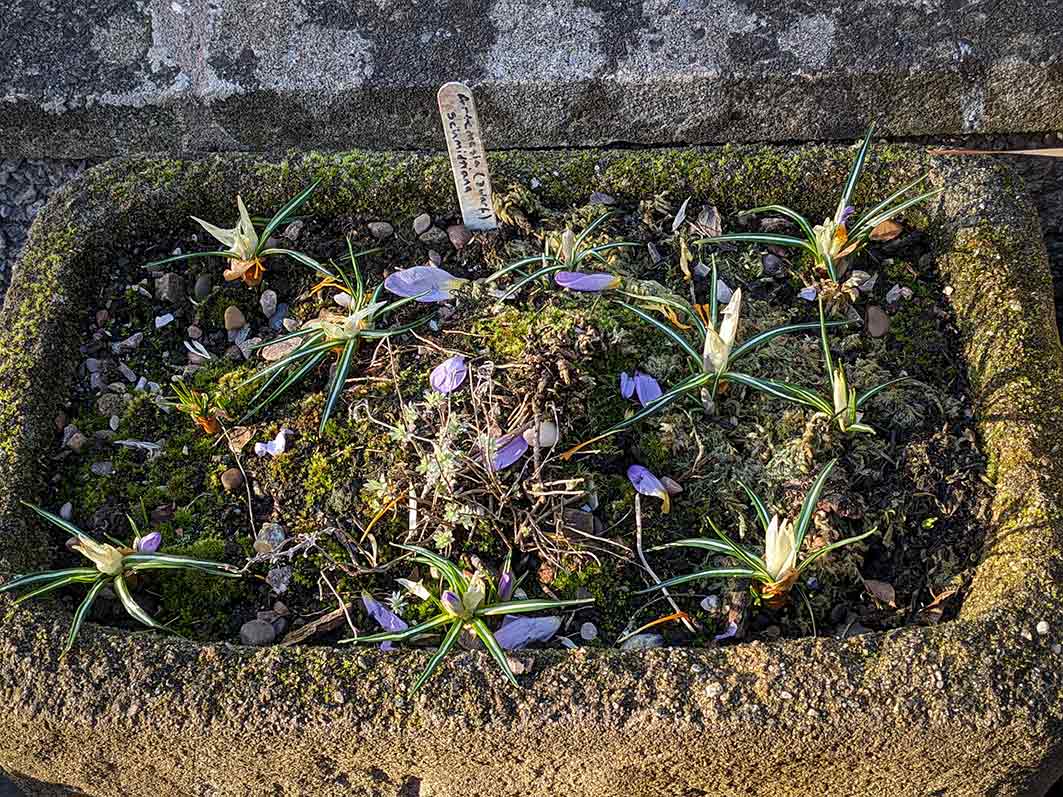
The same goes for some of the crocuses flower heads  The ones in the garden are doing well, but the ones planted int the small trough on the patio have been eaten.

Crocus bulbs just about to flower in a small trough.
Crocus just about to flower in the small trough.
Crocus flower heads eaten.
Crocus flower heads eaten in the small trough.

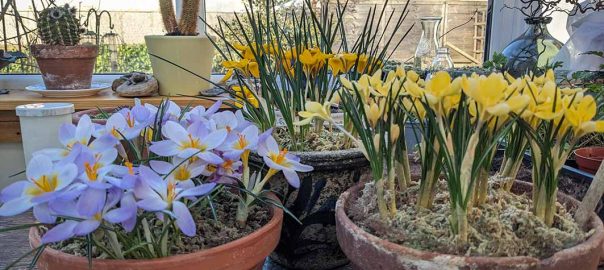
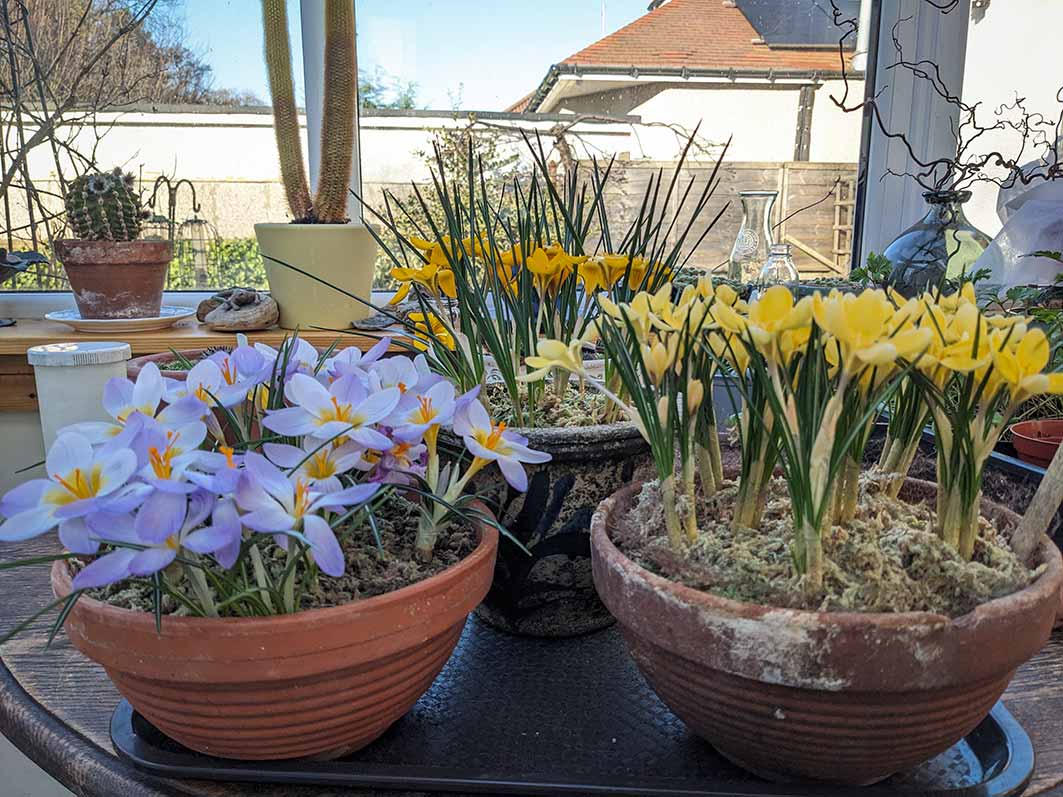
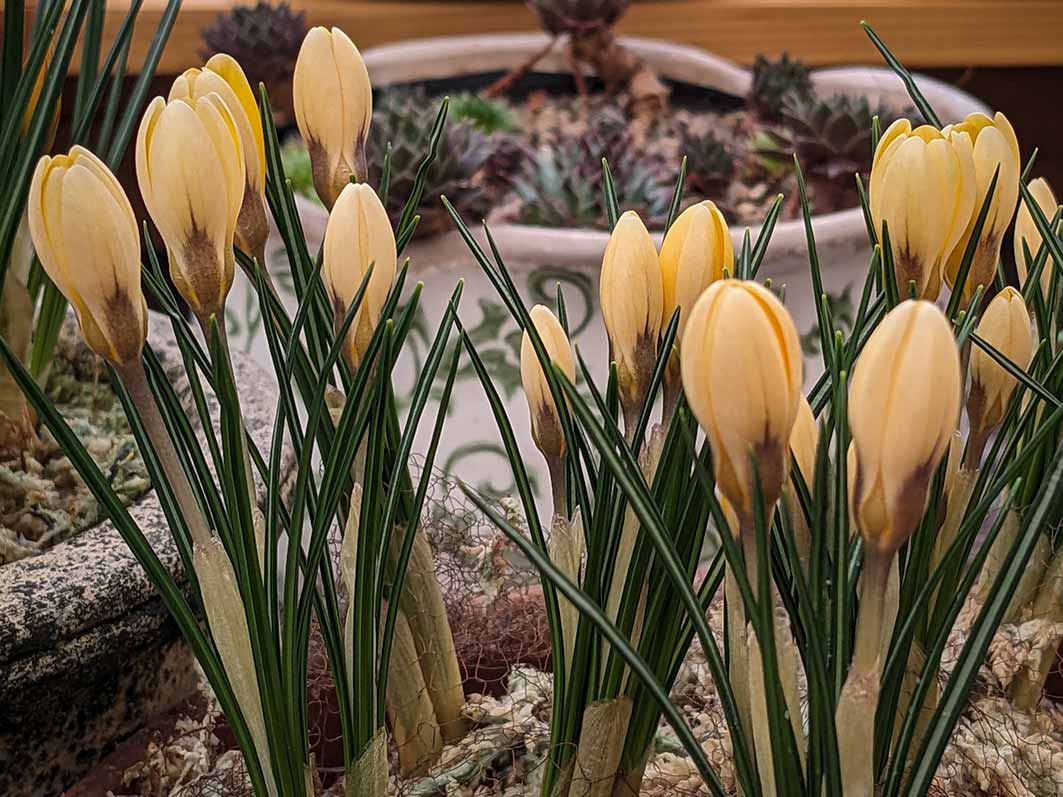
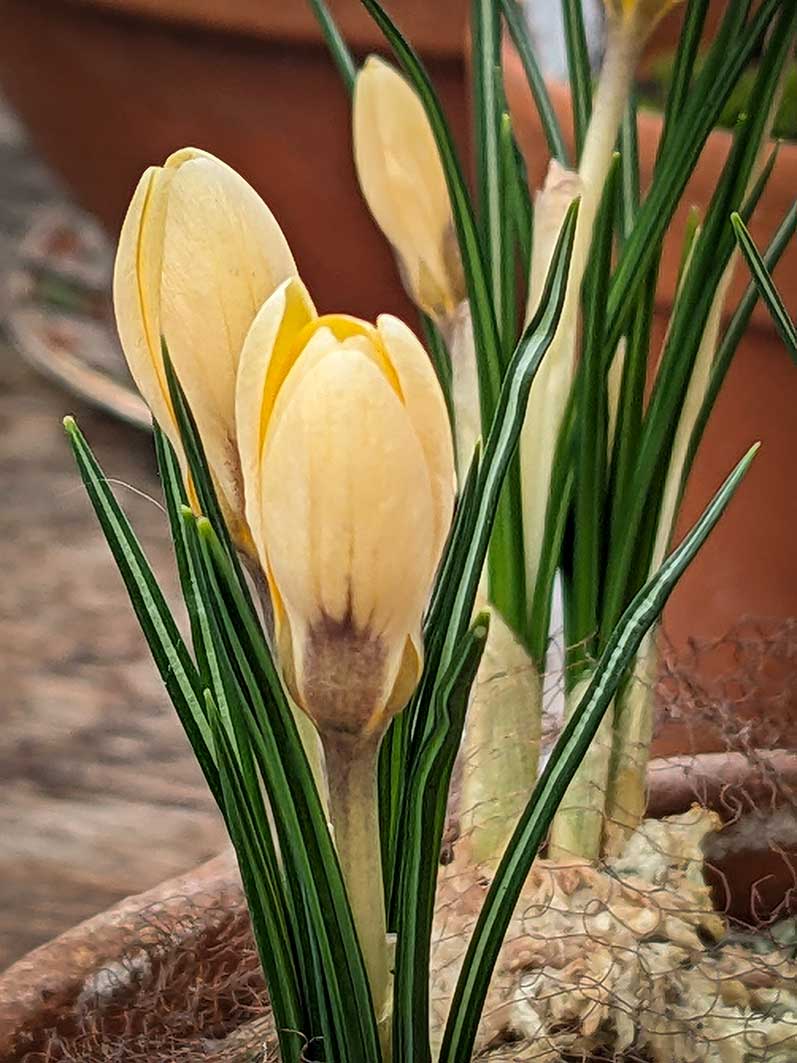
At least the crocus indoors came up without being eaten by anything giving some colour indoors.  I did order some ‘Gypsy girl’ and was given ‘Cream beauty’ instead which was rather annoying but they are pretty.

Crocuses indoors in pots on a table.
Crocuses in the conservatory.
Pale yellow crocus Cream beauty in a pot.
Crocus Cream beauty.
Pale yellow crocus Cream beauty.
Crocus Cream beauty – very nice but just not as nice as Gypsy girl.

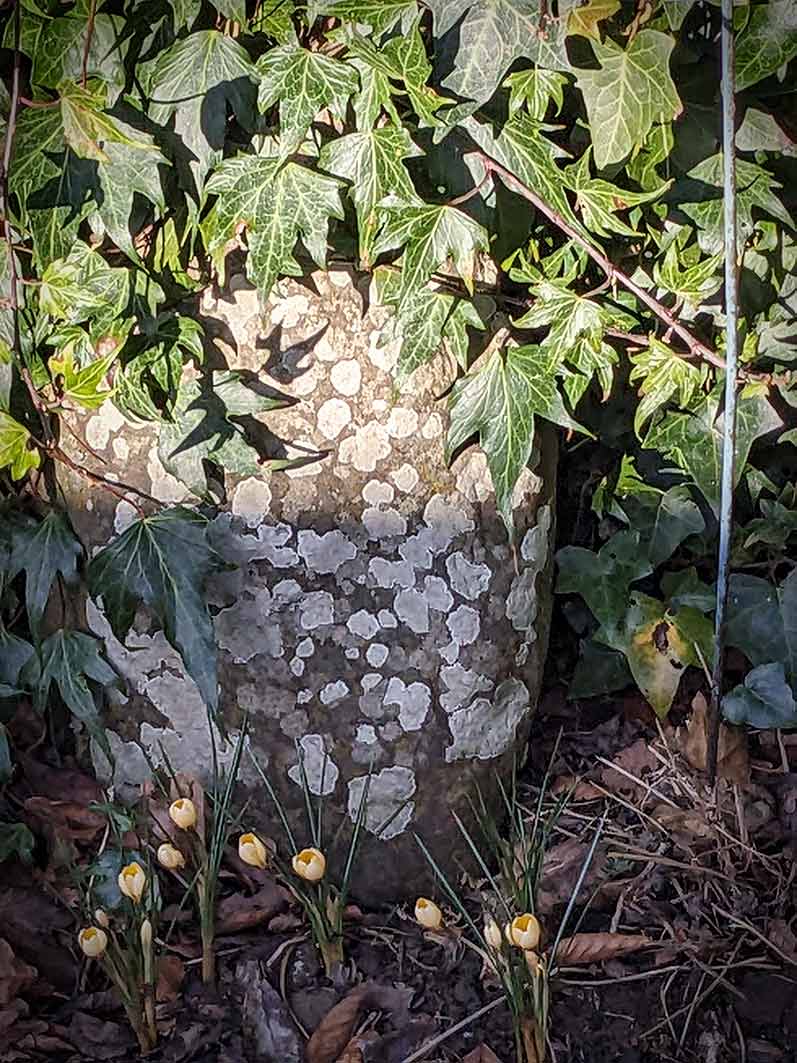
I had also planted some in the garden in front of my favourite stone which is covered in blotchy lichen.

Crocus Cream beauty in front of a tall stone covered in pale grey lichen.
Crocus Cream beauty in front of lichen covered stone.

Although the sun is out just now it is still bitterly cold so spring proper will be a few more weeks yet so still in my thermals for the time being.


Golden acer leaves up close showing the red veins and tips.

Autumn colours early October 2024

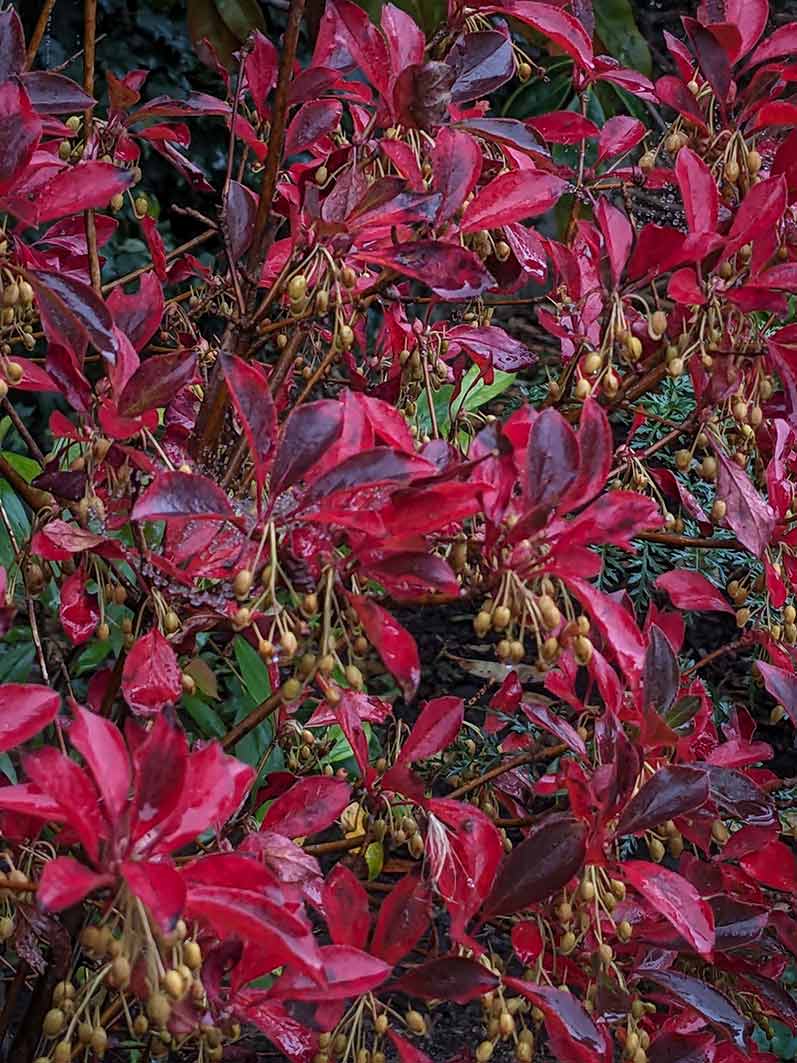
Late September and the beginning of October signifies the start of the autumnal, foliage  colour changes that I adore.  The weather is chilly and damp with a few sporadic sunny spells.  This is when some of the greens of summer change into gorgeous russets, bright reds and oranges, deep purples and buttery yellows. Last month the enkianthus foliage went from green to bronzy purple, but this month they have gone bright red just before they fall.

Enkianthus foliage change from purple to bright red.
Enkianthus bright red foliage

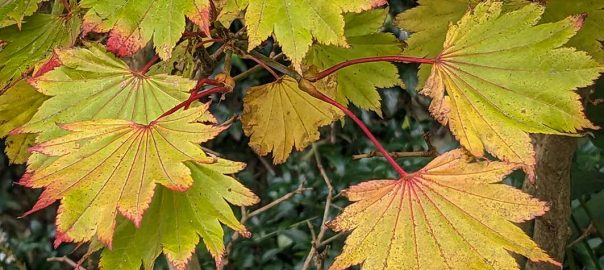
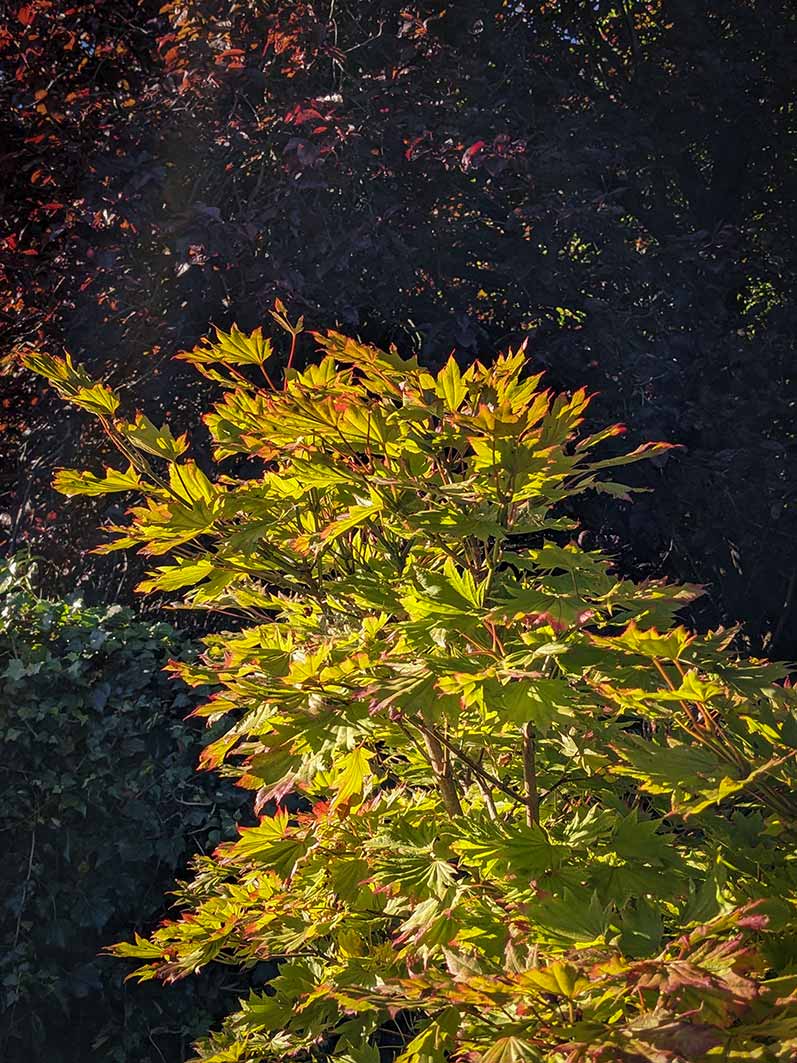
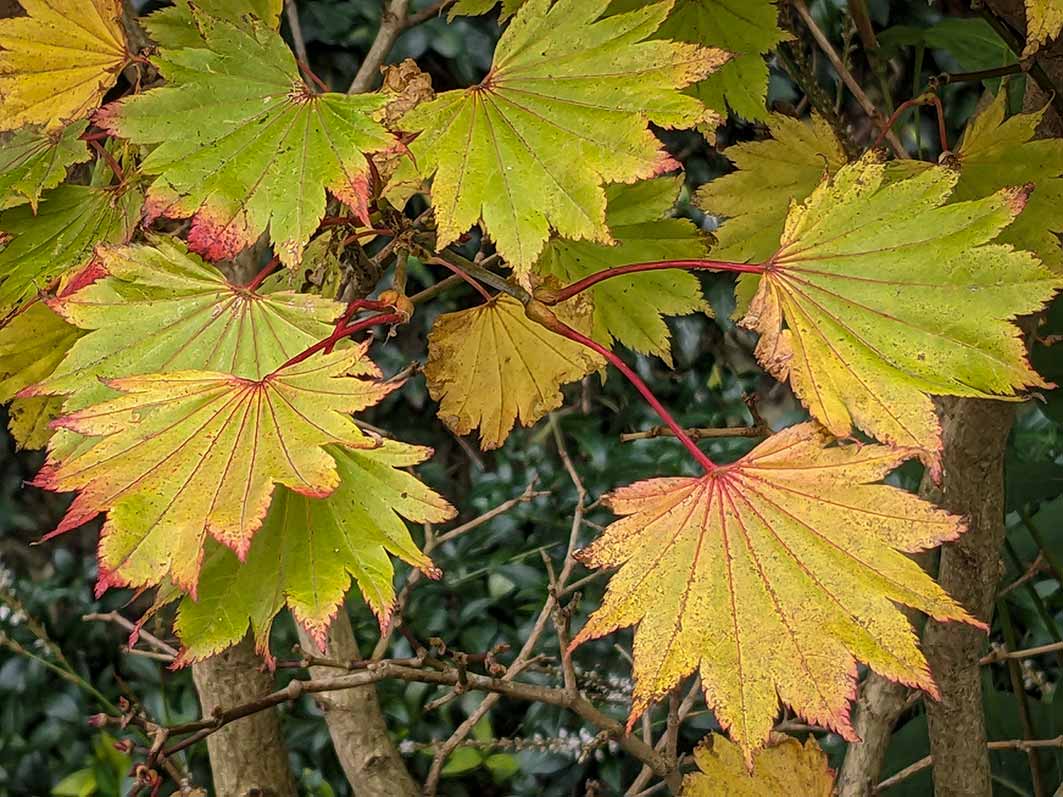
The golden foliage of the Acer shirasawanum aureum take on red tinges especially if the leave are in the sunshine.  In autumn the develop red stems and veins before they go brown and fall.

Sunshine on the golden leaves of an acer. Leaves tinged with red.
Acer shirasawanum aureum in the sunshine.
Golden acer leaves up close showing the red veins and tips.
Acer shirasawanum aureum red veins, stems and tips.

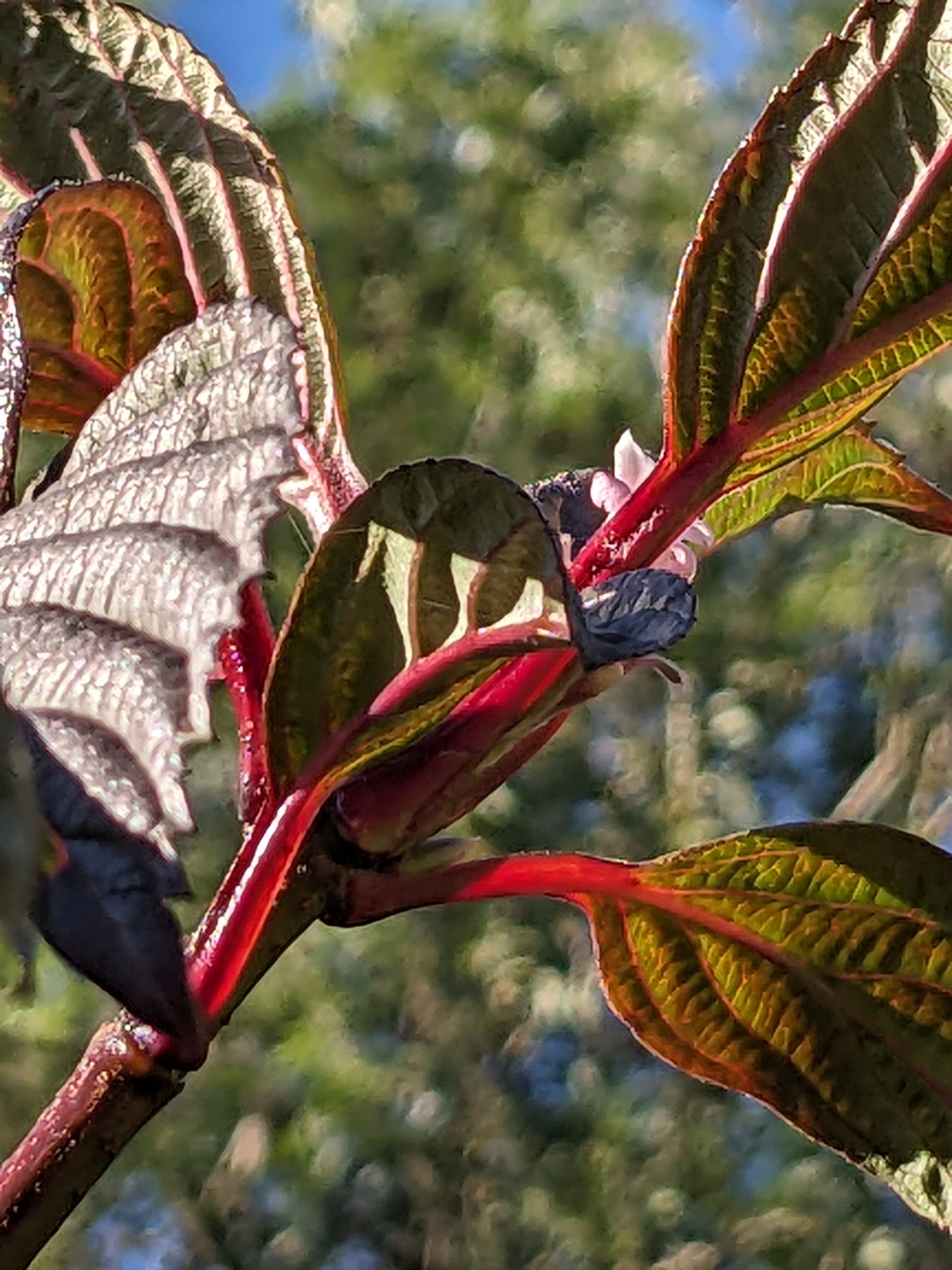
Another tree/shrub that gets red stems is the viburnum and the darkish green leaves take on a purply colour.  It sporadically flowers all year round.

Red stems on Viburnum shrub.
Red stems and leaf colour of Viburnum X Bodnantense Dawn

The fuchsia is still flowering away and there are still a few flowers appearing on the honey suckle nearby.  Once the flowers go on the honeysuckle they develop bright red berries much loved by the birds.  The leaves on the honeysuckle in the raised bed are still green whereas the leaves on the honeysuckle on the patio have  taken on purple tones.  It looks good next to the purple flowered hellebore (the only one flowering at the moment) and the bright yellowy green of the Hakonechloa macra ‘Aureola’ grass.

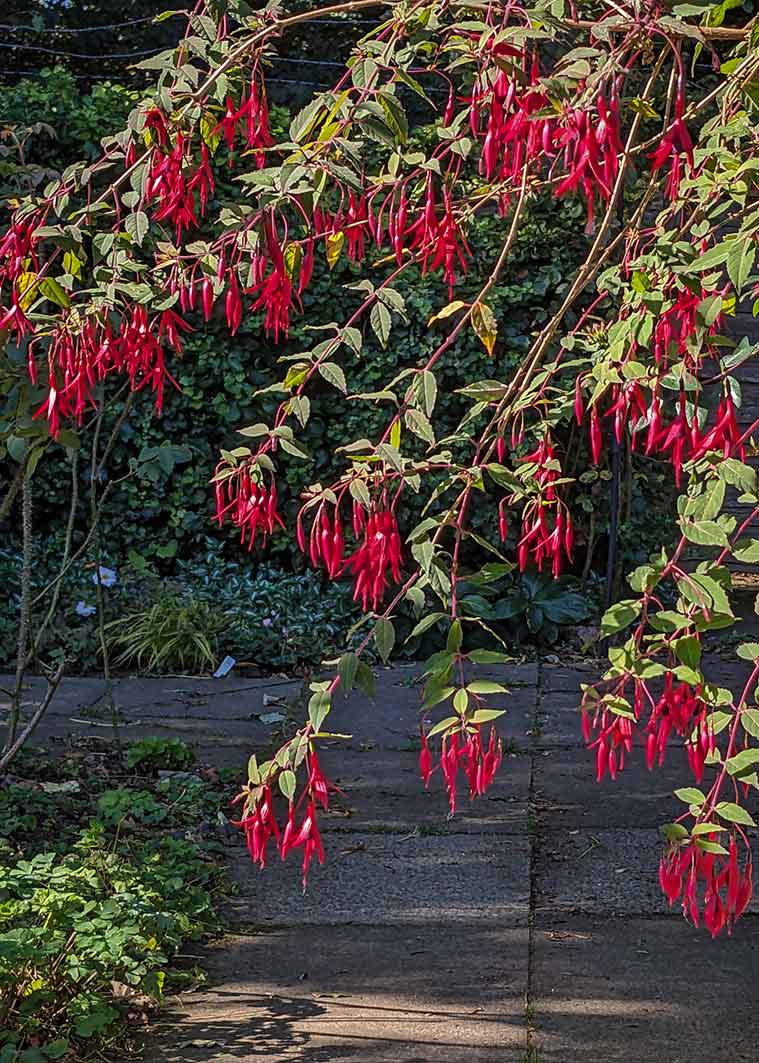
Small red and purple flowers on a fuchsia shrub.
The dainty red and purple flowers of the fuchsia growing across the pathway.
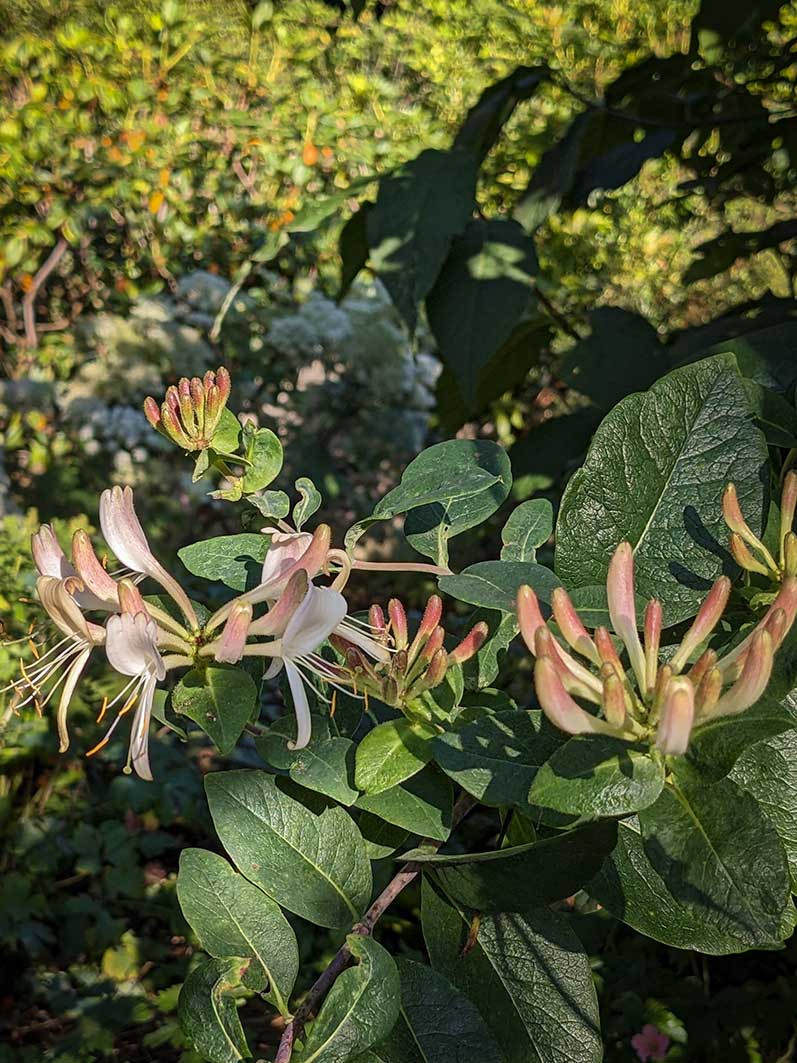
White honeysuckle flowers with pink tinges on the end of the buds.
White honeysuckle flowers.
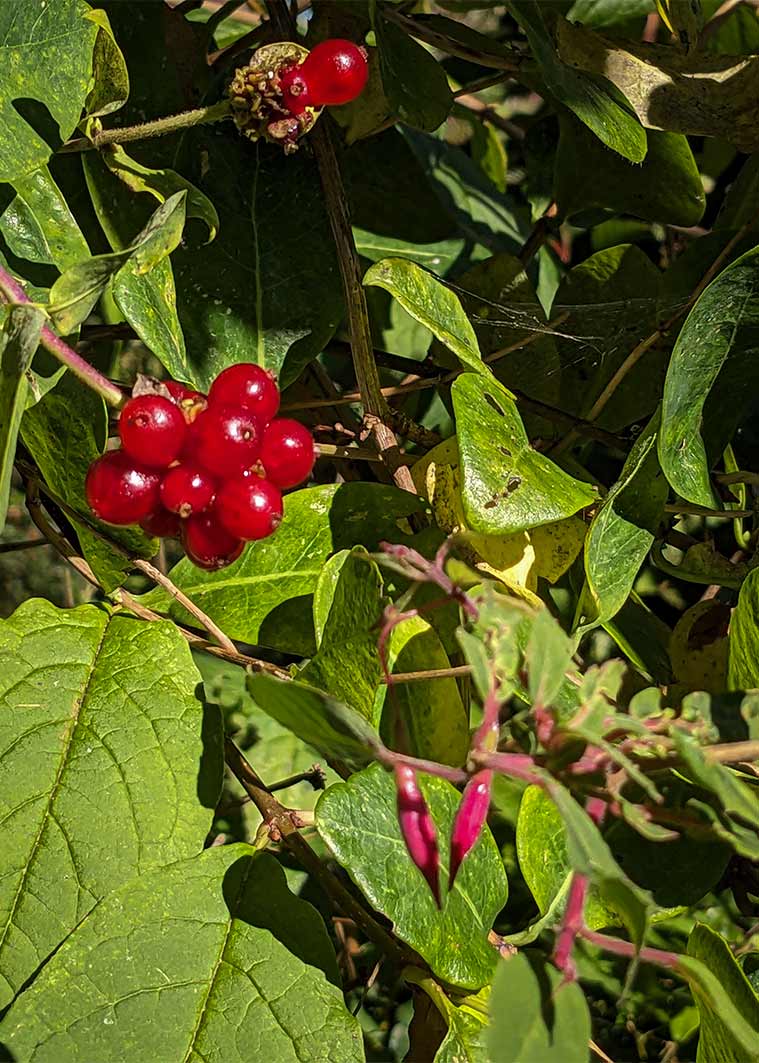
A cluster of bright red honeysuckle berries.
Bright red honeysuckle berries next to  red unopen flowers of the fuchsia.
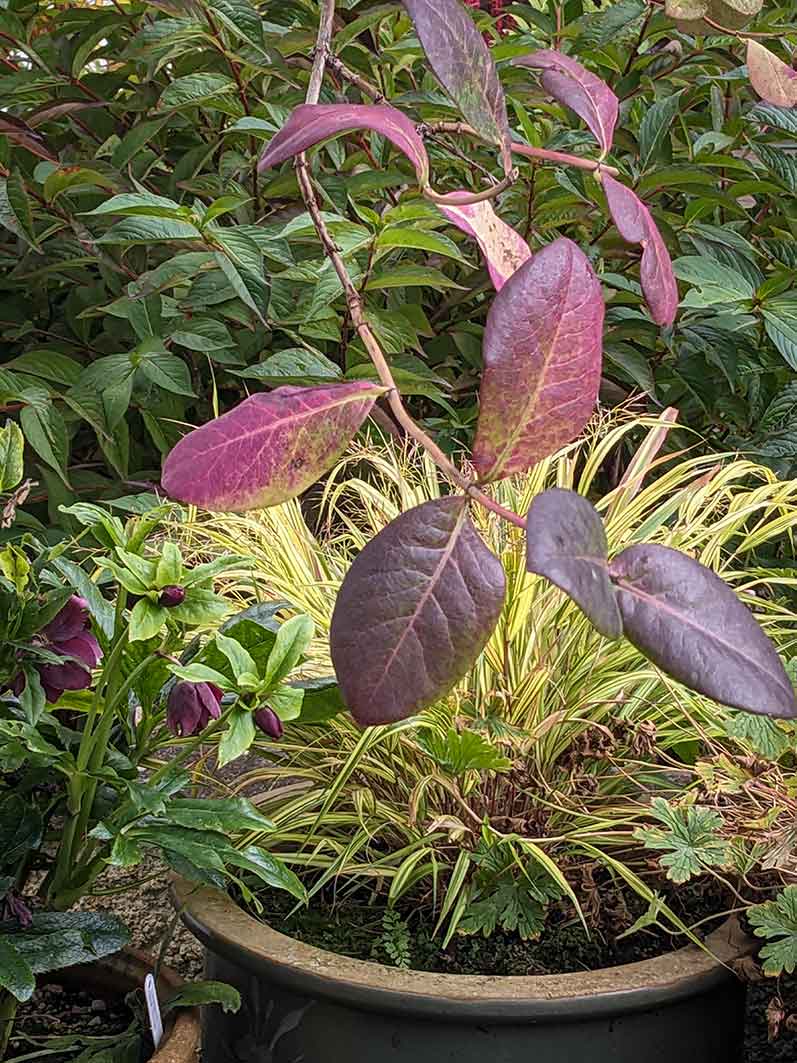
Honeysuckle purple leaves next to hellebore with purple flowers.
Honey suckle with purple leaves next to a hellebore with purple flowers.

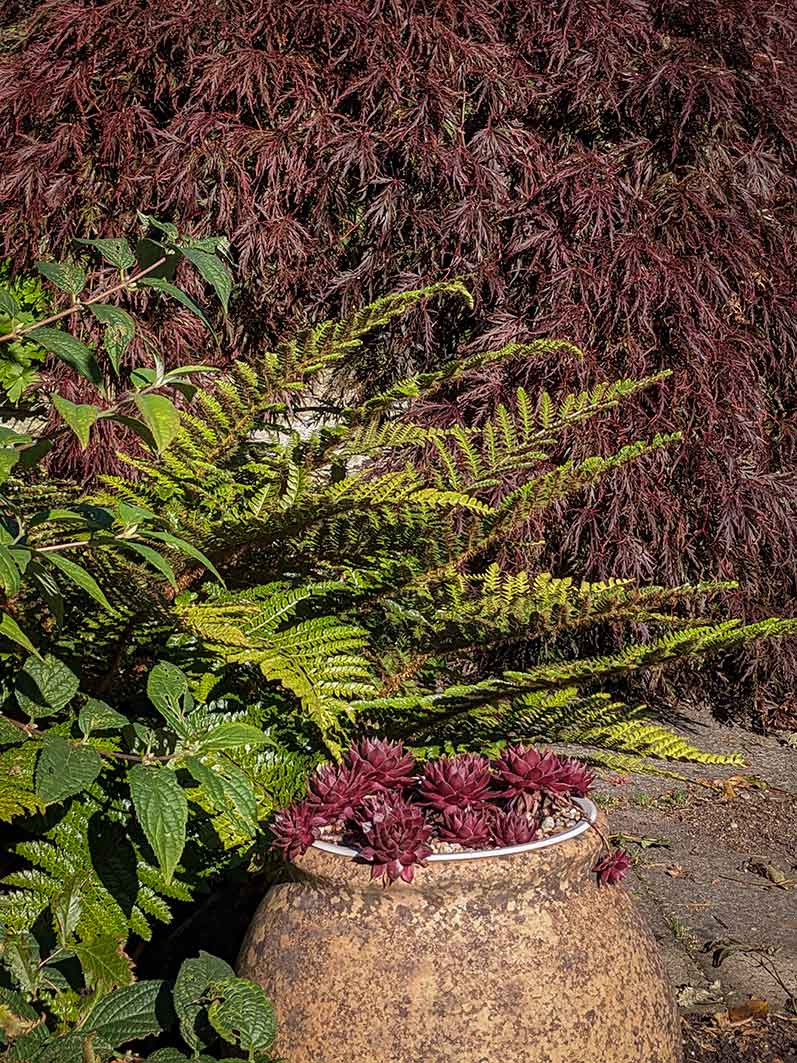
Soon the purple leaves on this acer will change to a bright red red colour but for now it goes well with the purple of the sempervivum ‘chocolate kiss’

Purple sempervivum 'Chocolate kiss' in front of the purple leaved acer palmatum dissectum 'garnet'.
Sempervivum ‘chocolate kiss’ in front of Acer palmatum dissectum ‘garnet’

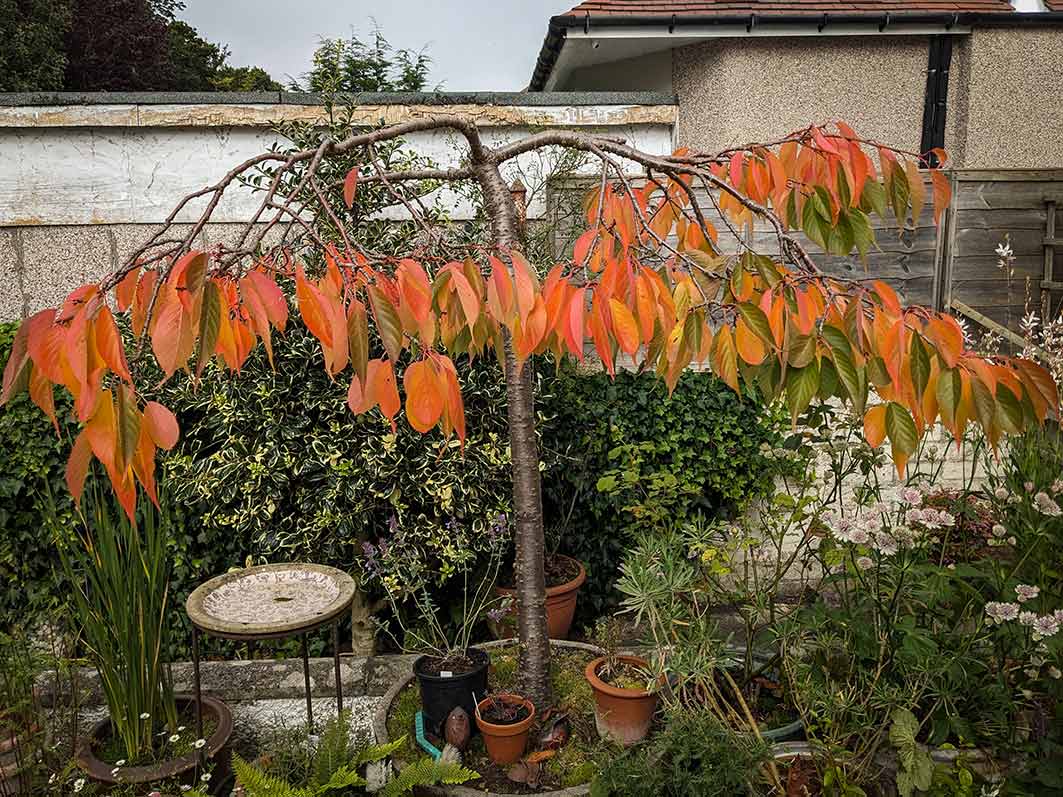
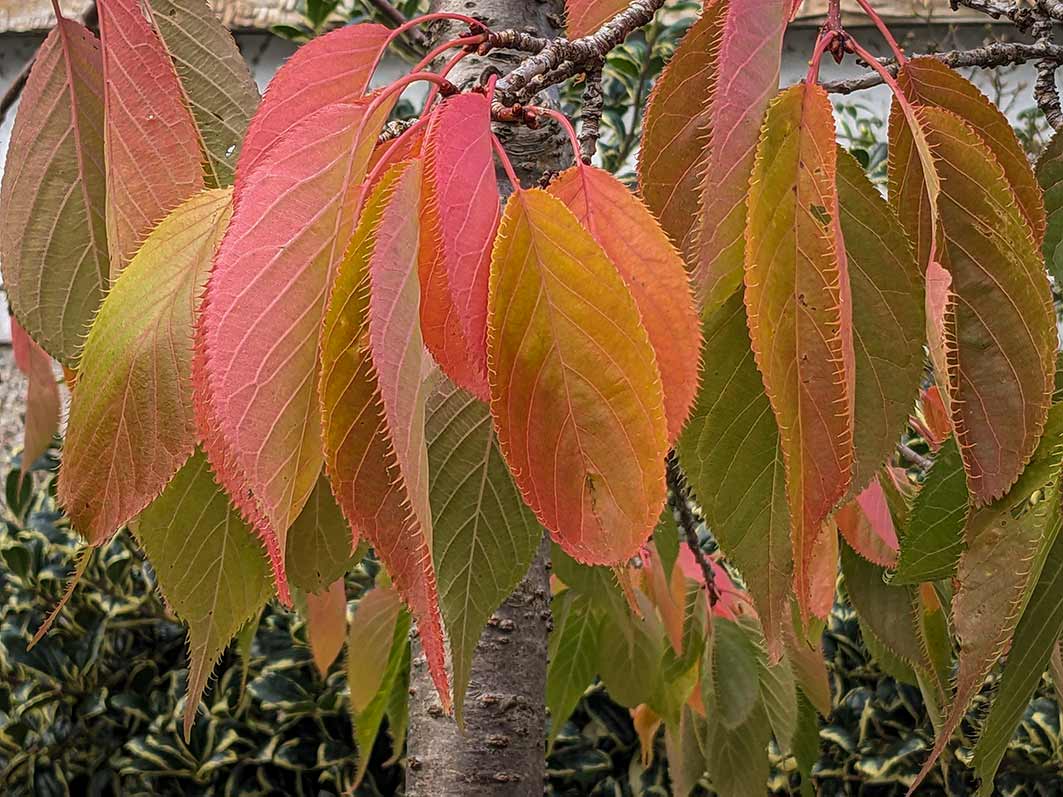
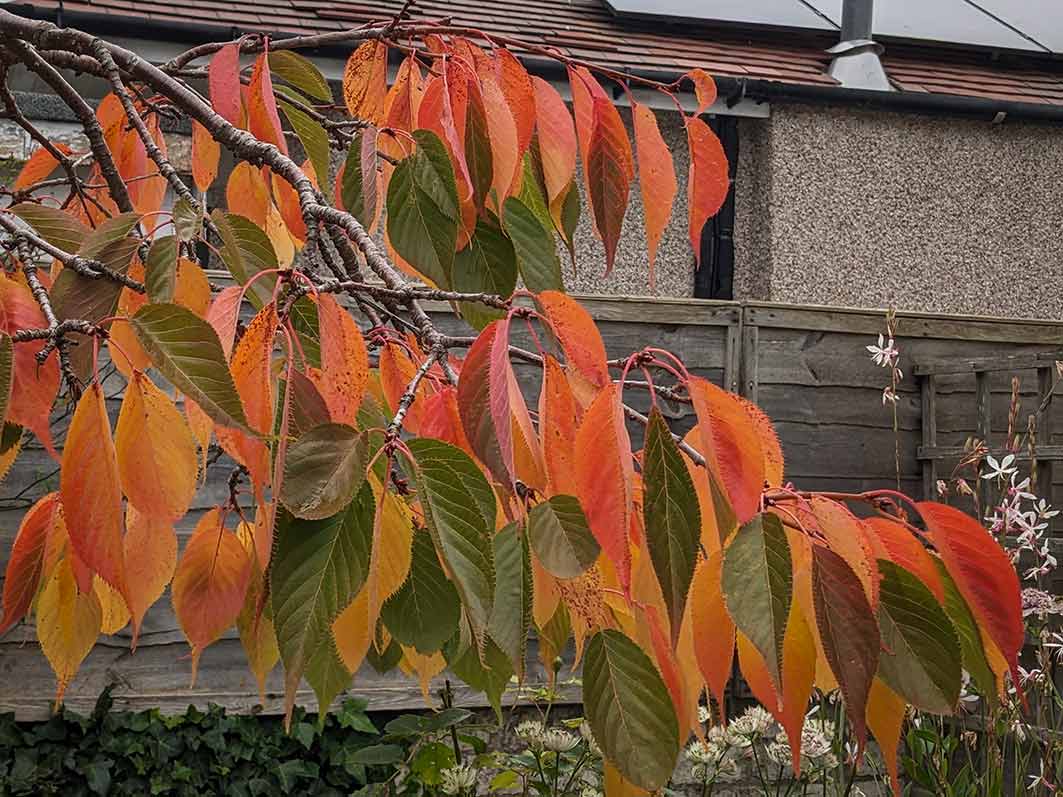
On the patio, in a half barrel, is a small cherry tree, Prunus Shirota Mount Fuji that has lovely green leaves during summer until they take on a peachy yellow colouration before turning bright orange just before drop.

Small cherry tree with peachy orange leaves in autumn.
Prunus Shirota Mount Fuji autumn colouration beginning.
Autumnal colours in cherry tree.
Prunus Shirota Mount Fuji foliage colours of orange, peach, yellow and green..
Cherry tree autumn colours darken just before the leaves fall.
The cherry tree foliage colours darken just before they fall.

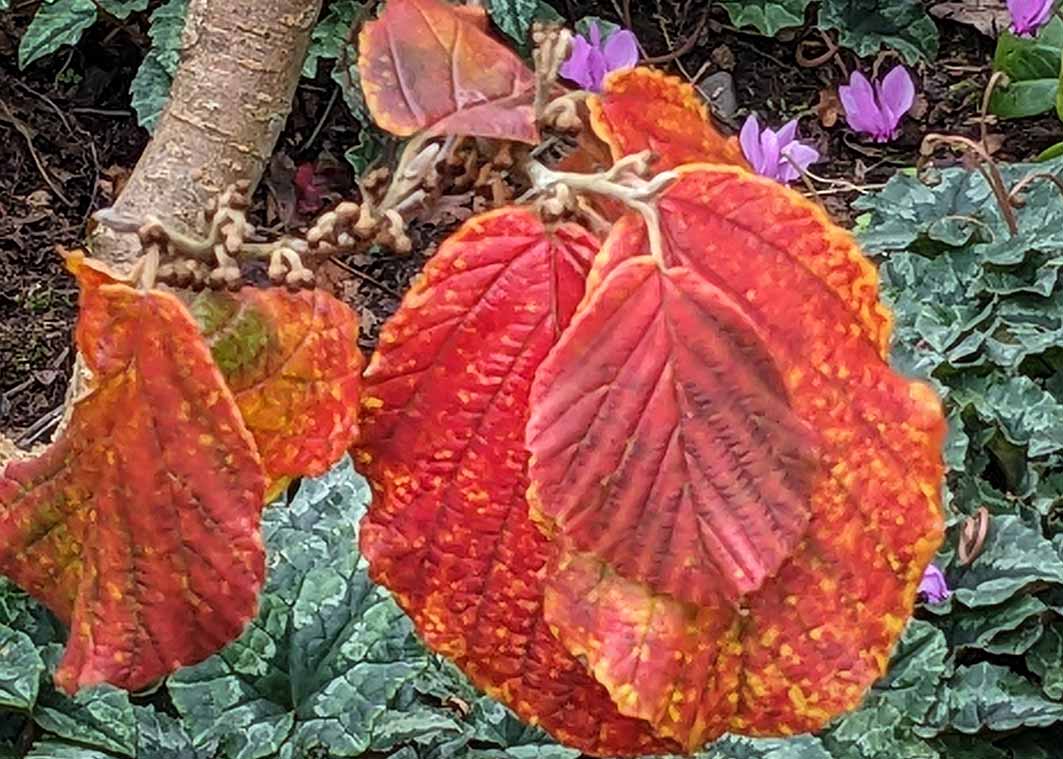
The witch hazel (Hamamelis inter Diane) leaves also go from green through bright yellows and oranges and the bright reds.

Hamamelis inter Diane witch hazel bright orangey red autumn foliage.
Hamamelis inter Diane bright orangey red autumn foliage.

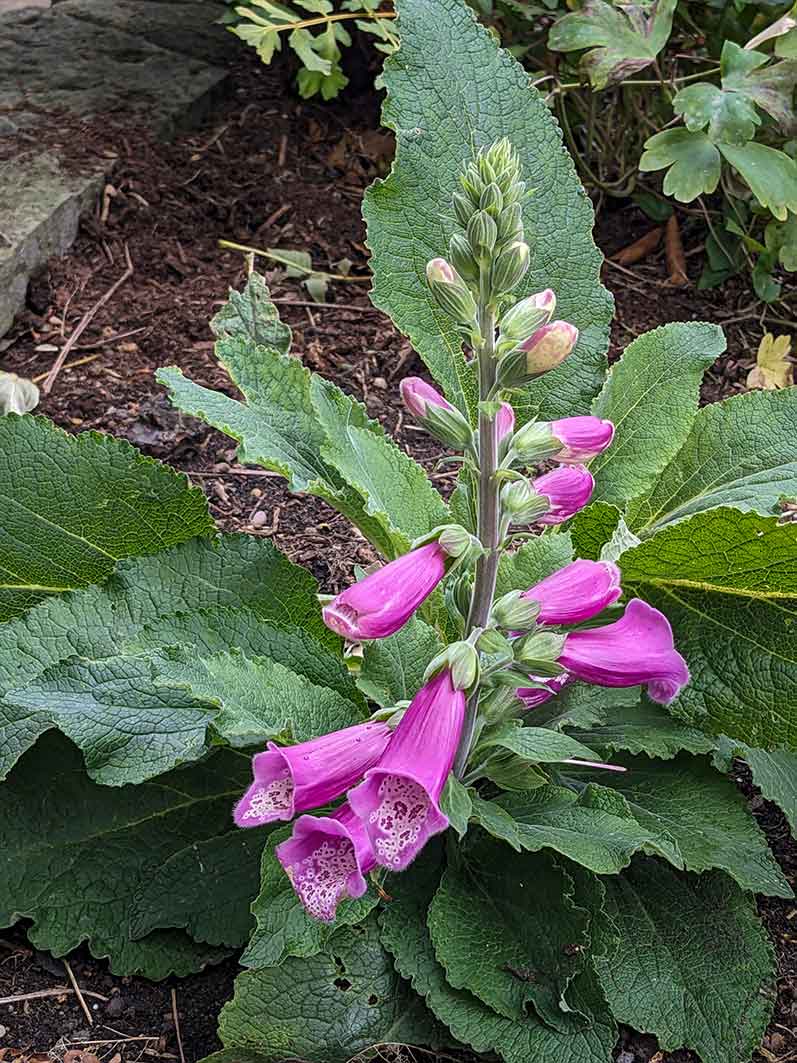
The persicarias are still flowering away, as are the  astrantias, gaura  and a few roses, even this little foxglove.  It may look a bit odd but it is kind of resting on it’s shoulder.

Purple/pink foxglove flowering in October.
Foxglove flowering in October.

As much as I am loving these autumnal colours I am already looking forward to the spring colours so I have been planting a few more bulbs.  There will be some in the garden, some on the patio and a few in the conservatory.   The recently revived indoor cyclamen have  lovely fresh foliage and I expect to see flowers fairly soon.

Autumnal bronze foliage of enkianthus with green berries.

End of August 2024 in the garden.

Well it hasn’t been very warm this August and we have had quite a bit of rain.  There is even  more slug damage – the echinacea have all suffered.  I just have little spikes instead of leaves, and any leaves that did manage to grow got snail damage!  I caught the culprits in action so no question of who did what.  I did think that the hairy leaves might just put the critters off eating them – oh how wrong I was.  I tried them in the garden, then in pots on the patio, then in pots on the patio table.
There is still plenty of colour about, still in flower are:  roses, Japanese anemones, verbena, selinum wallichinum, nepeta, erigeron, fuchsia, persicaria, gaura, astrantia, cyclamen, agastache, viburnum, water lilies, and even some foxgloves are still flowering.  Going over now are the purple loosestrife, oregano and lavender.  There are little carpets of purple flowers of cyclamen in various places in the garden.
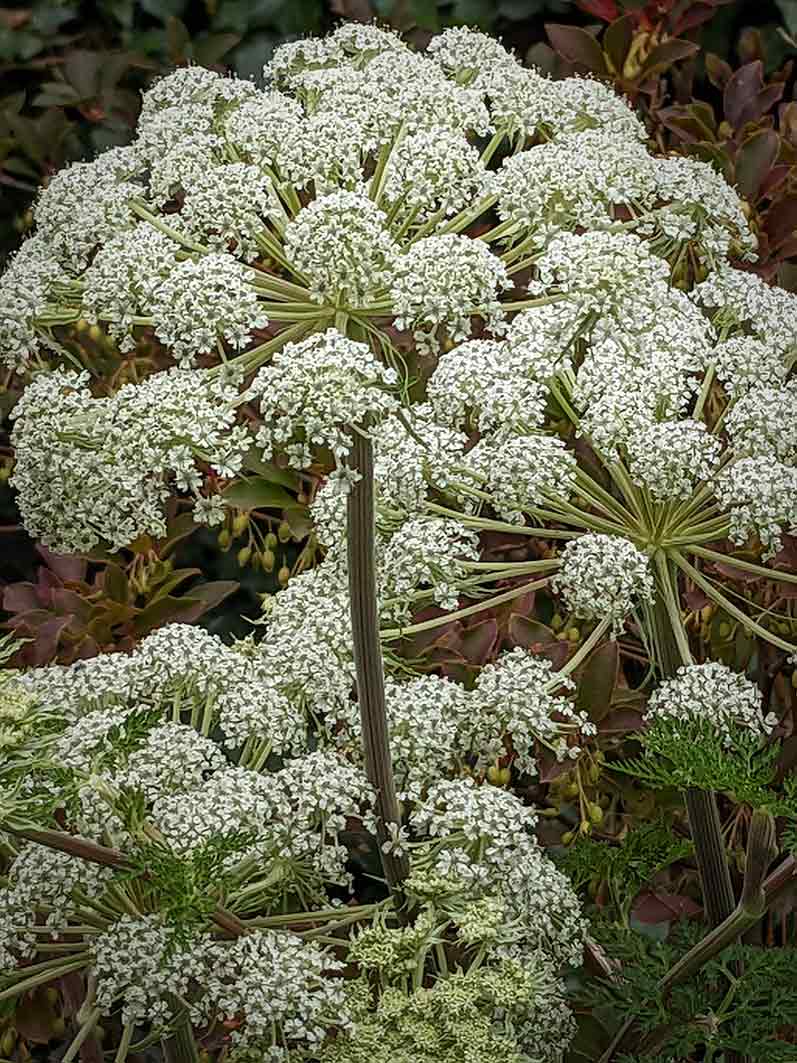
Large white flowerheads of selinum wallichinum.
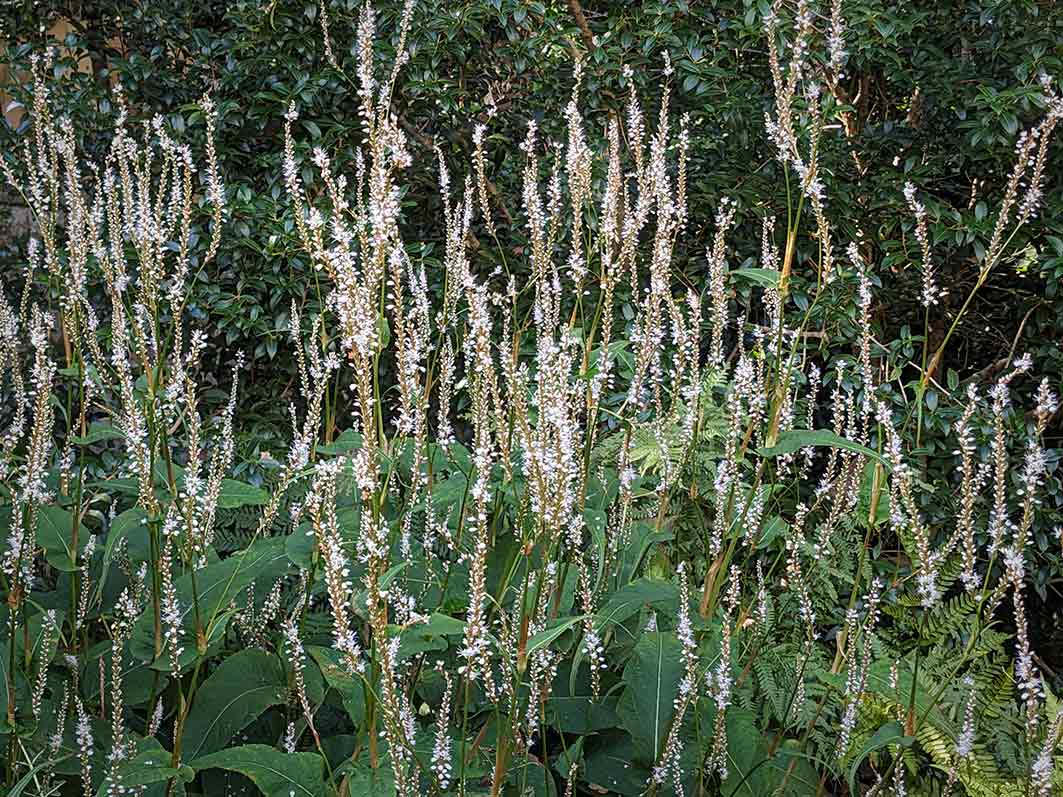
White flowers of persicaria alba.
Tall white persicaria.
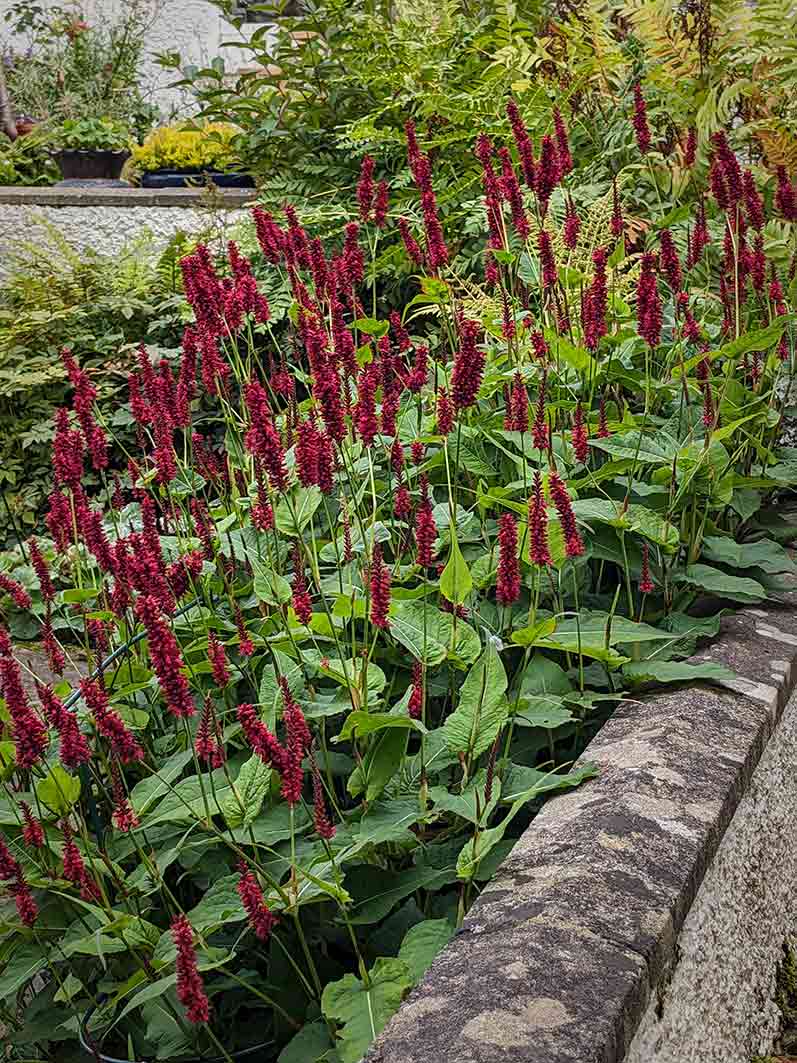
Red flowers of persicaria.
Tall red persicaria.
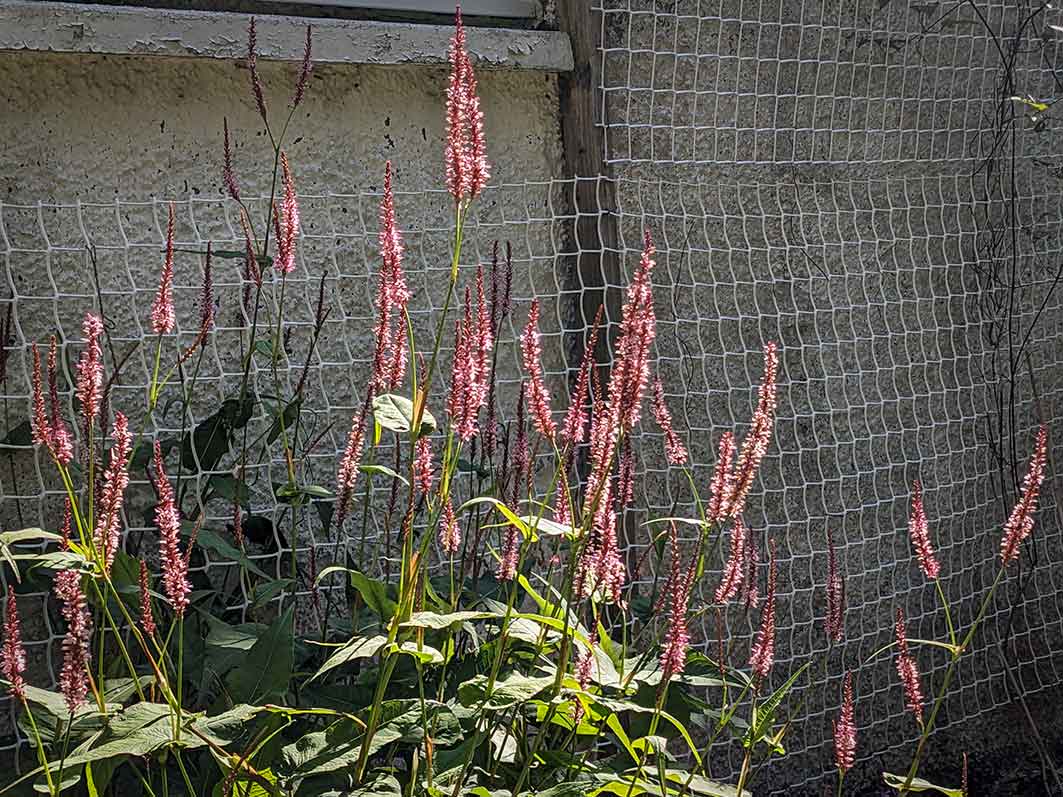
Tall pike persicaria flowers.
Tall pink persicaria flowers.
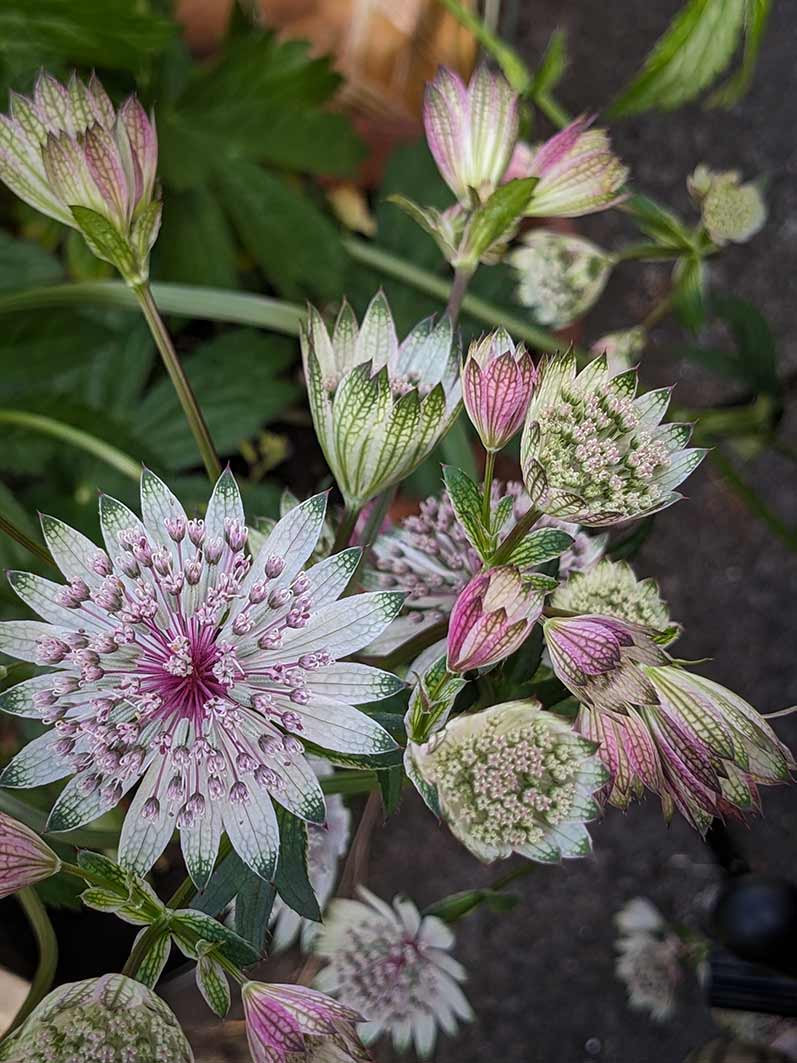
White with pink coloured astrantia flowers in autumn.
Pretty astrantia flowers
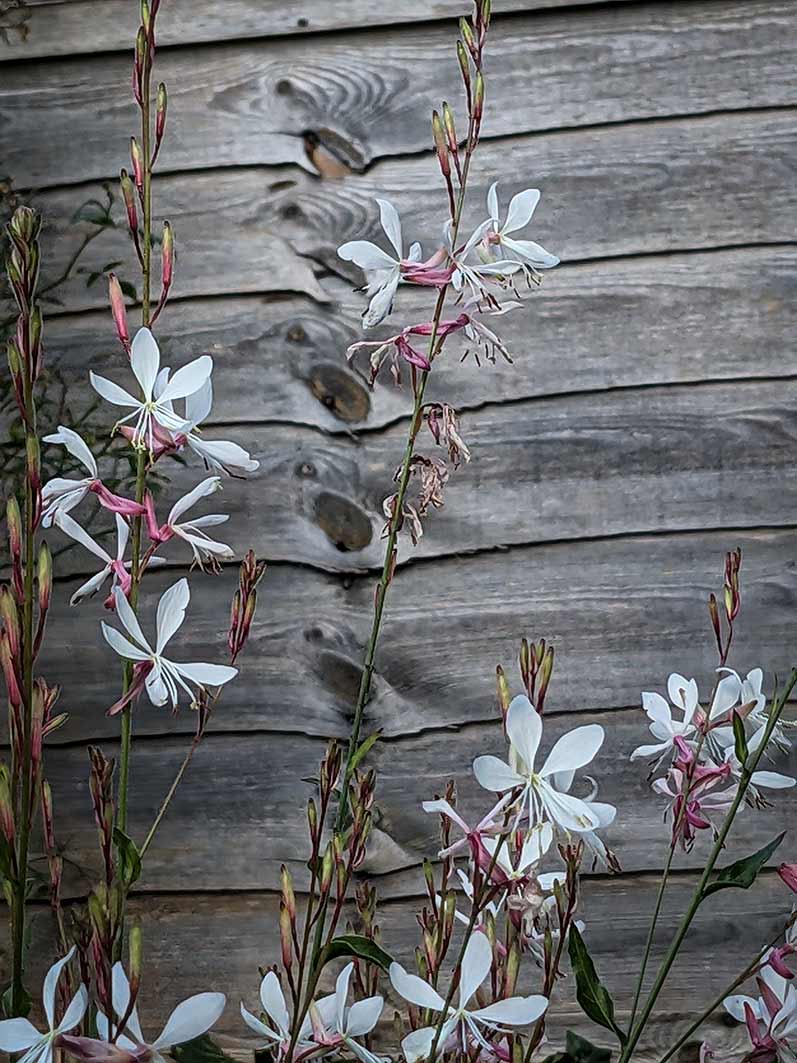
Dainty white, butterfly-like flowers of the Gaura.
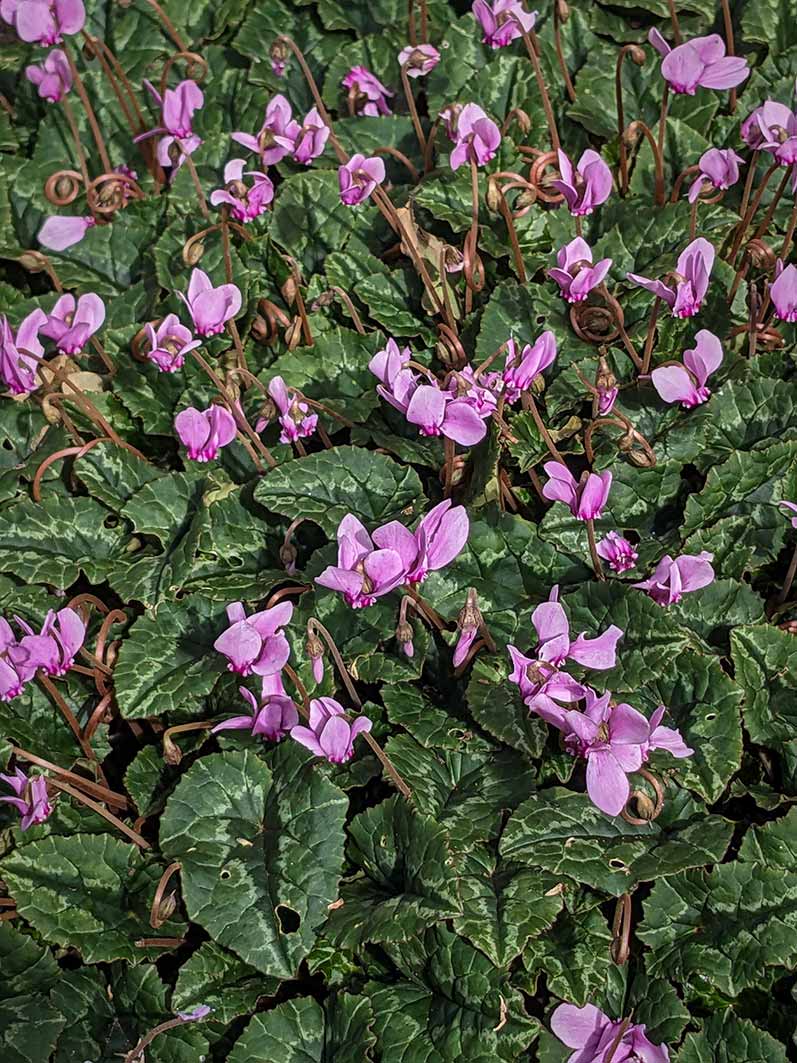
carpet of purple cyclamen
Cyclamen flowers.
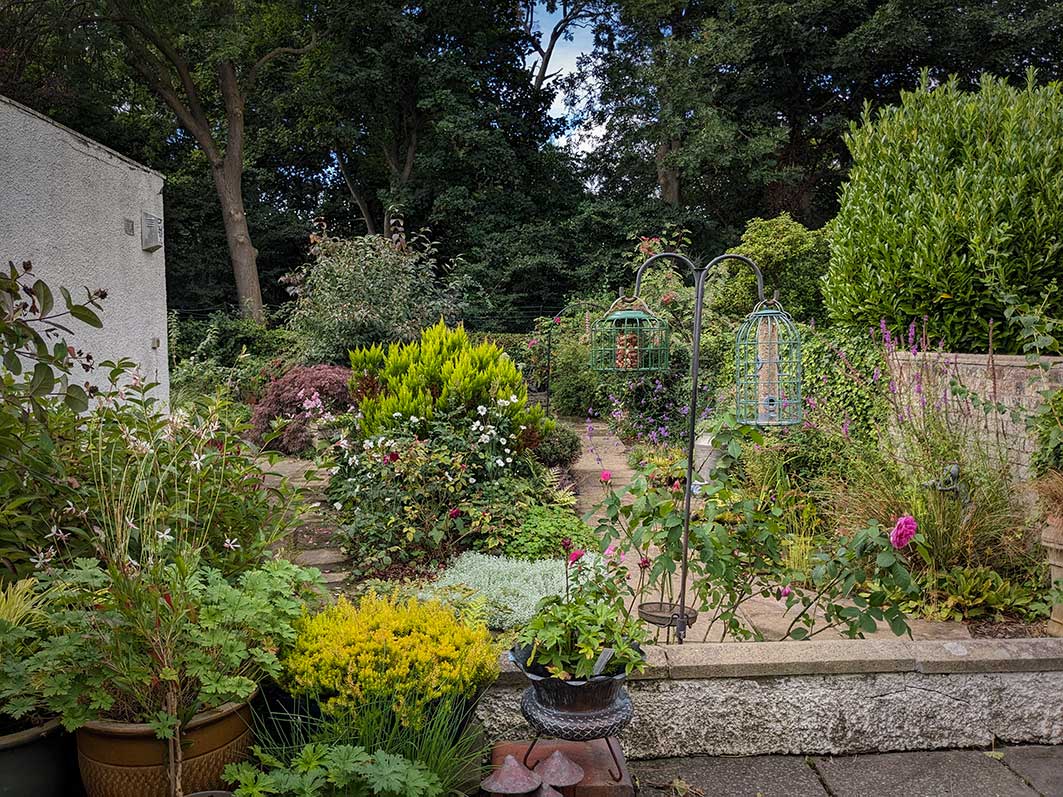
view of the garden from the patio end of August 2024.
From the patio, end of August 2024

As autumn approaches (rather quickly) there is colour in the berries of the rowan, holly, enkianthus and honeysuckle.  The foliage of the enkianthus is turning a lovely purply/bronze colour that looks great with the heuchera solar eclipse.

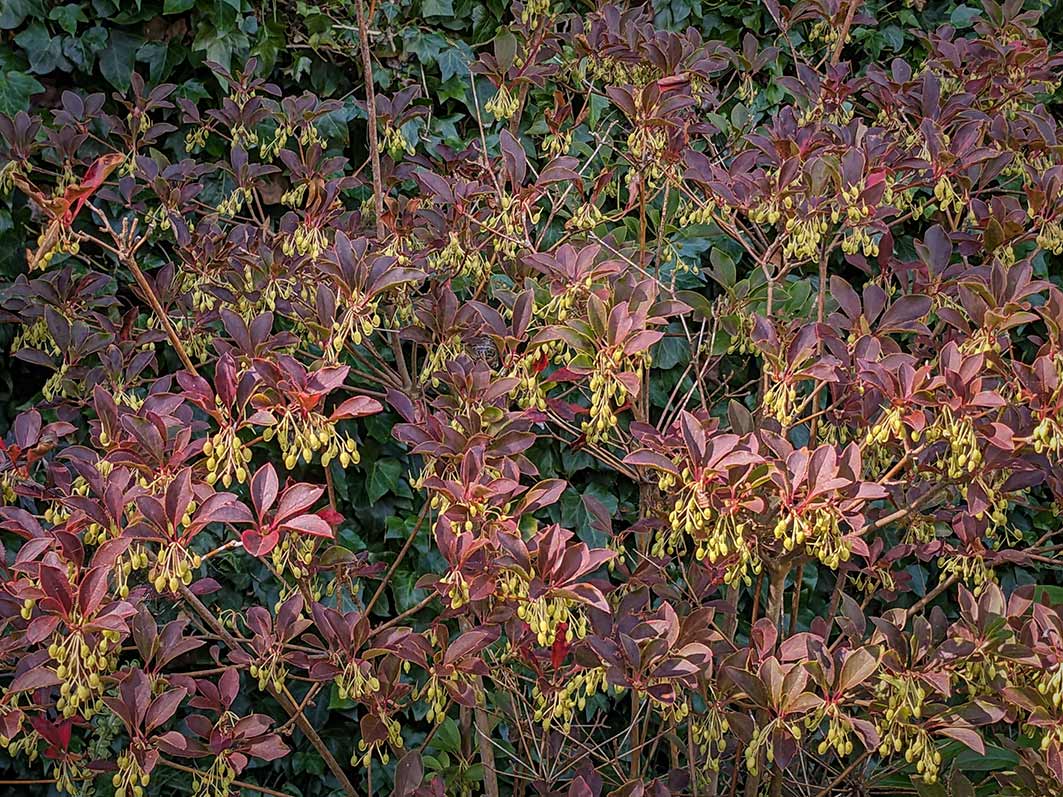
Autumnal bronze foliage of enkianthus with green berries.
Bronze coloured foliage of enkianthus and it’s green berries.
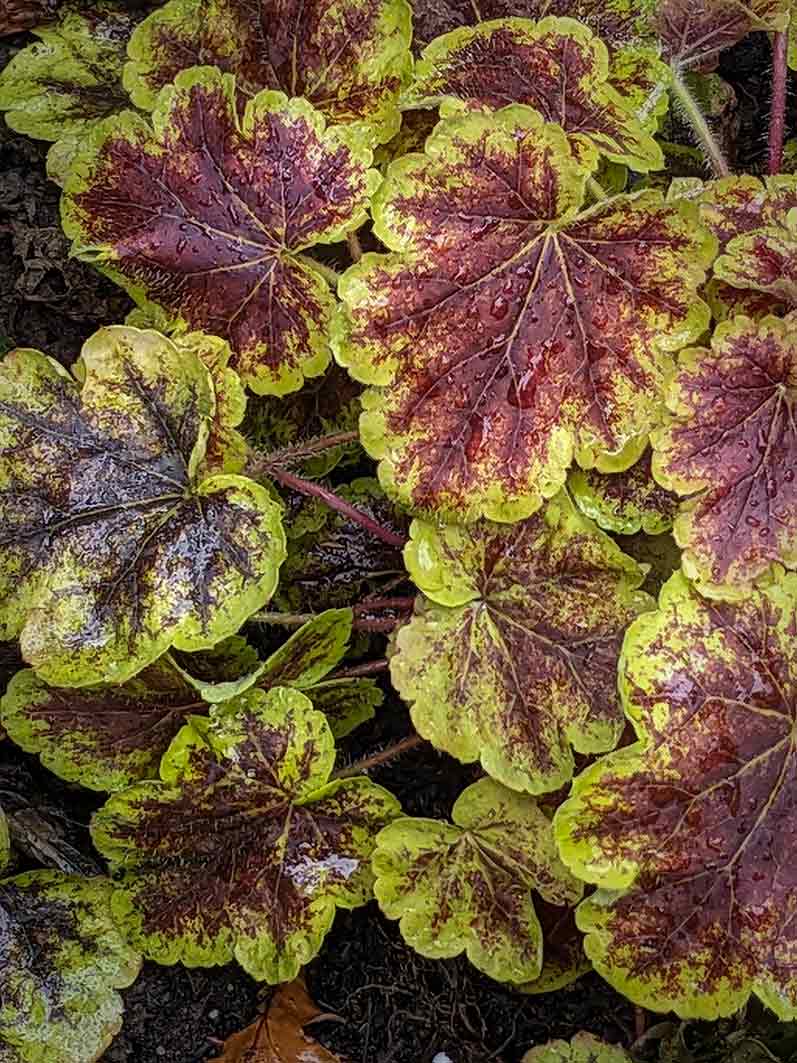
Bronze/purple centre with green edge of Heuchera solar eclipse foliage.
Heuchera solar eclipse bronze and lime green foliage.
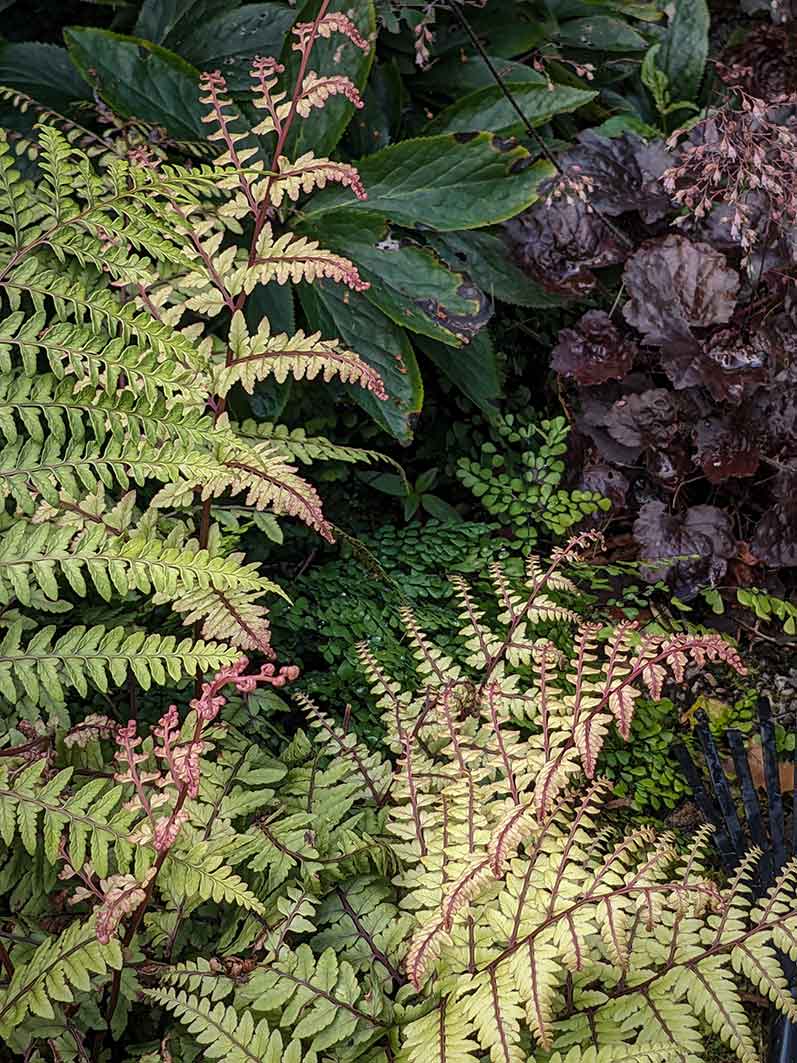
Fern with purple ribs and purple tinged frond ends.

The fern here has purple ribs and purple tinges on the frond ends that go well with the deep purple foliage of the heuchera next to it.  There are still young bronze coloured fronds popping up in some ferns in the stumpery.

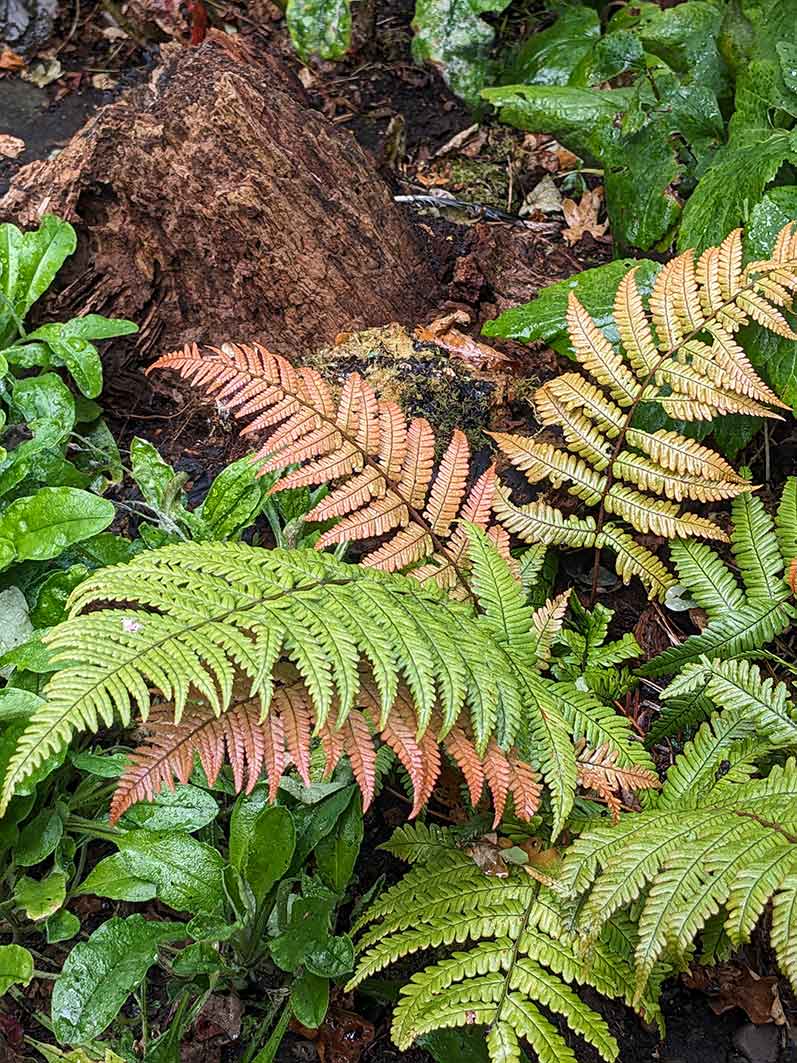
Bronze coloured fronds of the rosy buckler fern.

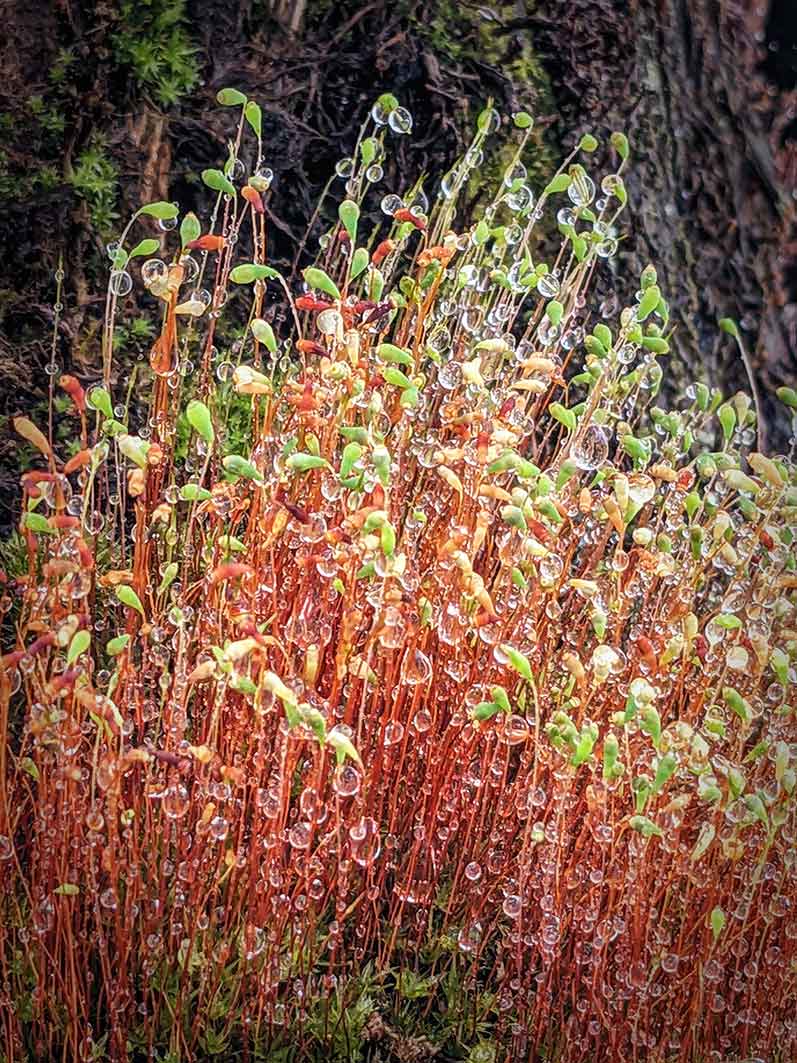
It is almost time to plant the narcissi and crocus so I did a quick check on the stored ones and found that some of the narcissi had some mold on them so they had to be chucked.   The little oxalis palmifrons bulbs had very long shoots already and were becoming a bit soft so I chucked most of them out and planted the few best looking ones (ever hopeful).  The cactus in the conservatory had another gorgeous flower on it just for one day – the fragrance was fabulous!  Also in the conservatory I started to water the indoor cyclamen after their summer rest and the leaves are coming through now.  There is moss growing at the base of the tree fern in the conservatory and as I was spraying the fern I thought the droplets looked good on the moss sporophytes.

Water droplets on sporophytes of moss.
Sprayed water droplets on the sporophytes.

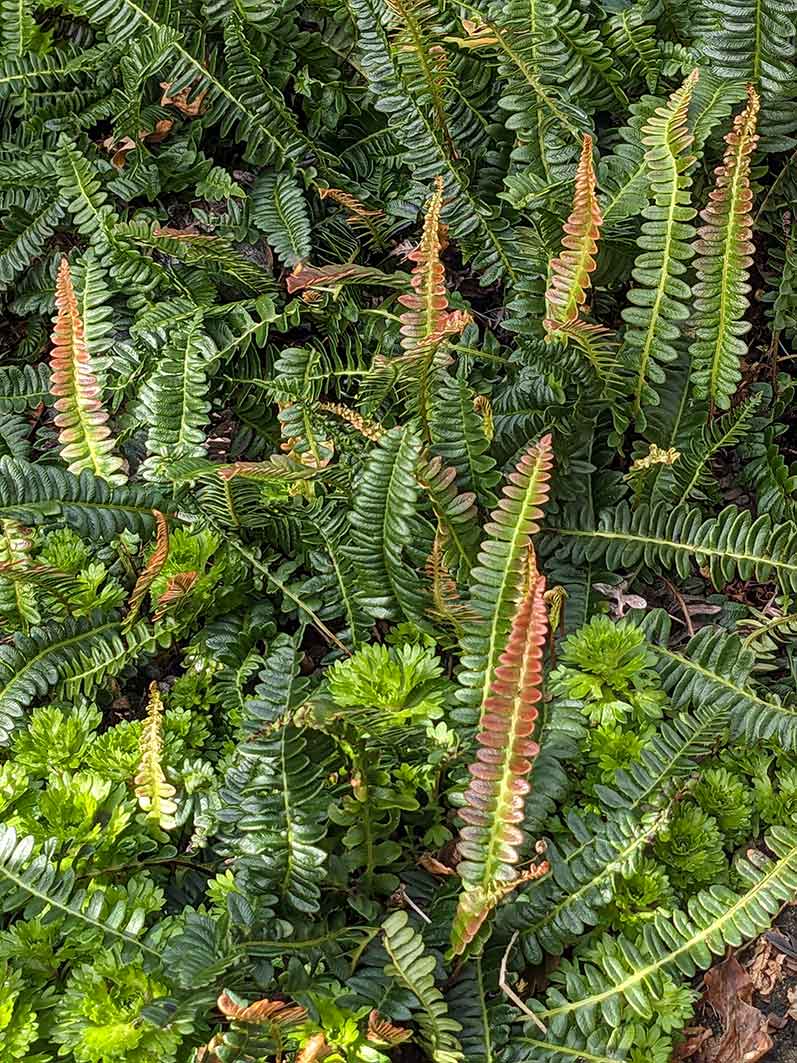
I have made a few decisions about the ground cover plants in the stumpery: the sweet woodruff is rather rampant and is covering up other plants so that will be coming out (perhaps I can leave some behind a large log and just keep it in check), the violets are getting every where so some of them will just get ripped out, the same goes for the bugle.  The lovely little creeping fern. Blechnum penna-marina, is becoming a bit of a thug and it’s rhizomes are intermingling with other plant roots  so I will keep some in a large pot.  It has got all tangled up in amongst the saxifrage and it has taken a while to untangle it all.

Small ground cover fern coming up through saxifrage.
Blechnum penna-marina coming up through the saxifrage.

The dogwood that has been struggling in the damp corner beside the ramp has been moved to the stumpery where it should have more space.  The large fern just kept flattening it where it was.  The jobs for the weekend are putting some Blanket Answer in the pond as for the fist time ever we have blanket weed.  Horrid stuff!  Plus the usual cutting back, dead-heading and keeping up with the weeding.  I suppose I ought to do some work in the front garden too.

pink generous gardener rose at the top of an arch

Beginning of July 2024

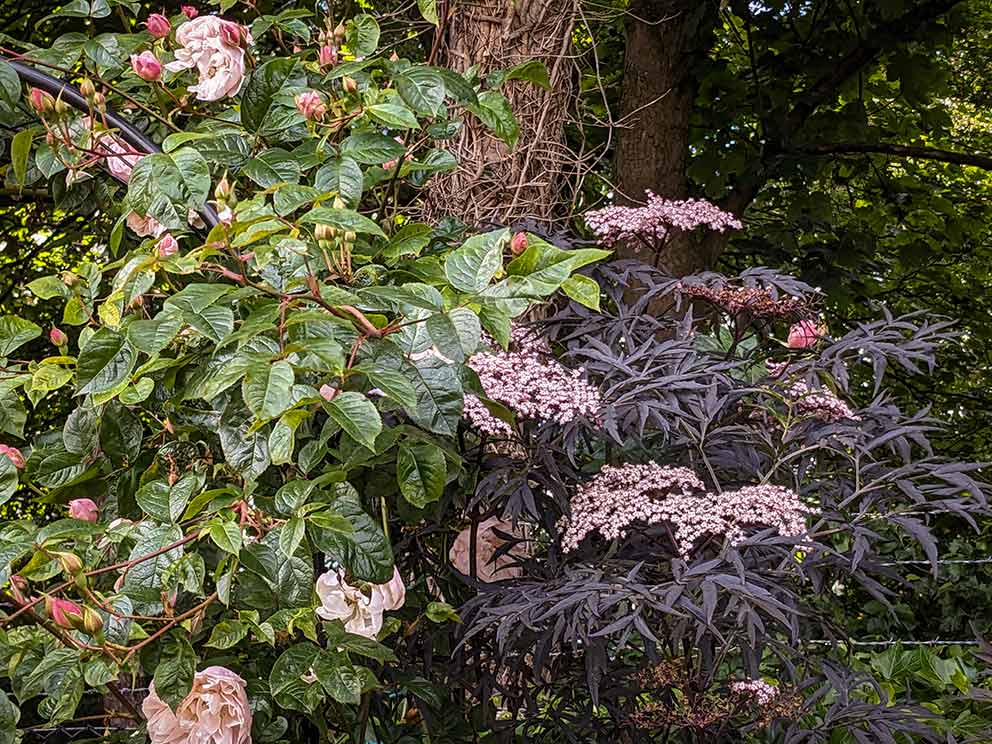
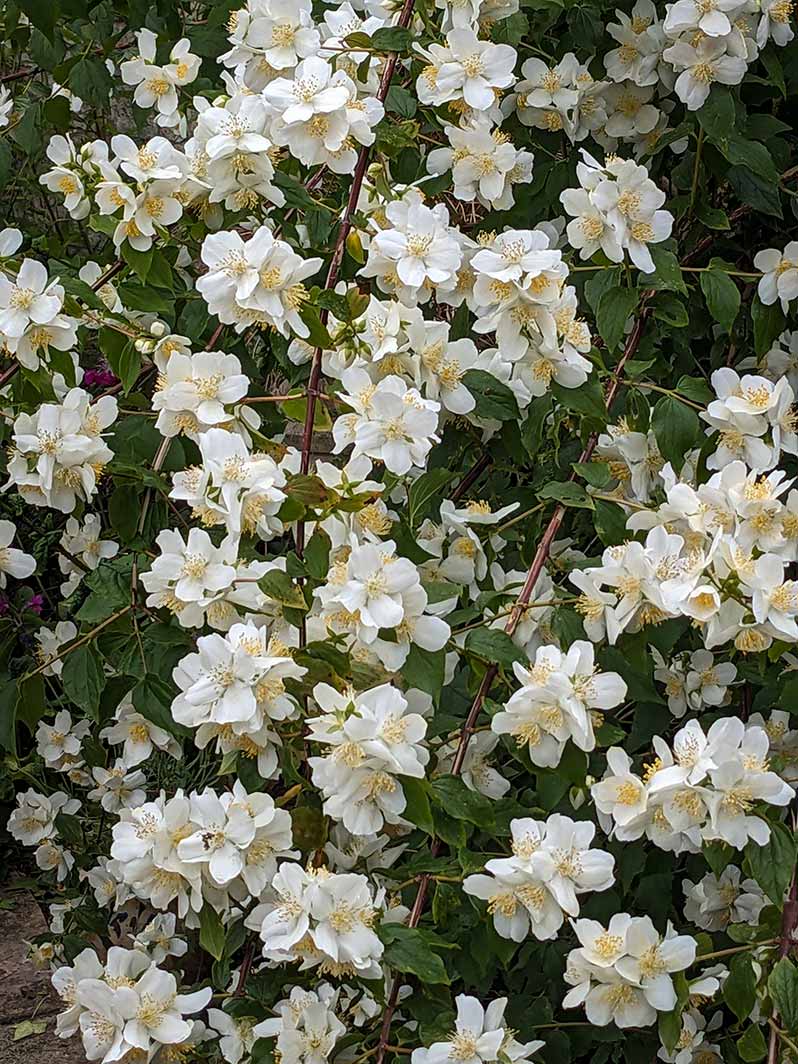
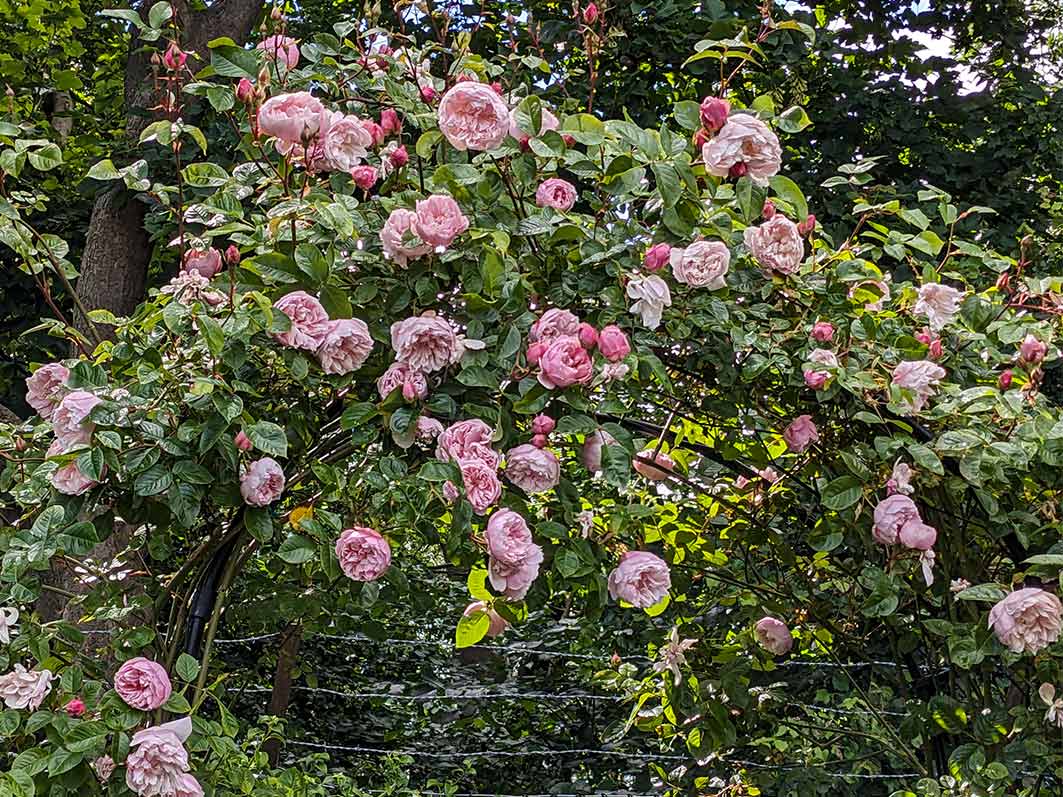
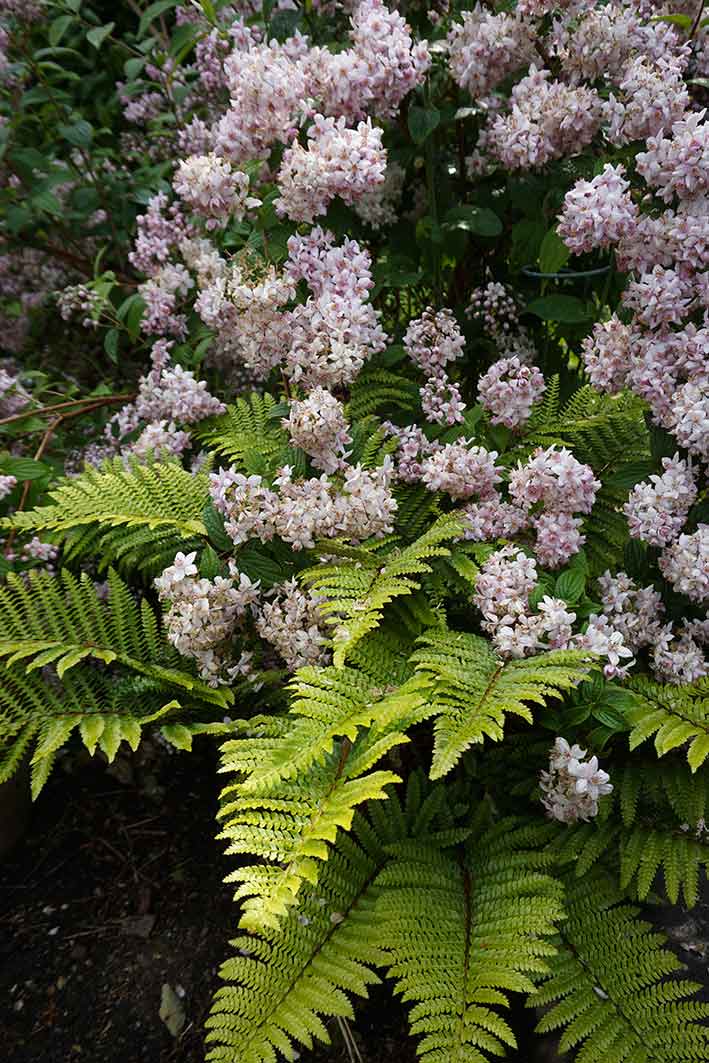
Finally the Generous Gardener rose is in full bloom over the arch at the back of the garden.  It looks great along side the dark foliage and the pink flower heads of the Sambucus nigra f. porphyrophylla ‘Eva’ (PBR.)  There is perfume everywhere from the various roses, honey suckles and philadelphus.  However, the philadelphus flowers are now going over and there are white petals all over the ground beneath it.

pale pink rose beside deep purple leaves and pink flower heads of sambucus nigra
Generous gardener with sambucus nigra
pretty white flowers all over the philadelpus

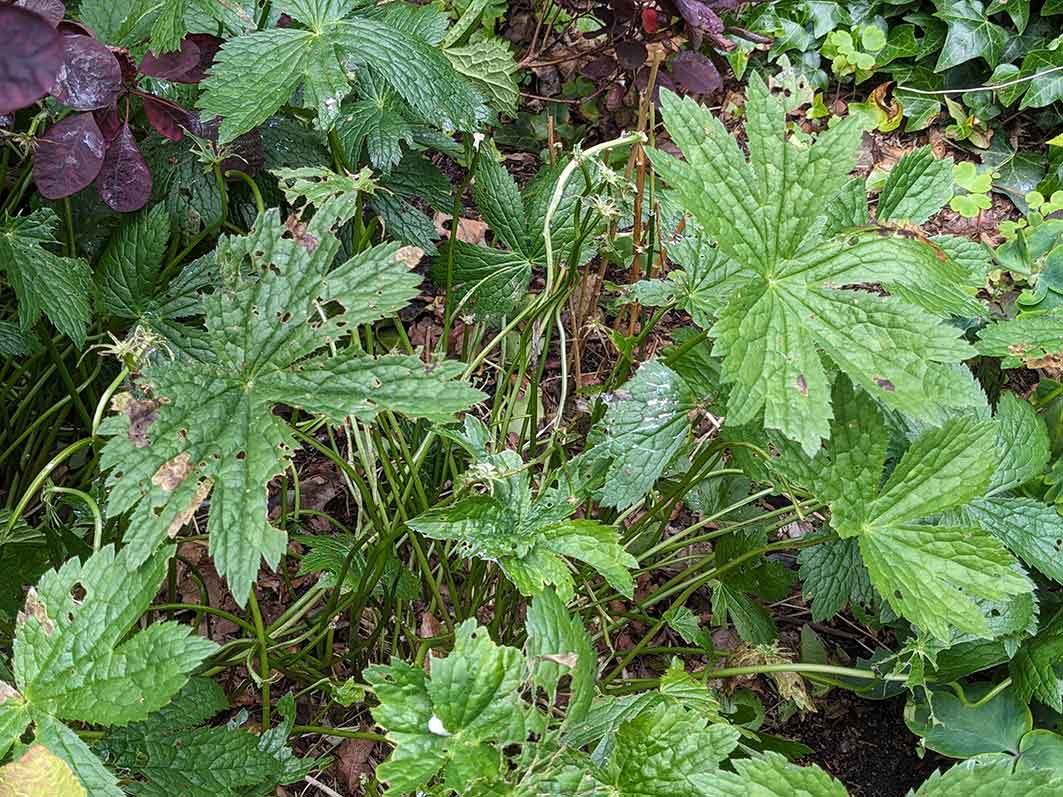
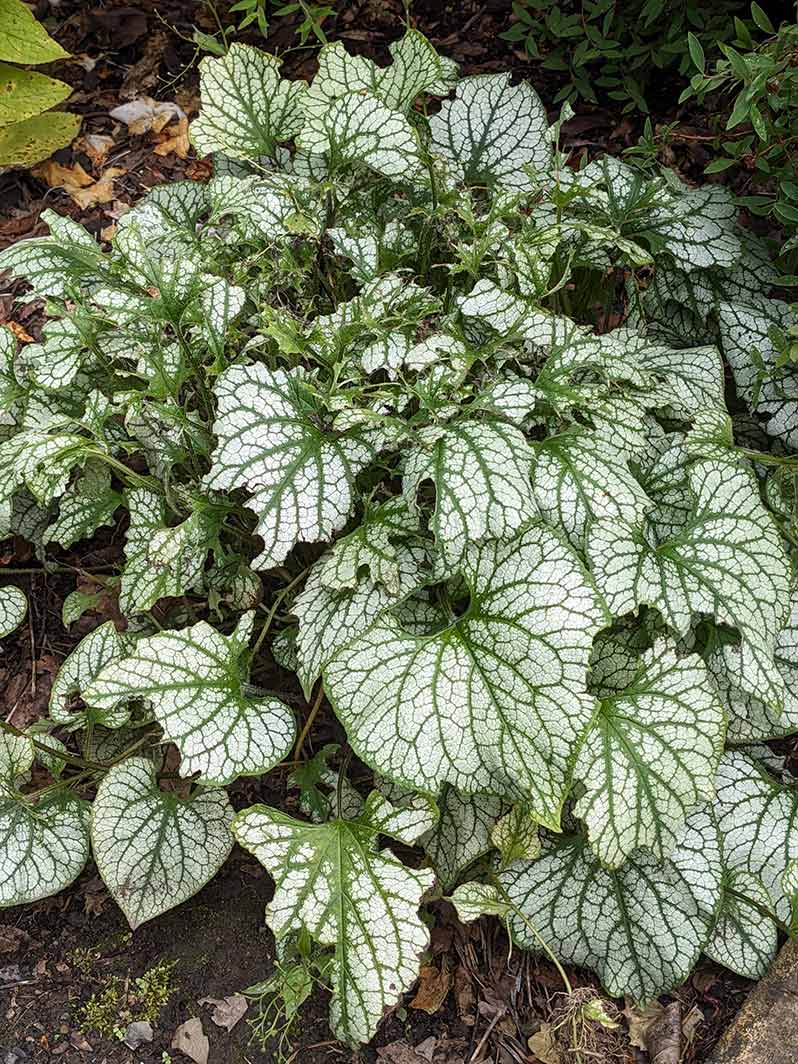
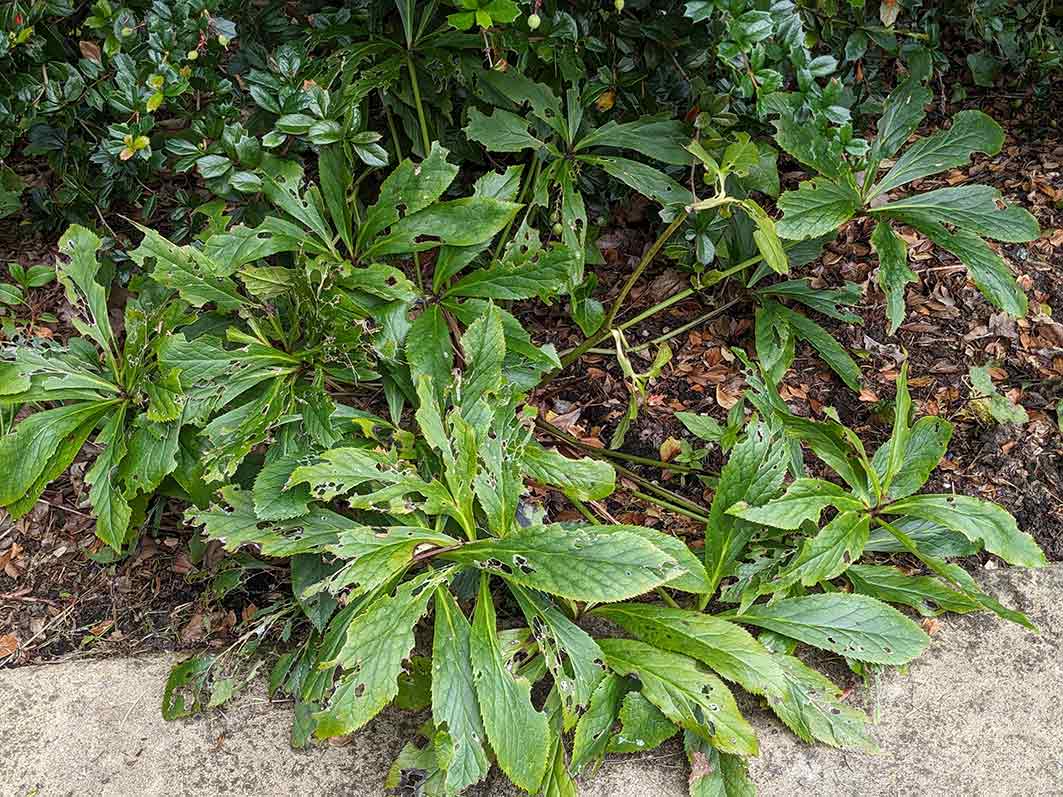
The astrantias are flowering their socks off but the slugs have decimated the foliage of the white one which is in the garden.  The pink and red astrantias are in copper pots that the slugs dislike so they have been spared. And speaking of damage: the hellebores are in a bit of a state, as are the brunnera Jack frost.  Slugs and snails are not meant to like astrantias, hellebores and brunneras but nobody told the ones in my garden! To be fair I think most of the damage to the brunneras has been caused by the wood pigeons tearing bits from the foliage.  They have been pecking away at the honey suckle too.

half eaten foliage of astrantia by slugs
Slug damaged astrantia foliage. (I took that photo a day or so ago and when I went out on slug patrol today there are NO leaves left and I found 6 slugs on it!)
damage caused by pigeons, slugs and snails on brunnera foliage
Damaged brunnera Jack frost
slug and snail damage to hellebores foliage
hellebore damage

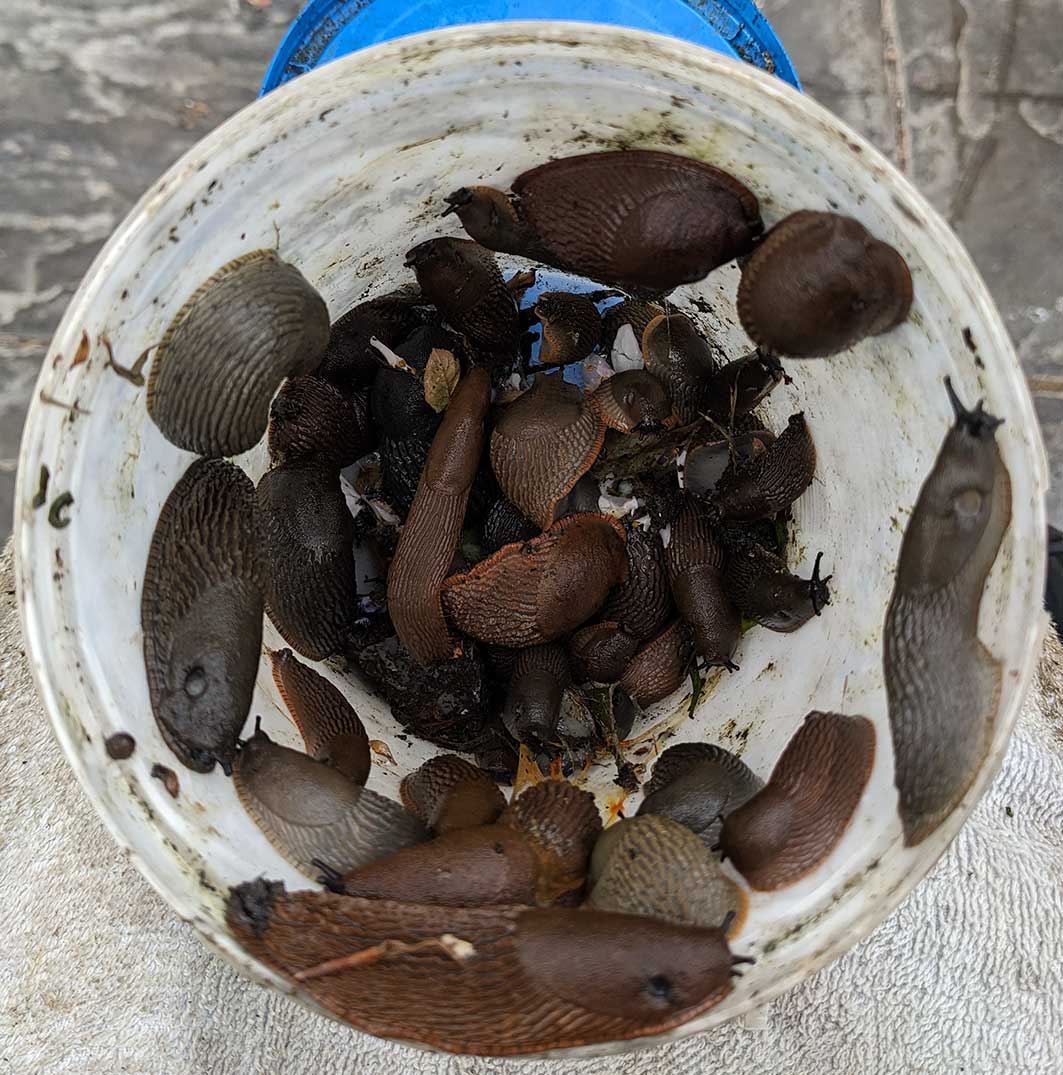
And here are some of the culprits:

tub of Spanish slugs that cause damage in my garden
Tub of Spanish slugs

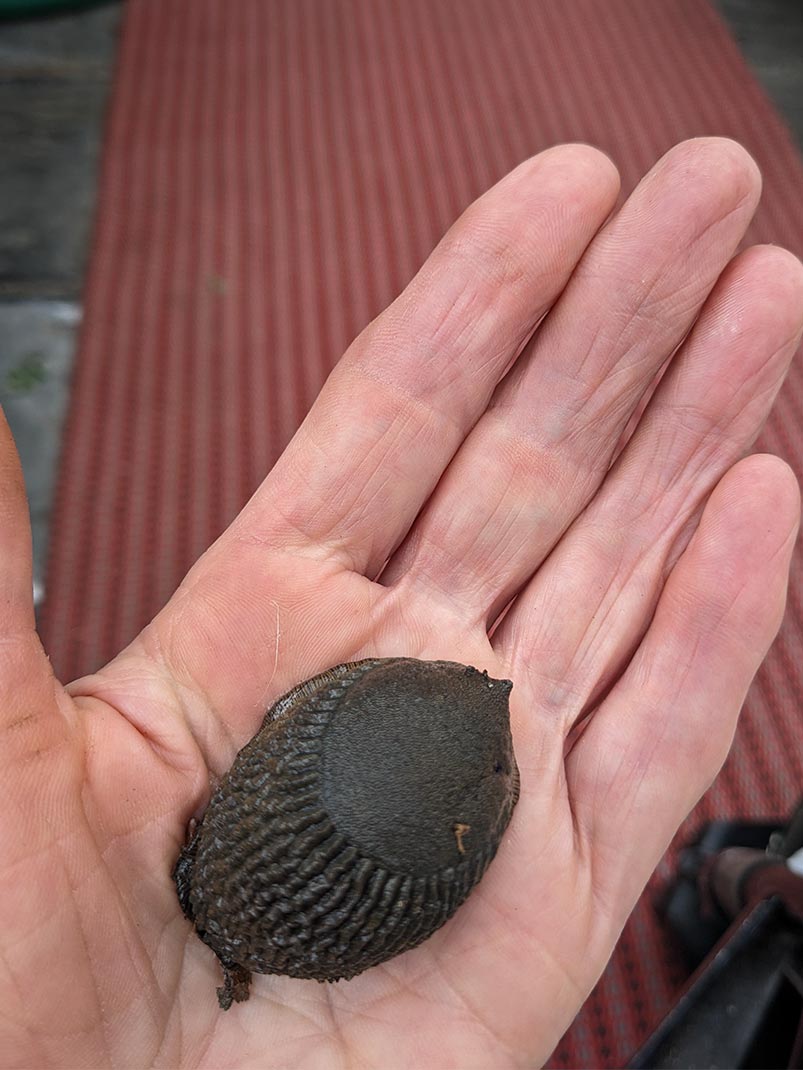
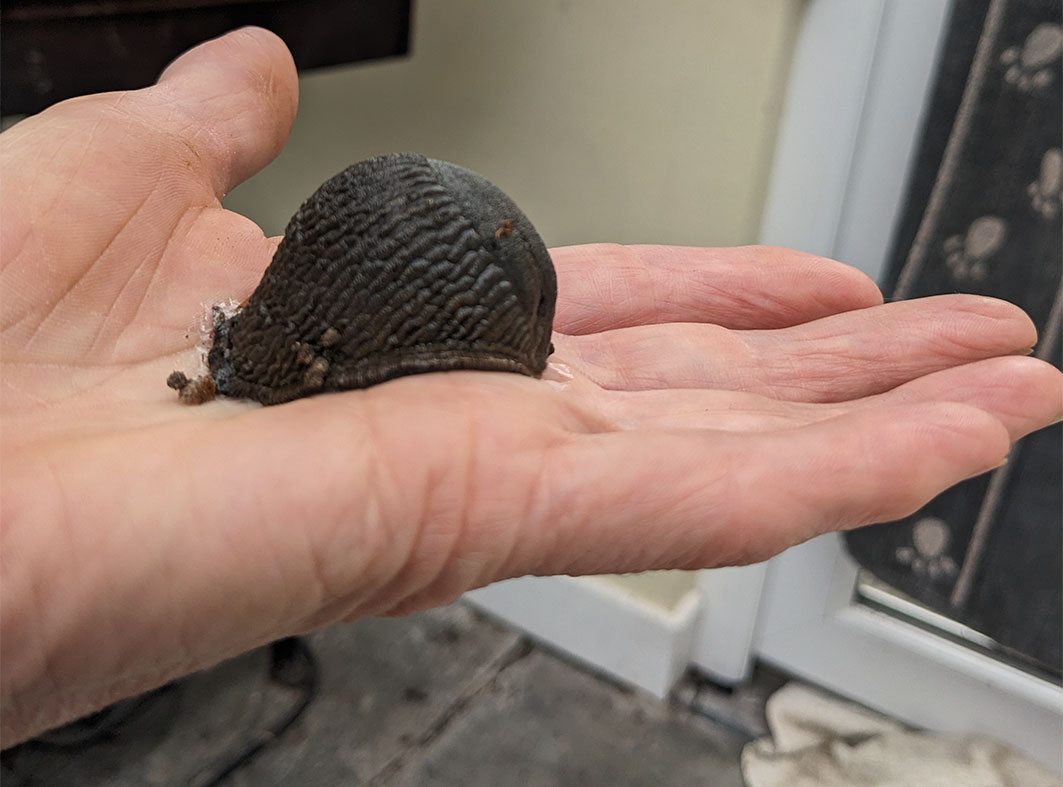
If I don’t do a slug patrol daily then these ones would grow to this kind of size or even bigger!

big Spanish slug on the palm of my hand
Big Spanish slug
big Spanish slug on the palm of my hand
Big Spanish slug

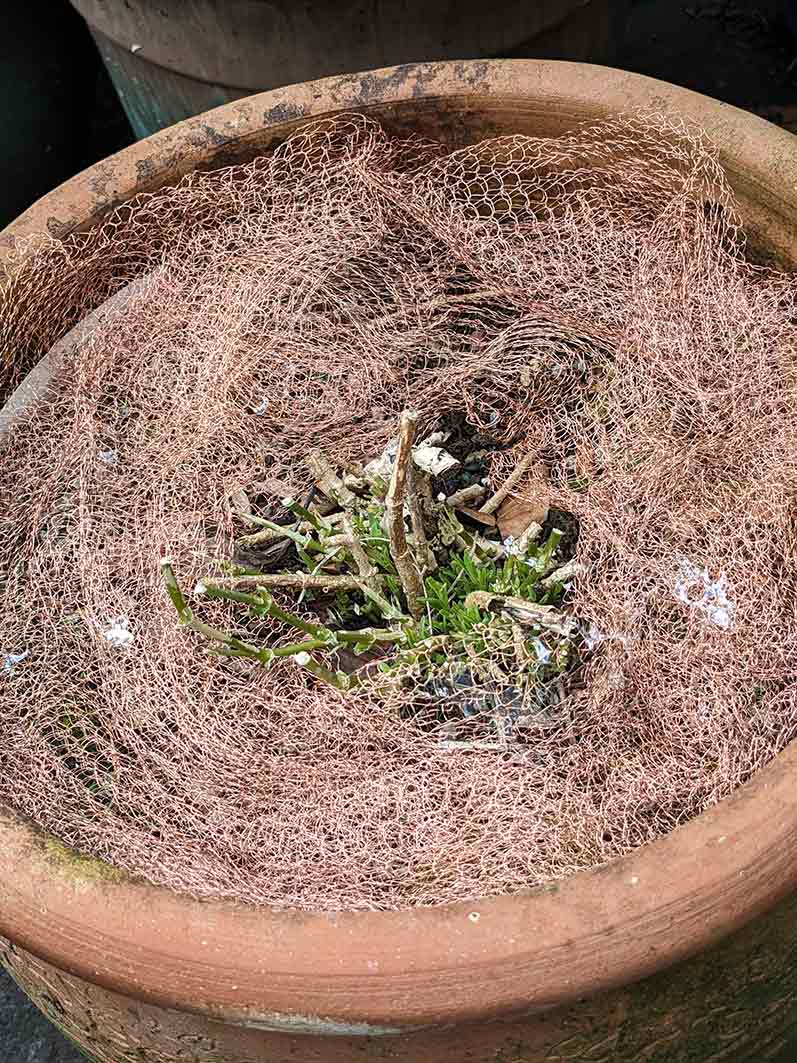
I have resorted to putting some copper mesh around some plants but I have found slug trails over that too so now I will have to make copper hats to cover some plants until they get a little higher and tougher.  I had no problem at all with slug damage on the Gypsophila paniculata ‘Compacta Plena’ but this year it just can’t get started without being chomped.

large clay pot with copper mesh around a plant that has been eaten by slugs, shows slug trails over the copper mesh
Copper mesh with slug trails on it.

The rhododendron and duetzia have gone over now but the sambucus, spireas, hardy geraniums, thalictrums, astrantia,  lavender, cirsium, verbascums, verbena, alchemilla, gaura, erigeron, fuchsia, geums, cowslips and roses have now taken over.  There are still a few foxgloves hanging on and one clematis; Clematis warszawski has a few flowers on.

pink generous gardener rose at the top of an arch
Generous gardener rose (excuse the barbed wire of the fence in the background)
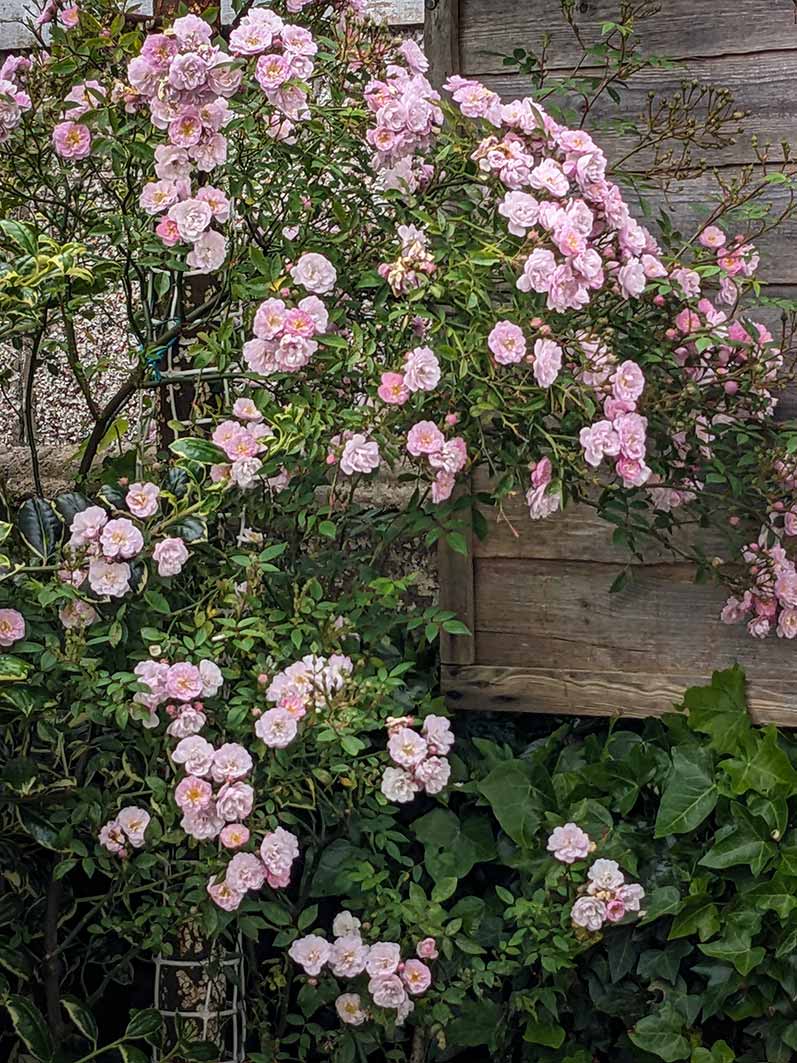
pink mini patio rose climbing up a pole
Mini pink patio rose
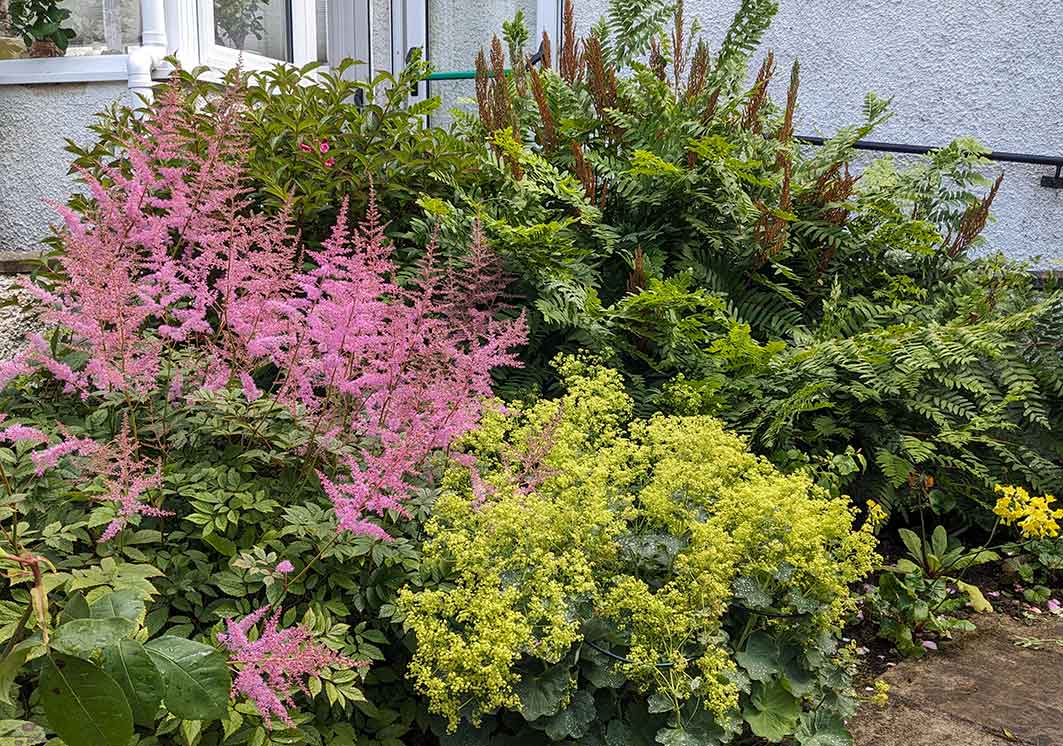
damp corner of garden with astilbe, fern and alchemilla mollis
Damp corner
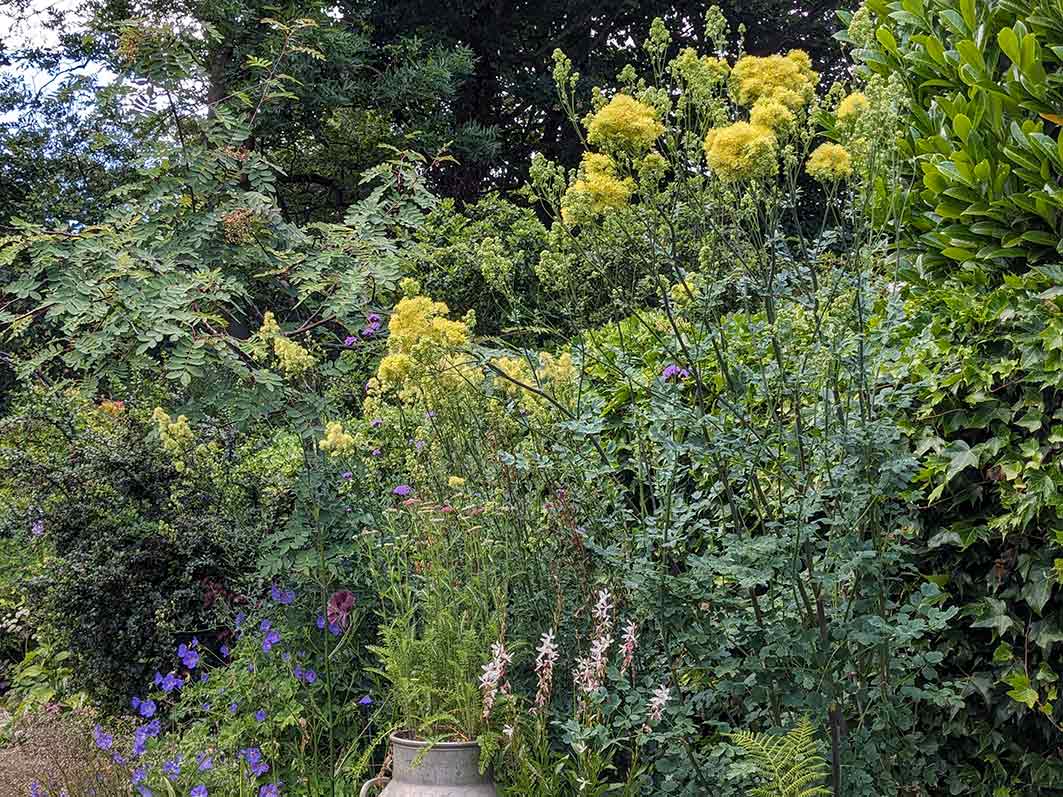
tall yellow thalictrum flowers
Tall Thalictrum flavium Glaucum yellow

It is back to being cold and wet today so we are still waiting for summer to appear.

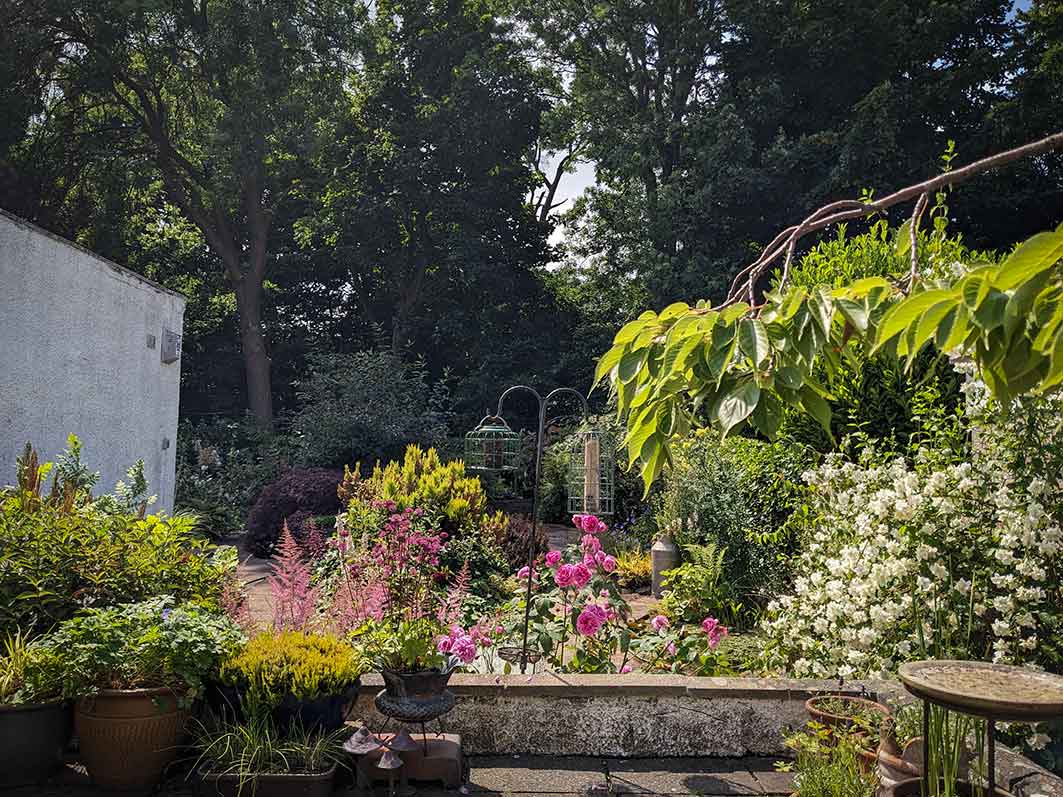
the view from the patio end of June 2024
the garden from the patio at the end June 2024
flower combinations in the stumpery

End of April 2024

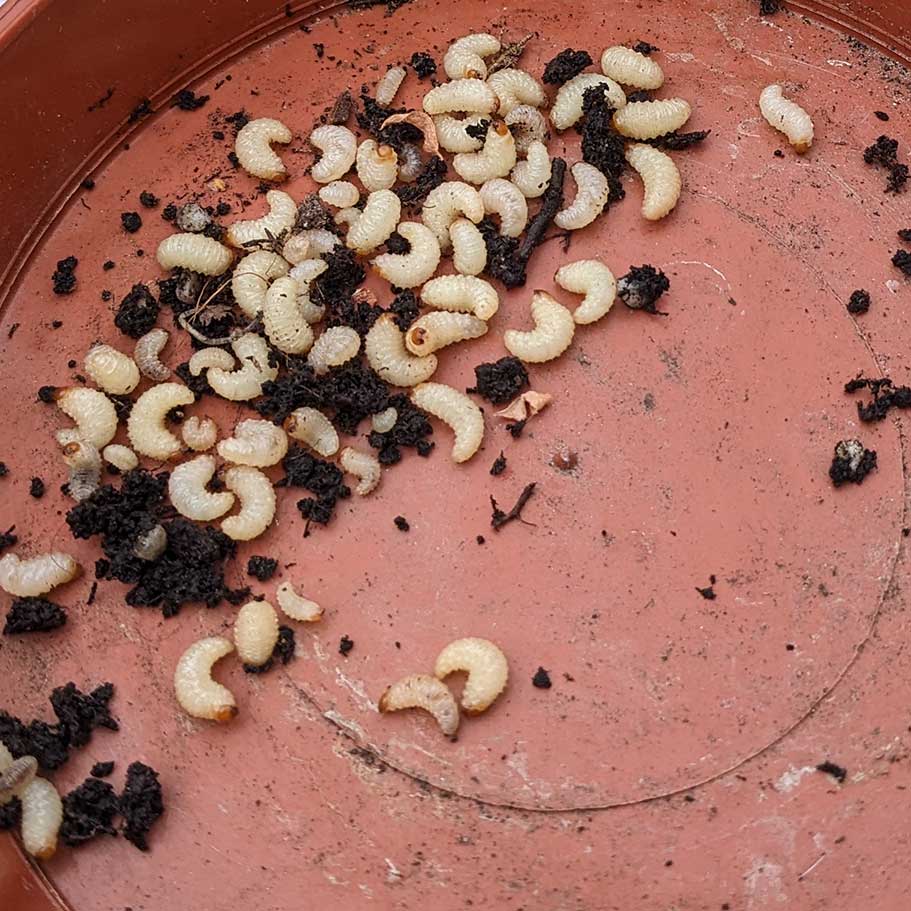
Finally we have had a few nice days – still cold but not quite so wet.  The news was saying that we have the wettest 18 months till March this year since records began (maybe they just meant England but we have been very wet up here too).  I am still eagerly waiting for some signs of new growth from a few newly planted plants (last year) but so far it looks like they have died.   I had also taken quite a few Nepeta Junior Walker cuttings to sell at the Duddingston Kirk Garden Club sale but sadly they didn’t make it.  Some nepata in the stumpery also didn’t make it.  I found vine weevil grubs in one of the large pots on the patio that contained  some heuchera,  but at least I managed to take cuttings of the heuchera and saved them, I then fed the grubs to the birds.  I found one adult vine weevil in the conservatory but so far I haven’t found grubs in any of the plants in there, that may be because I put a top layer of gravel on the succulents so it couldn’t lay it’s eggs in the soil.  So, I have ordered vine weevil nematodes to treat the patio, conservatory and back garden.  I hate the blighters – apparently every adult is female and they can lay hundreds of eggs from April to September.  Just as well they can’t fly.   Trouble is, that to use the nematodes you need a soil temperature of above 5ºC and wet soil.  In Scotland we have to wait a while longer than England before the soil temperature is high enough for the nematodes to survive.  The temperature is ok now so I had better get on with it.

vine weevil grubs in a brown saucer
Vine weevil grubs

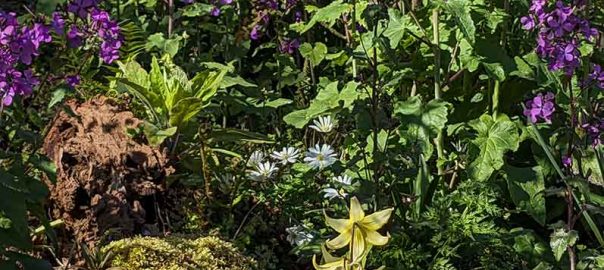
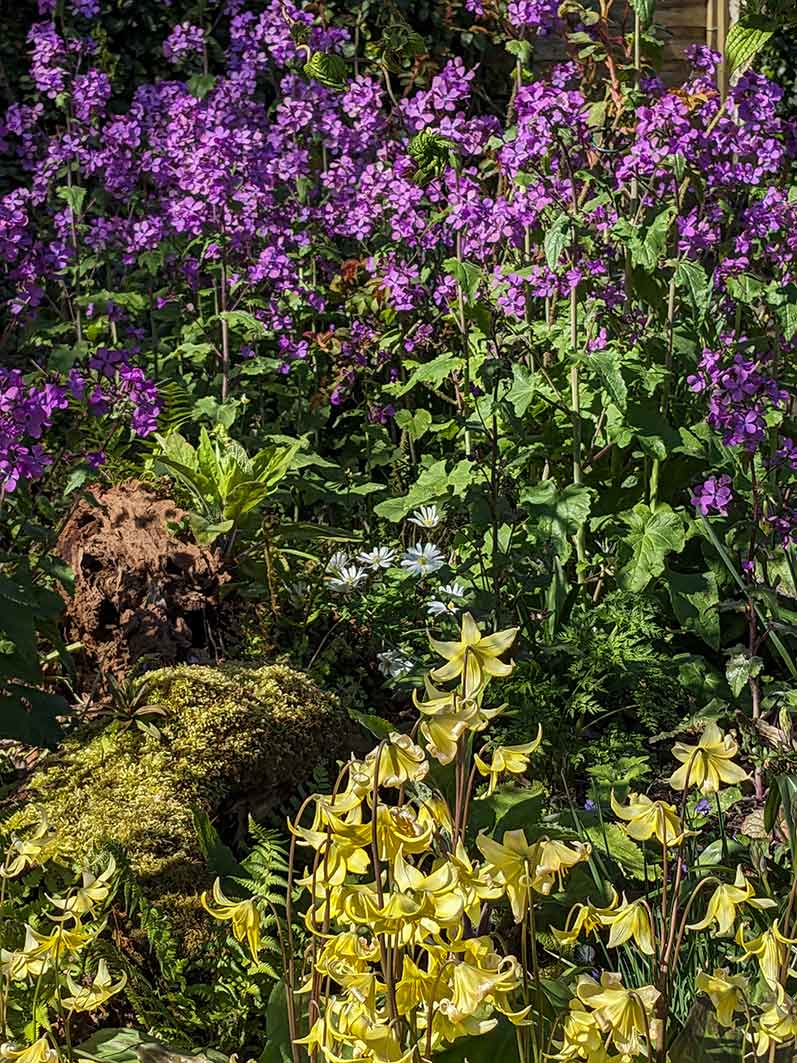
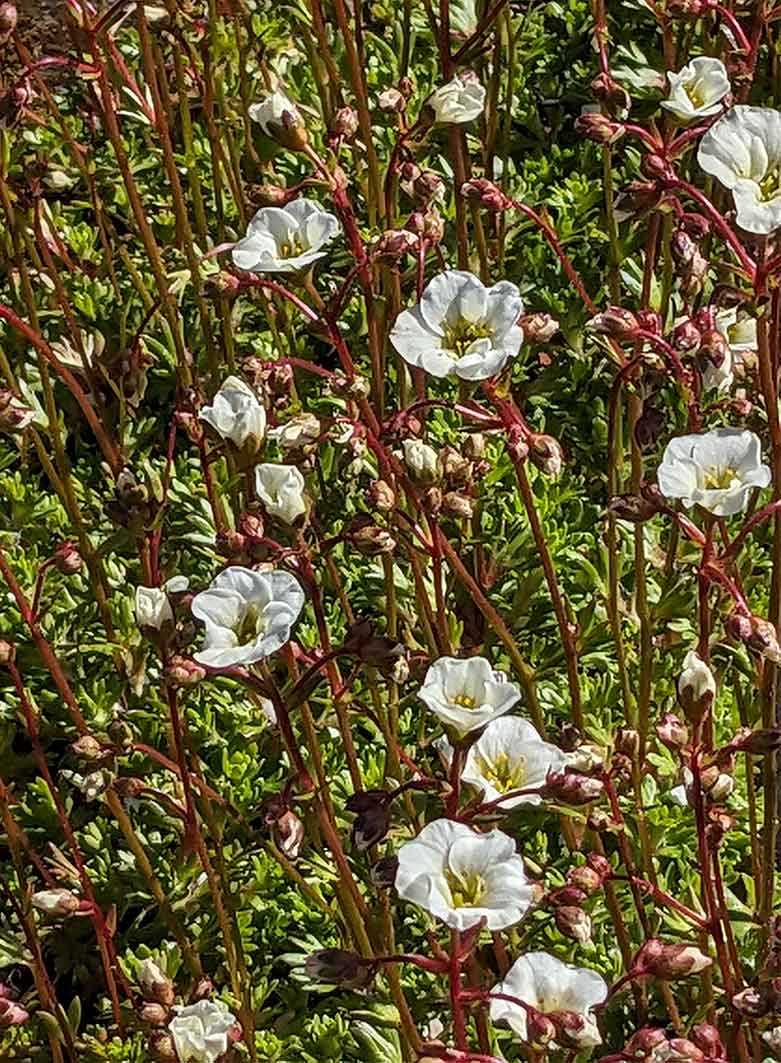
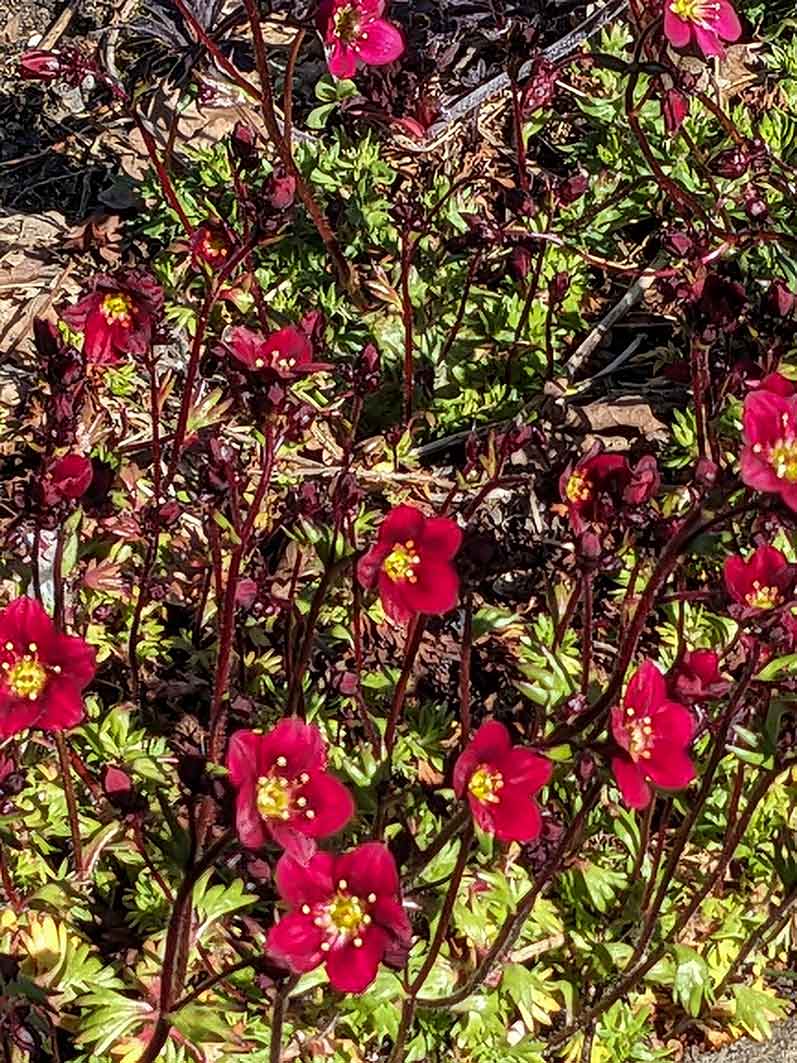
Most of the narcissi have gone over now except for the narcissi Pipit  Most of the tulips are over, as is the cherry tree, mahonia, spirea Bridal wreath, rosemary and  the epimediums.  Now taking over are the saxifrage mossy white and saxifrage andresii carpet purple along with the purple honesty, white wood anemones, bluey purple pulmonaria and yellow erythroniums in the stumpery.    The bright orange berberis is looking good just now and the ferns are all just beginning to unfurl their fronds.

flower combinations in the stumpery
Colour in the stumpery
saxifrage mossy white
Saxifrage mossy white
red coloured saxifrage plant
Saxifage andresii Carpet purple

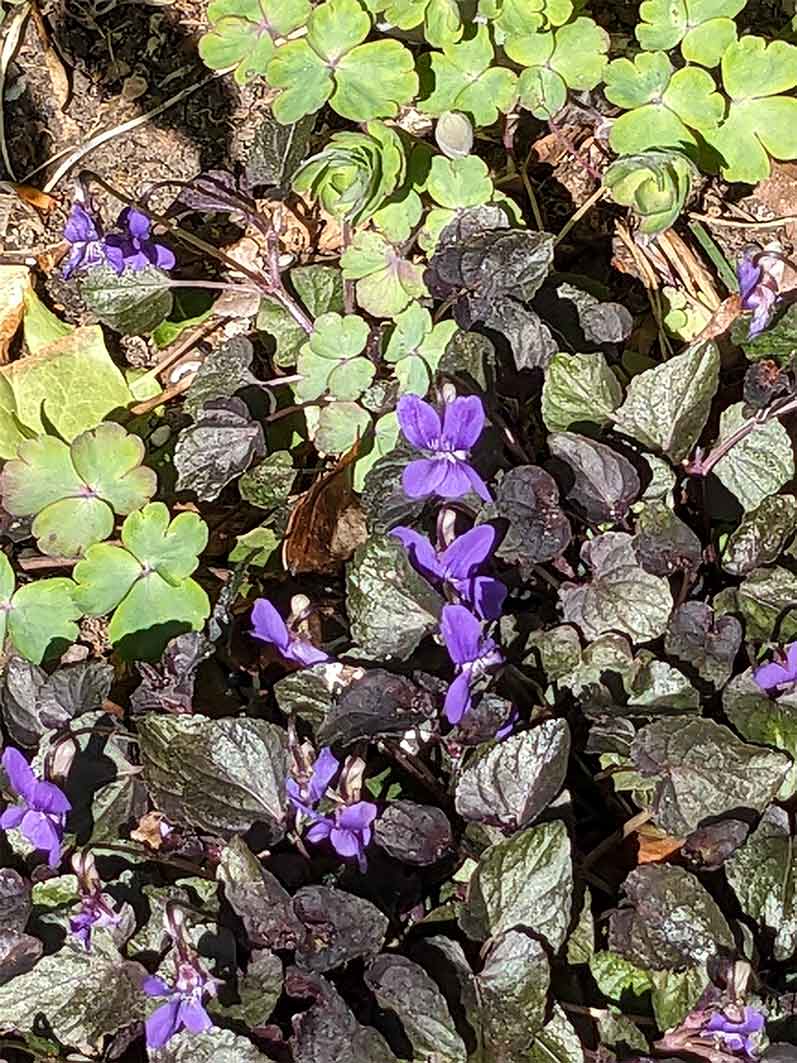
There are loads of little splashes of purple all around the back garden from the Viola labradorica.  Not only does it have delightful little purple flowers but the leaves take on a purple tinge too.  They will self seed everywhere but I love them.  People do say that to make your garden feel more cohesive it is good to do repeat planting, either the same plant in various places around the garden or a similar colour repeated throughout.  I have done this with a few plants such as the viola, bugle, perrywinkle, hellebores, geraniums and aquilegias.  I was hoping to do the same thing with nepeta and erigeron but a few of the erigeron just died leaving empty spaces in some areas.  One of my spirea japonica white gold died too but the one right beside it is fine – I have no idea what happened there.

violet flowers of viola labradorica with purple tinged leaves
Viola labradorica

I am glad to hear that the weather will be getting a little warmer soon so I will be able to get in the garden a bit more, although the colder weather has maybe kept the number of slugs down as I haven’t seen that many – yet.