Monthly Archives: April 2026

view of the garden from under a cherry tree.

End of April 2026

We had a pretty wet and windy start to April but now there is a lot more sunshine around.  There is still a chilly breeze though, and with clear nights there is still the chance of frosts.

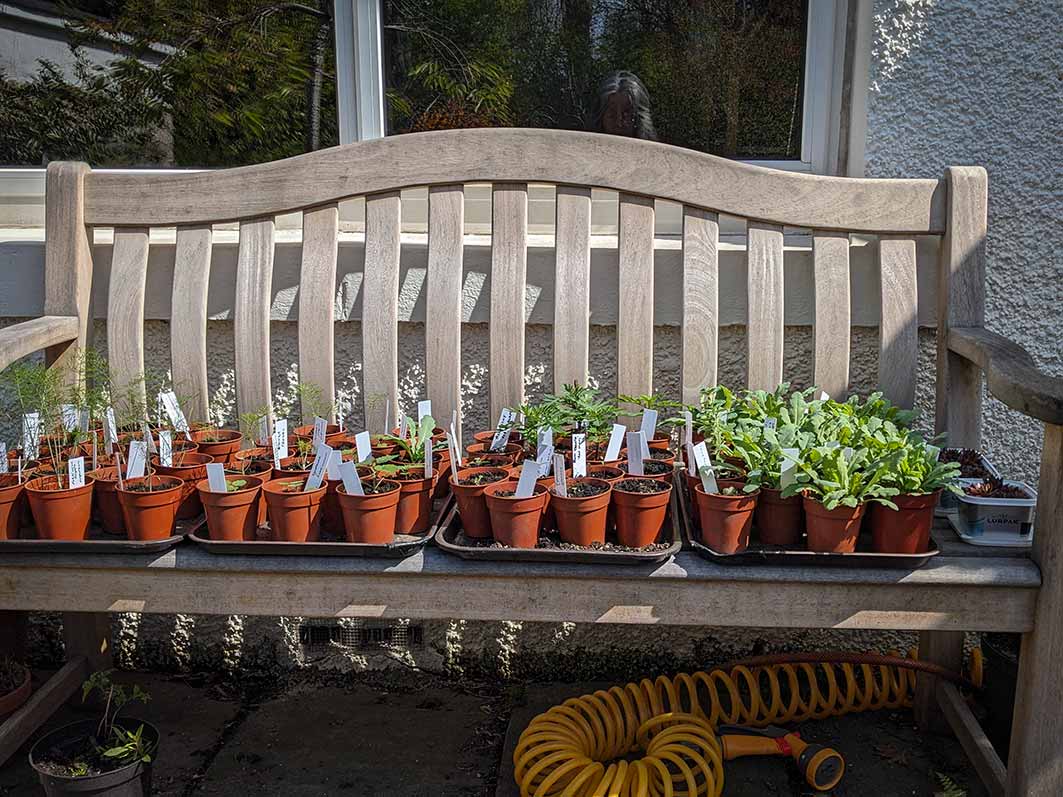
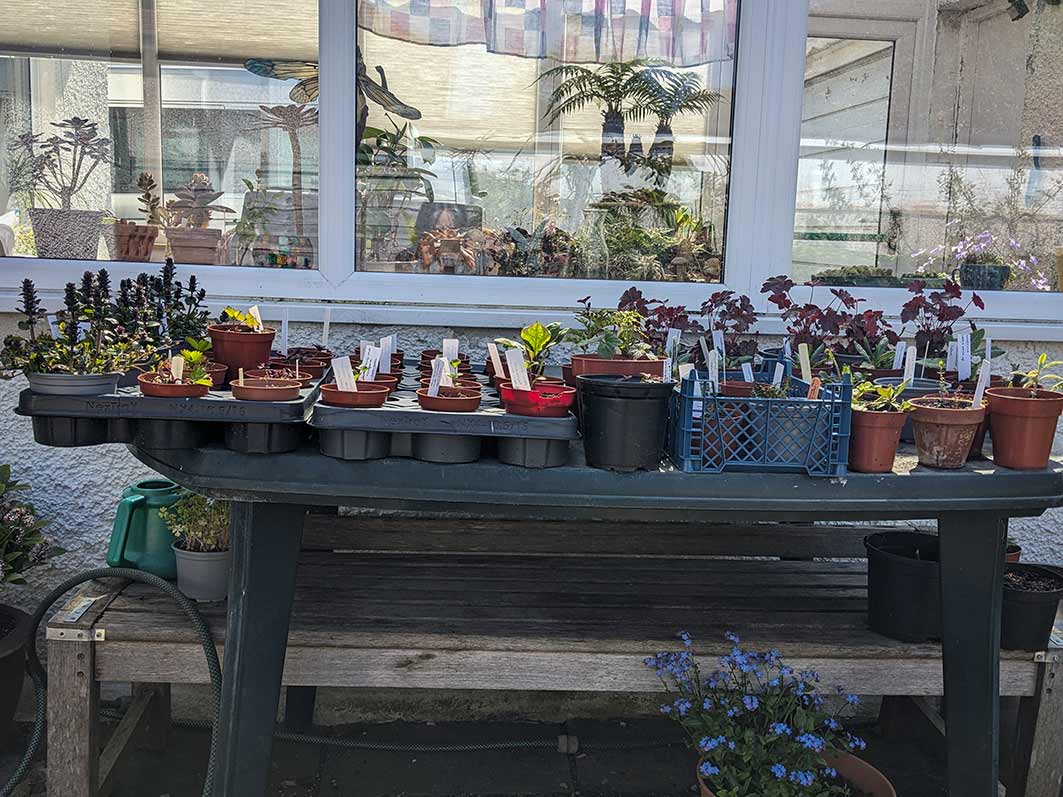
Sadly the Duddingston Kirk Garden Club has ground to halt now but the good news is that Jock Tamson’s Gairden (JTG) is taking over our annual plant sale (May 2nd in Duddingston Kirk manse garden). I have loads of seedlings and cuttings to take along for sale so a lot of my time has been spent tending to them.  Right now that means hardening them off by taking them all out during the day and bringing them all in again in the evening.  Once the plant sale is over I should have a lot more room in the conservatory and the patio tables.
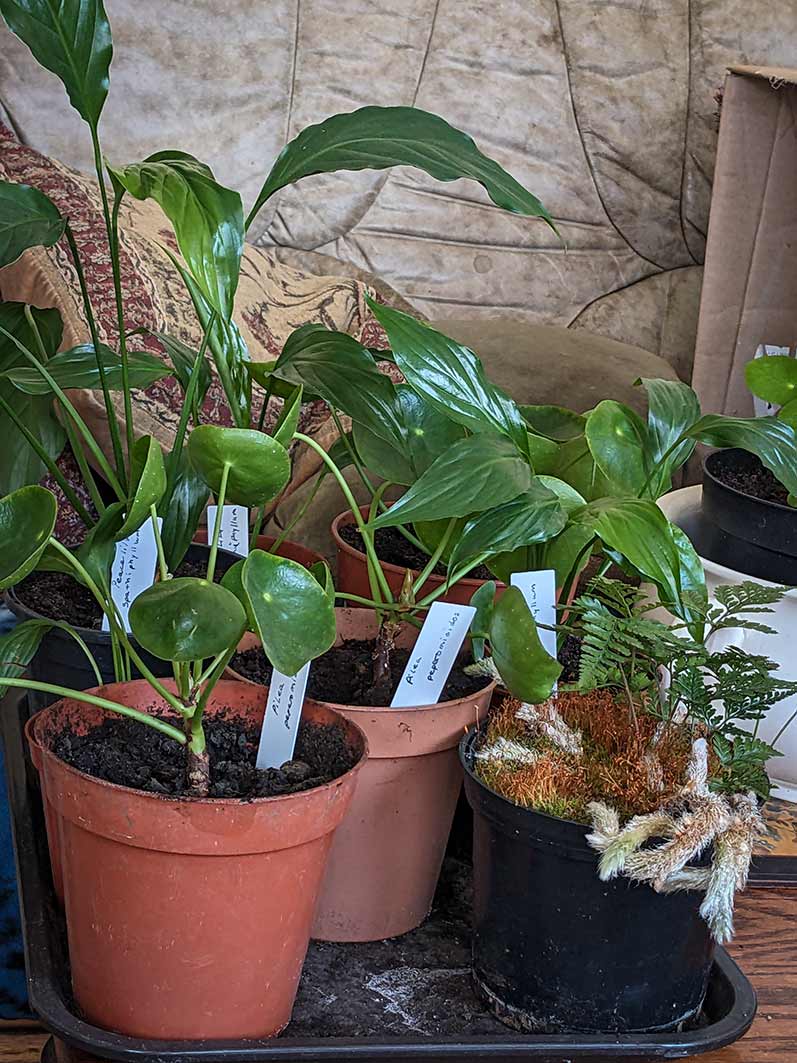
selection of house plants for sale.
House plants for sale 2026.
selection of small plants for sale on a table.
Plants for sale 2026.
Plants for sale on a bench.
More Plants for sale 2026.

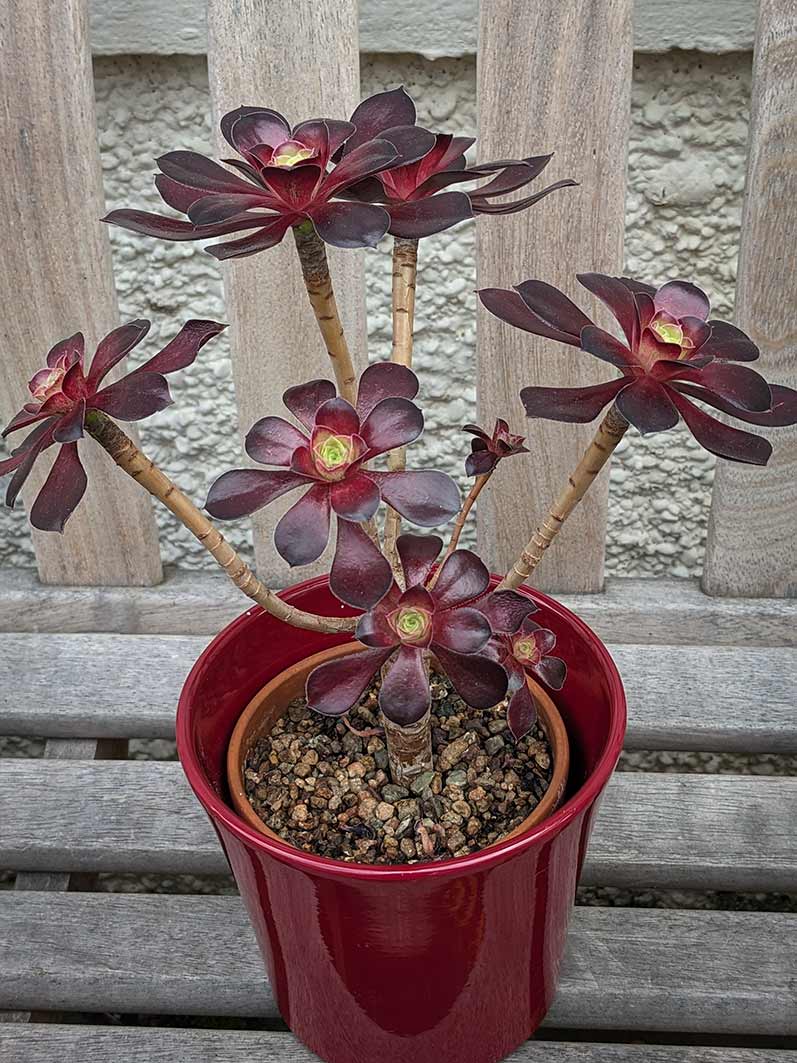
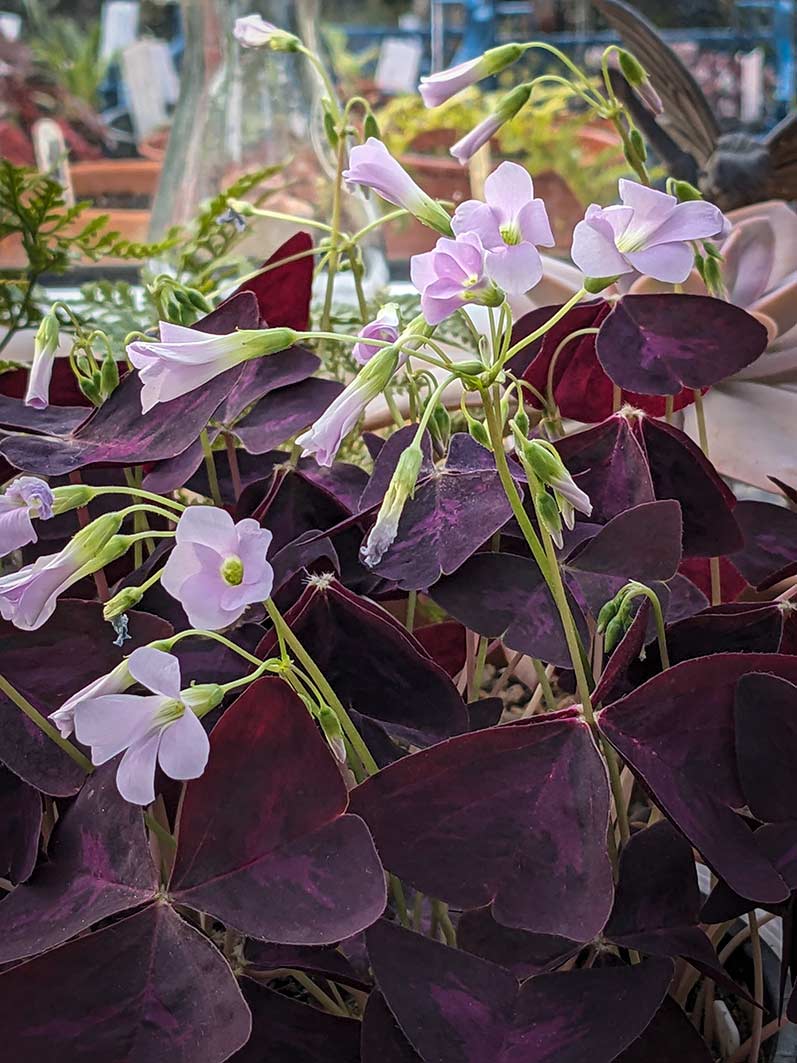
In the conservatory the cactus bumps have flowers on them which I didn’t expect.  I thought the bumps would have to get larger before they flowered.  Hey-ho.   Oxalis triangularis is just starting to bloom now with its very dainty flowers and dark purple foliage.  One of my neighbours brought some old pots that she no longer wanted and would I want any?  I spotted this deep red one that goes really well with aeonium Voodoo now that it has its deep red, summer colours.
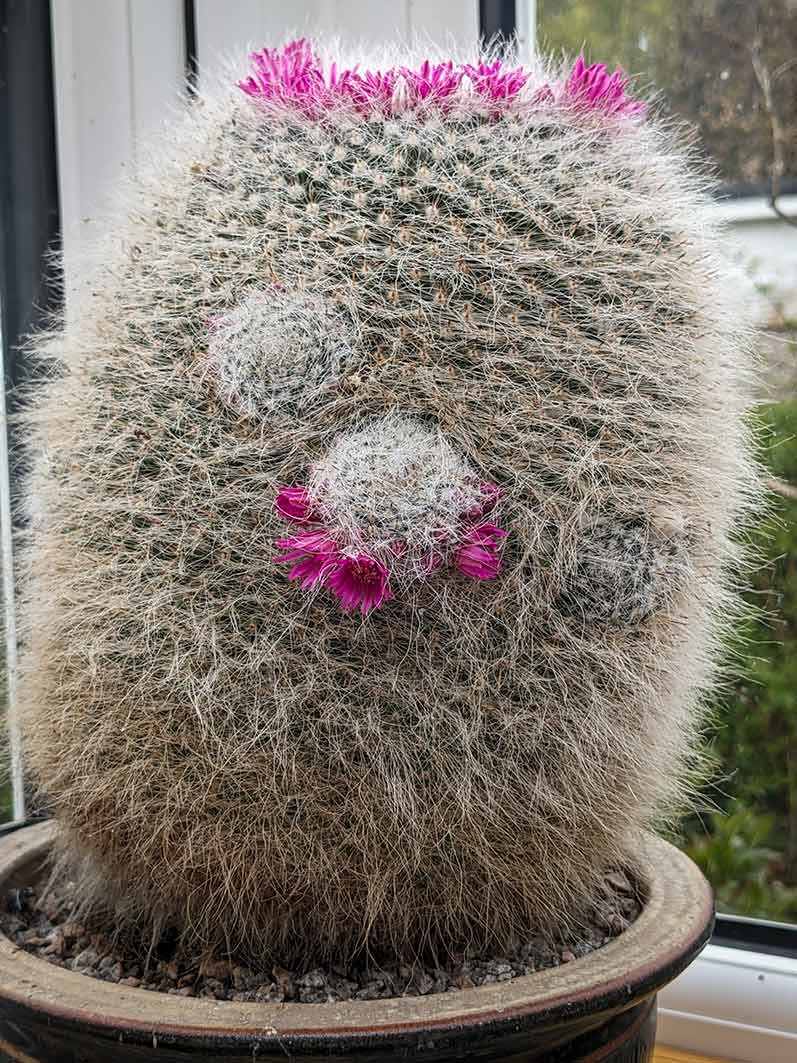
Large fluffy, spiny cactus with small bumps with pink flowers on top.
Old mother cactus flowers.
Purple triangular shaped leaves and dainty pink flowers of Oxalis triangularis plant.
Oxalis triangularis.
Deep red colours of aeonium voodoo succulent plant in a dark red pot.
Aeonium Voodoo in a dark red pot.

It is the time of year that the vine weevil grubs are chomping their way through plant roots so we have given the whole back and front garden, patio pots, conservatory and the plants for sale, a nematode treatment.  This at least keeps them at bay.  I just need to keep the earth moist for the nematodes to do their job.

I love wandering around the garden at this time of year spotting all the new shoots and being thankful for the plants that have come through the wet winter.  The emerging fern fronds (fiddles) look especially nice and they are all very different.  My favourite one just now is the very hairy looking  Polystichum polyblepharum.  I love ferns!
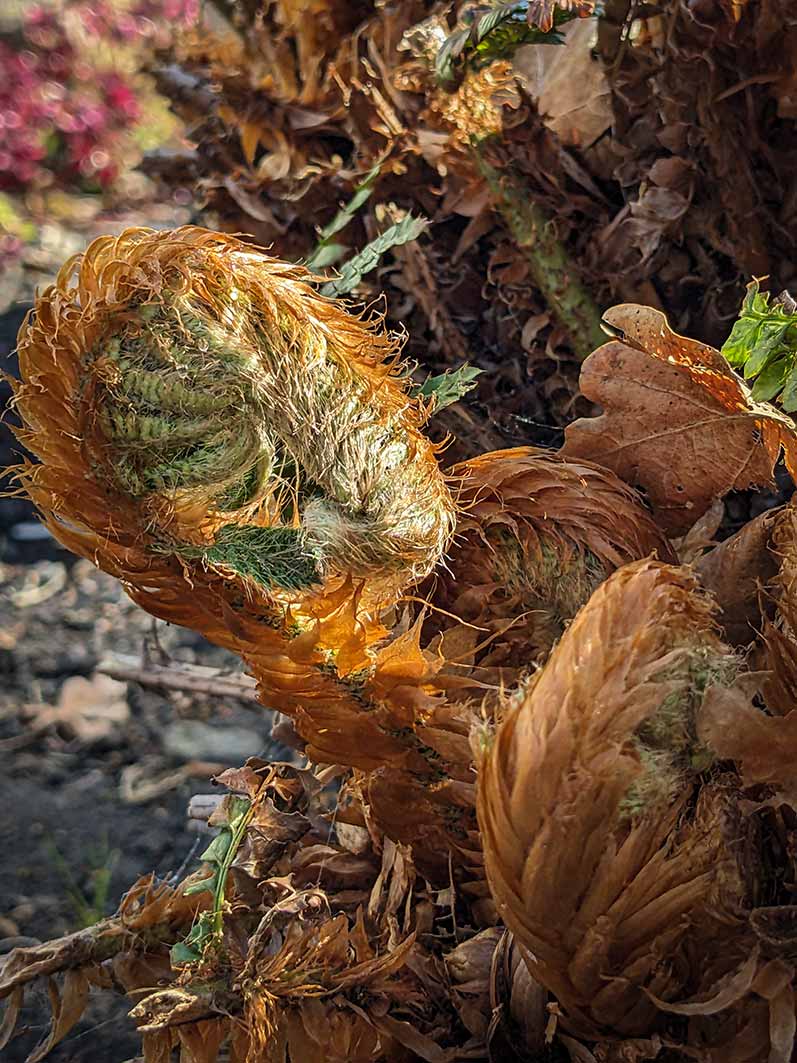
Hairy new fronds on fern.
Polystichum polyblepharum fern.

All around the garden are little purple violets that have just spread wherever they want.  I do have to keep an eye on them or they would just take over.  The same goes for the ajuga and the periwinkle.
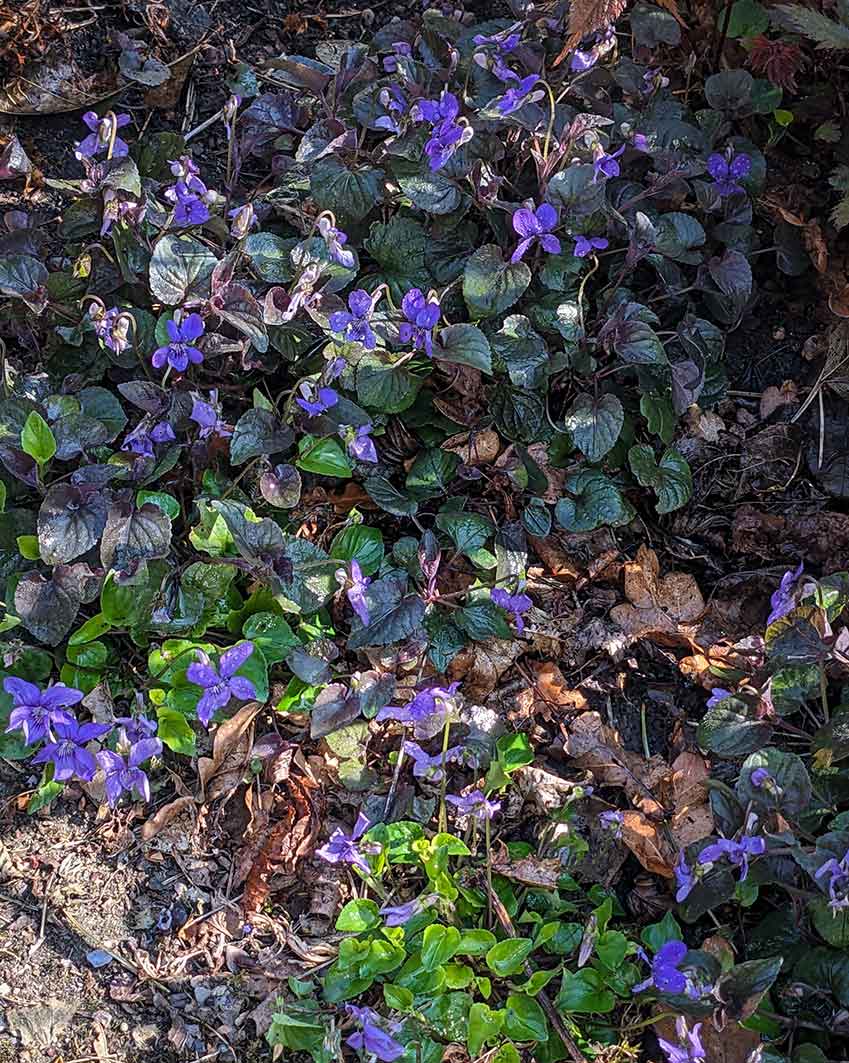
Purple violets on a woodland floor.
Viola riviniana purpurea (labradorica)

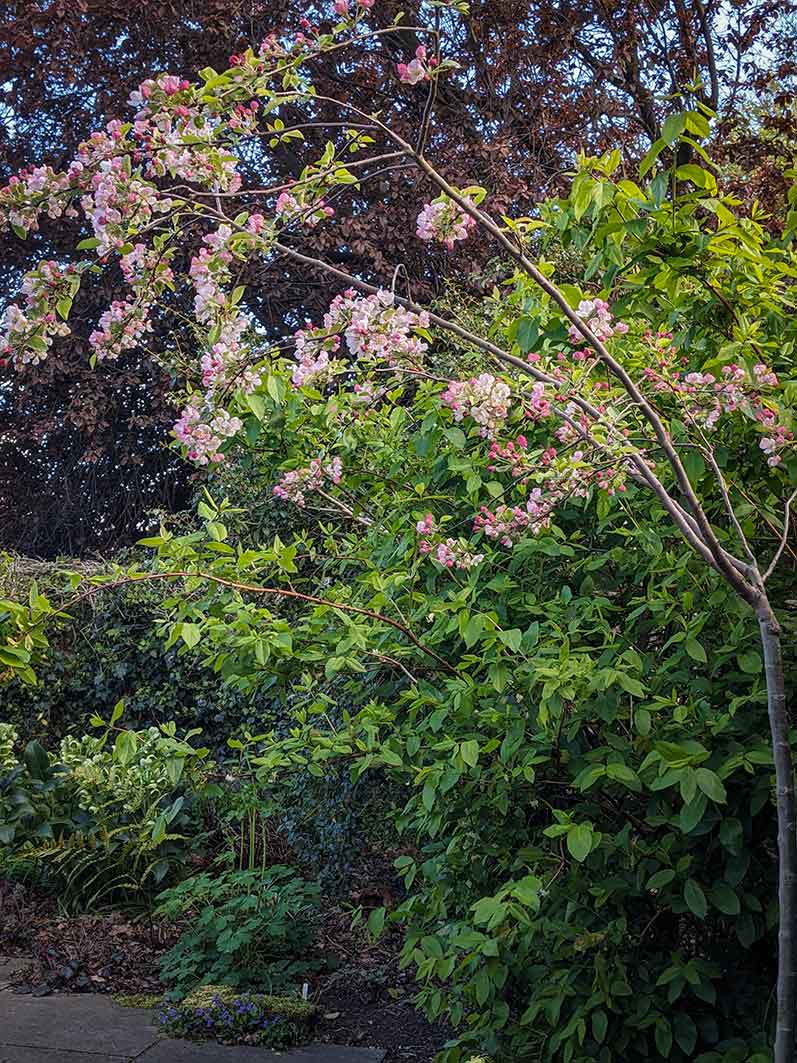
As for the forget-me-nots well they are popping up everywhere too.  The rain seems to have washed them down to the edge of the borders.  And under the rhododendron is a patch of dicentra formosa ‘ bacchanal red’   which has to be kept under control or it would spread everywhere.  The yellow erythroniums are needing dead-headed now to prevent them seeding everywhere as I already have 3 large patches of them.  One patch is under the crab apple which is now blooming away.  It hasn’t produced any more branches to the back of it so it is going to be drooping heavily to the front once the blooms have been replaced by the heavier crab apples.  I have to keep an eye on Harry otherwise he would just hack it back!  Although someone of FB told me about a method call Notching which can induce the bud bellow the notch to start to branch so I may try that next year and see what happens.
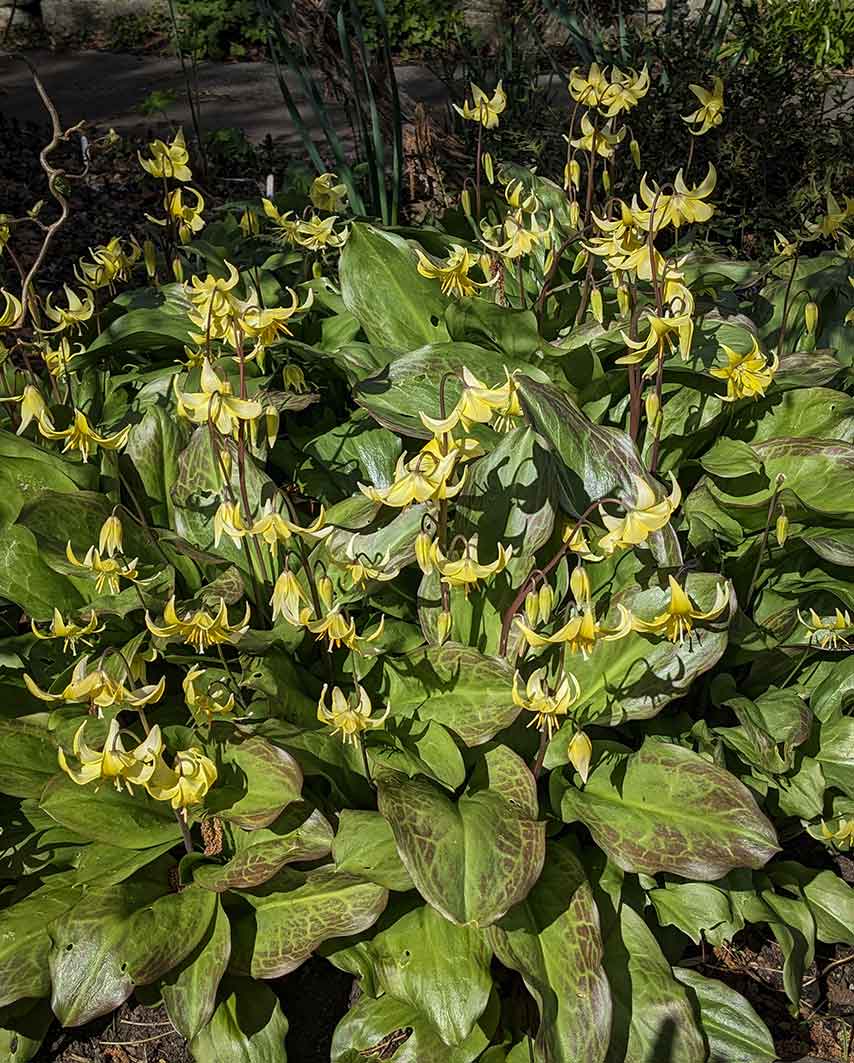
yellow flowers and mottled green and brown leaves of erythronium plant.
Erythronium yellow.
small pink blossoms on a crab apple tree
Crab apple tree Malus Sylvestris Evereste.

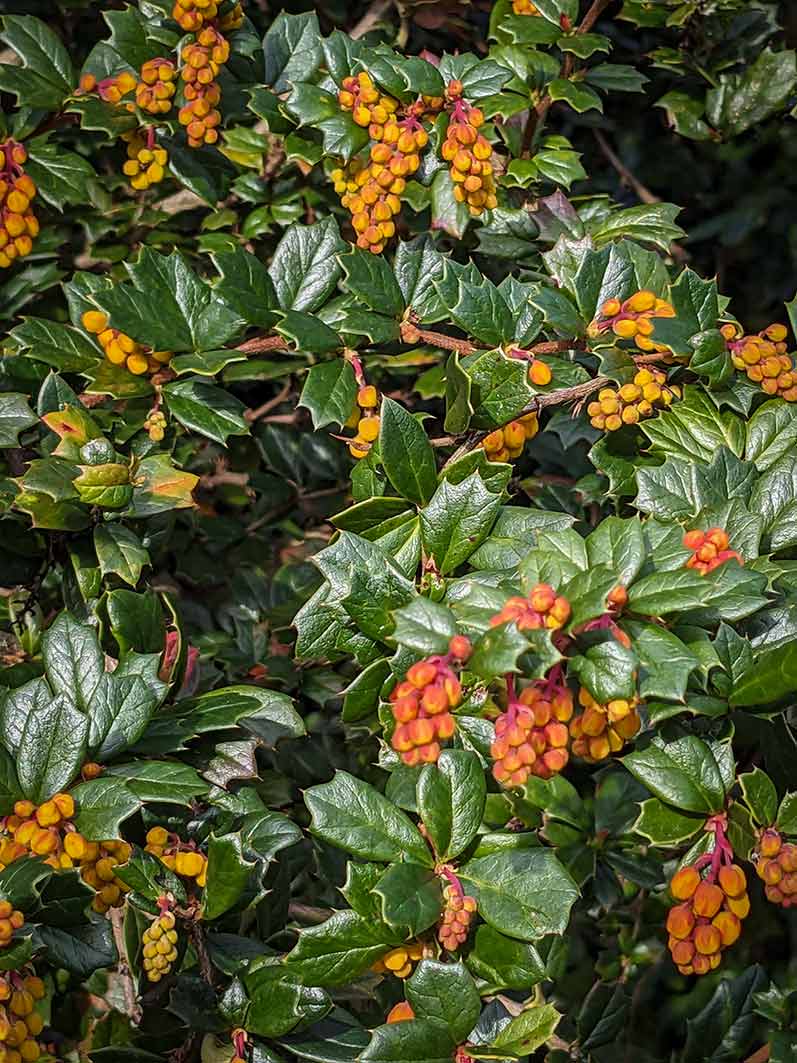
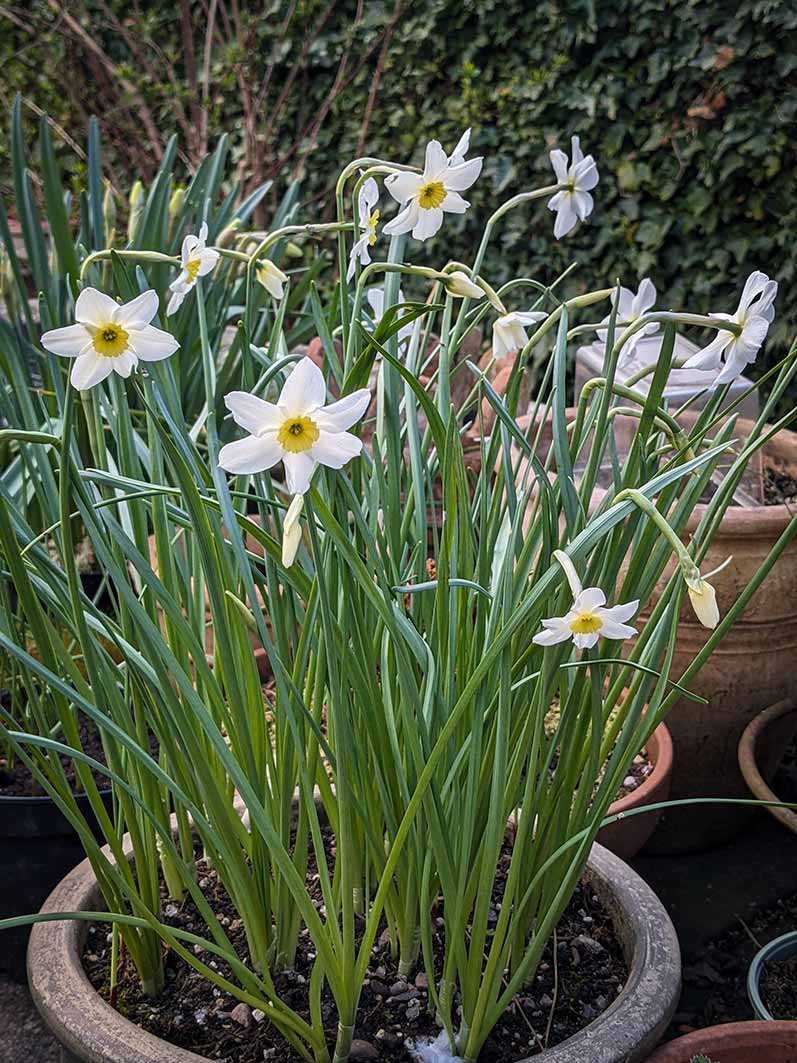
The berberis is in full flower now and if you peek up the right hand side of the garden you can see it with the white spirea flowers in the background and a few yellow tulips behind it and just in the foreground are the narcissi actaea pheasant eye.   Most of the narcissi have gone over except for a few Segovia on the patio, the small narcissi pipit  in the stumpery are still in flower.  Narcissi Pipit are always the last to come through.
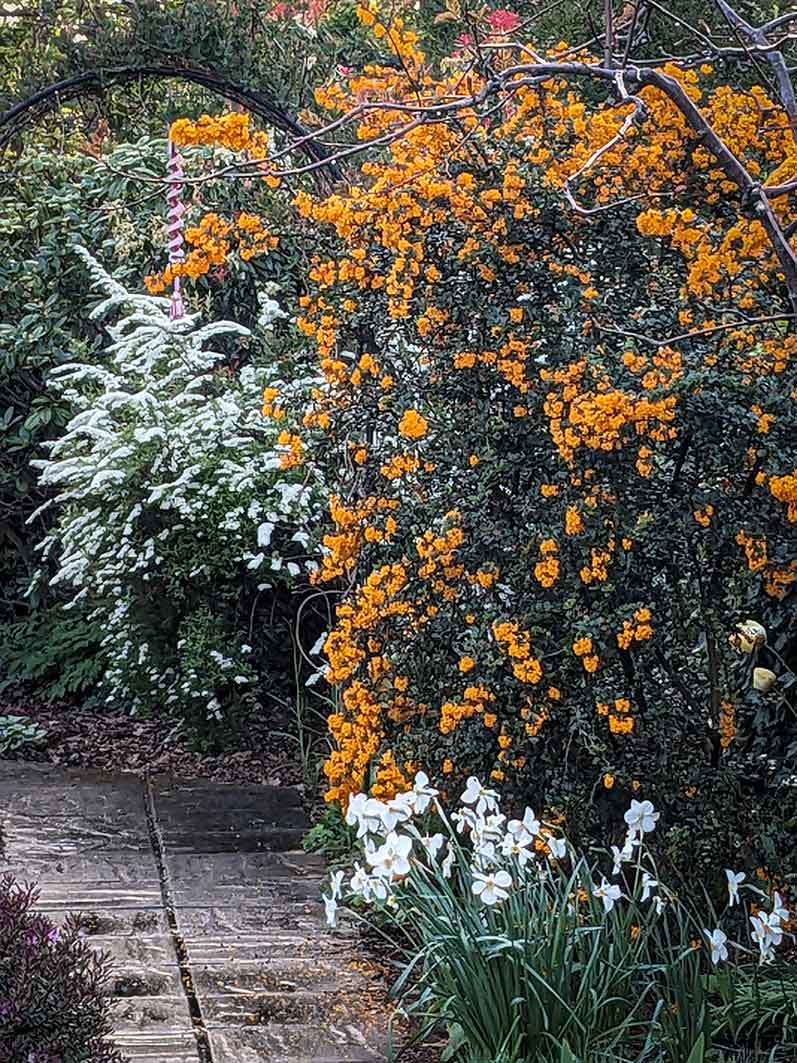
Orange flowers of berberis with small white sprays of flowers of spirea in background. Foregreound is pale yellow narcissi actaea pheasant eye.
Berberis and spirea.

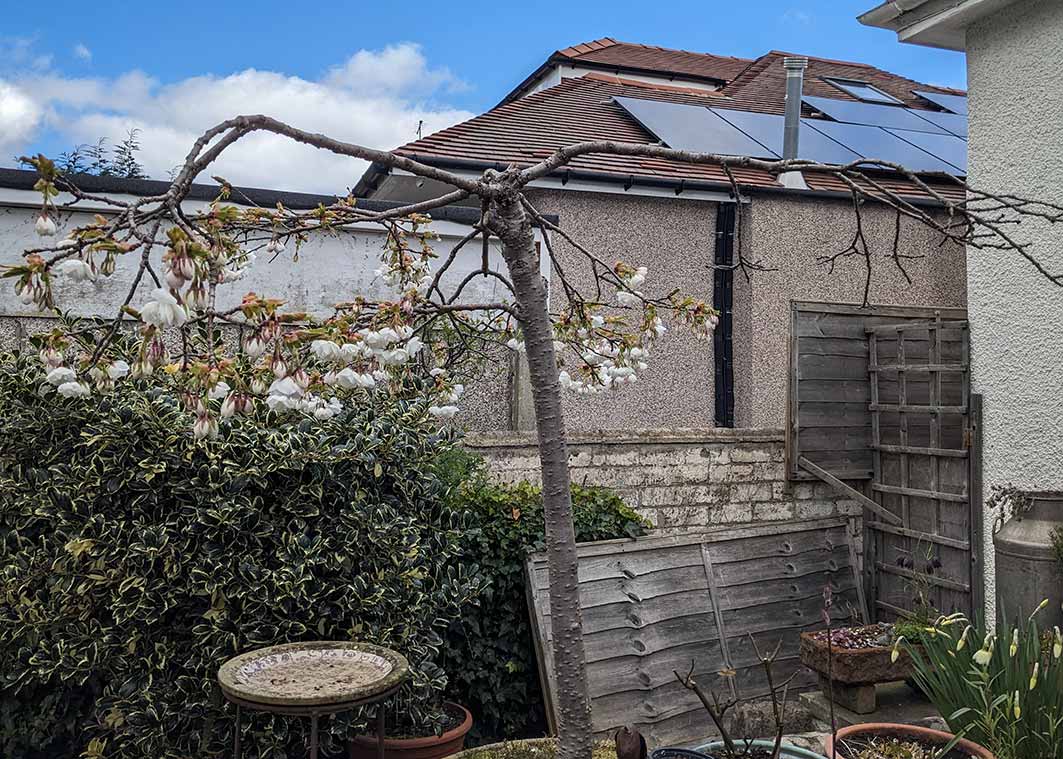
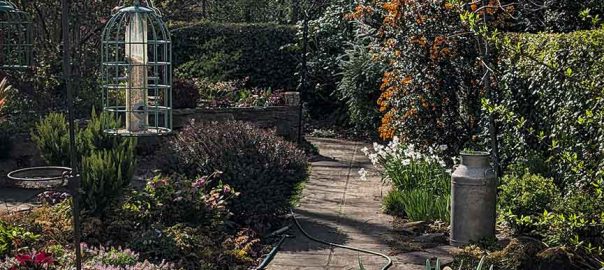
The view from the patio just before the cherry blossom fell and the narcissi had gone over,
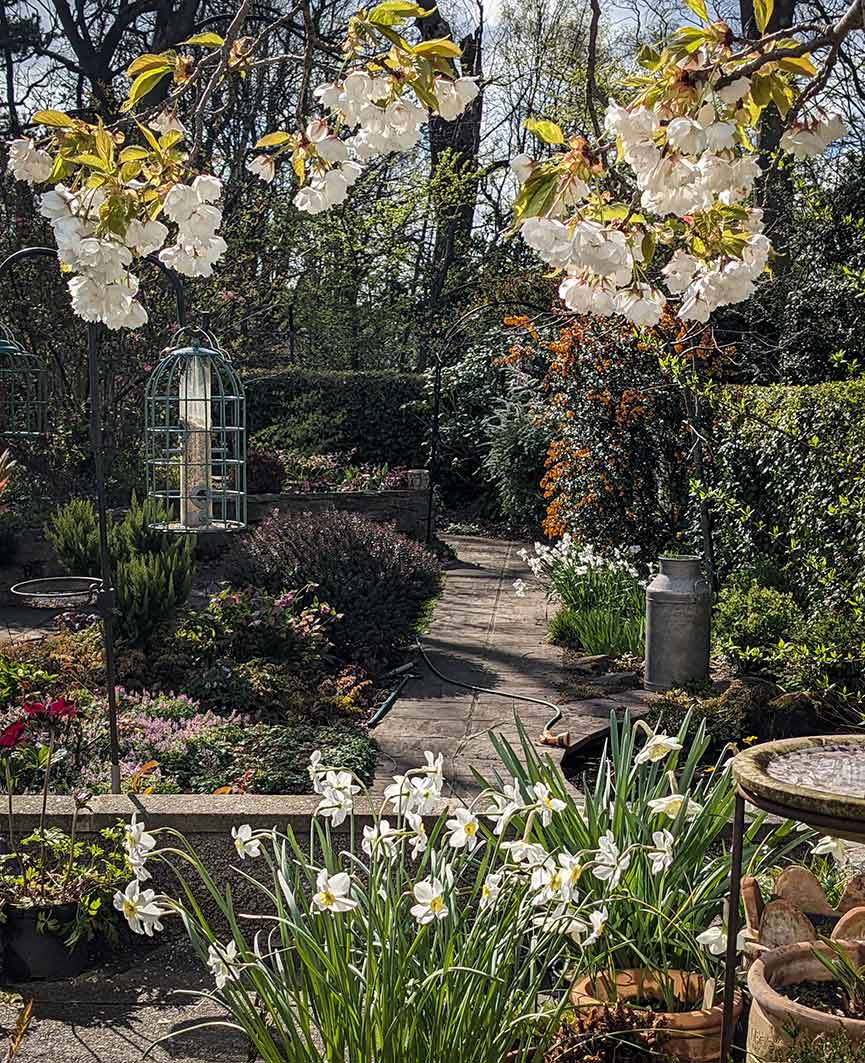
view of the garden from under a cherry tree.
Before the blossom all fell and the narcissi ha gone over.

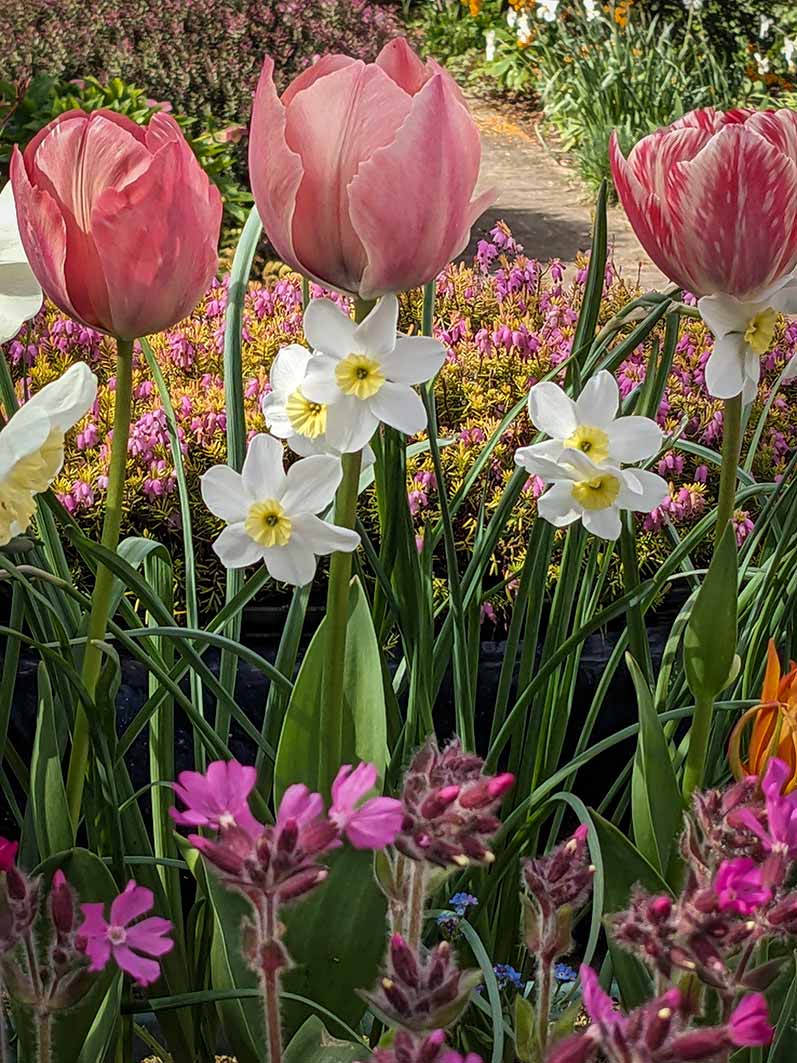
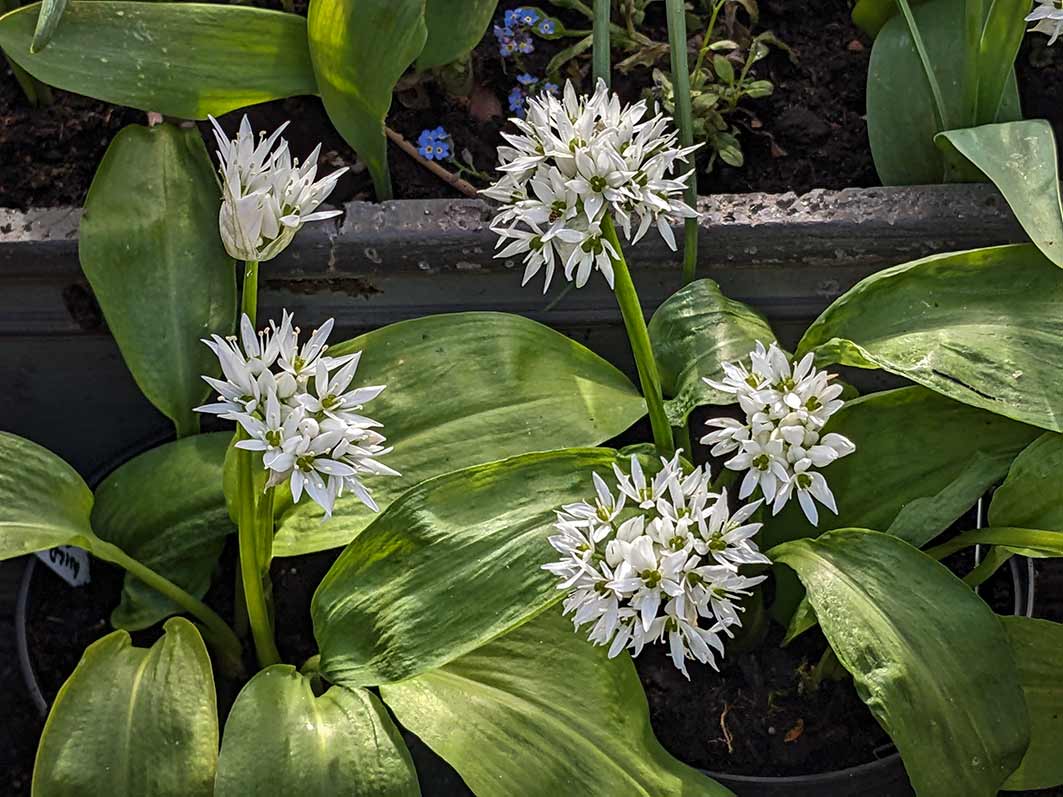
Most of the tulips have gone over but the ones in mum’s planter are still in flower.  They look nice next the narcissi Segovia and the pink silene Flos-Jovis Peggy.  The wild garlic looks pretty too.
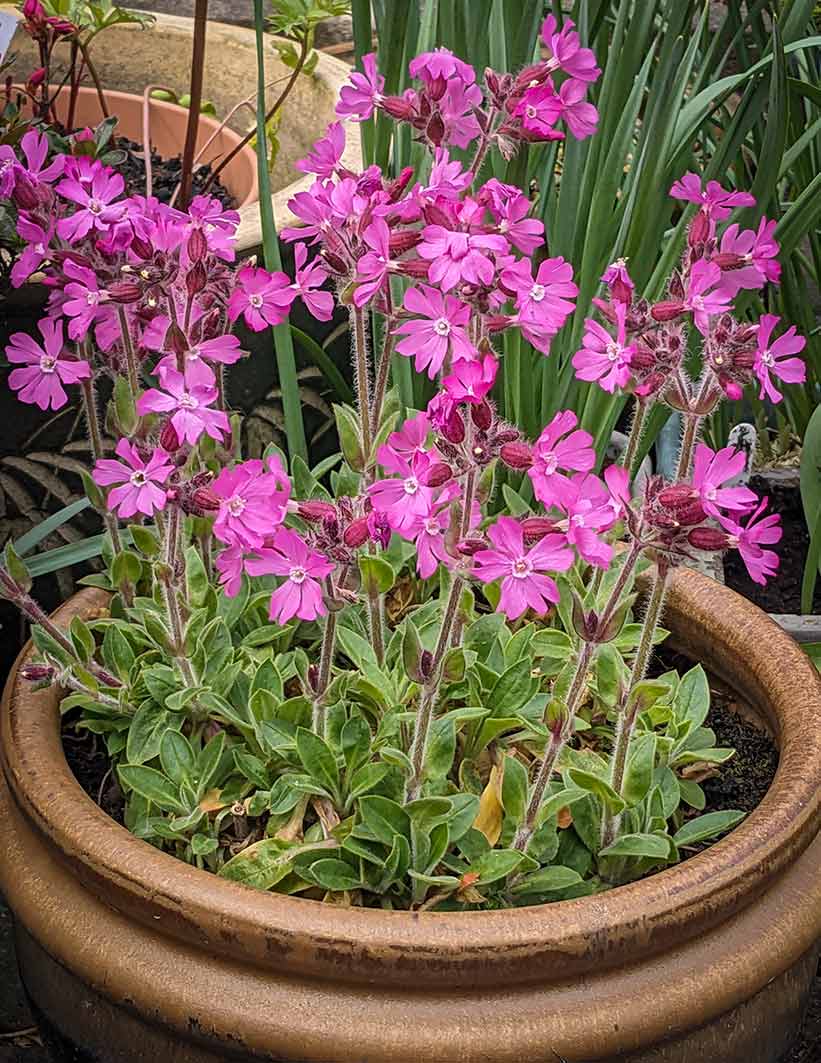
Pink flowers on a dwarf campion plant.
Silene Flos-Jovi Peggy.
Pink tulips layered with pale narcissi and dwarf pink campion flowers.
Unknown tulips with narcissi segovia and silene Flos-Jovi Peggy.
white flowers on the wild garlic plant.
Wild gar;lic, allium ursinum.

Just beside the conservatory door to the patio is the skimmia japonica which has a really nice scent when in flower.  It is just about over now.
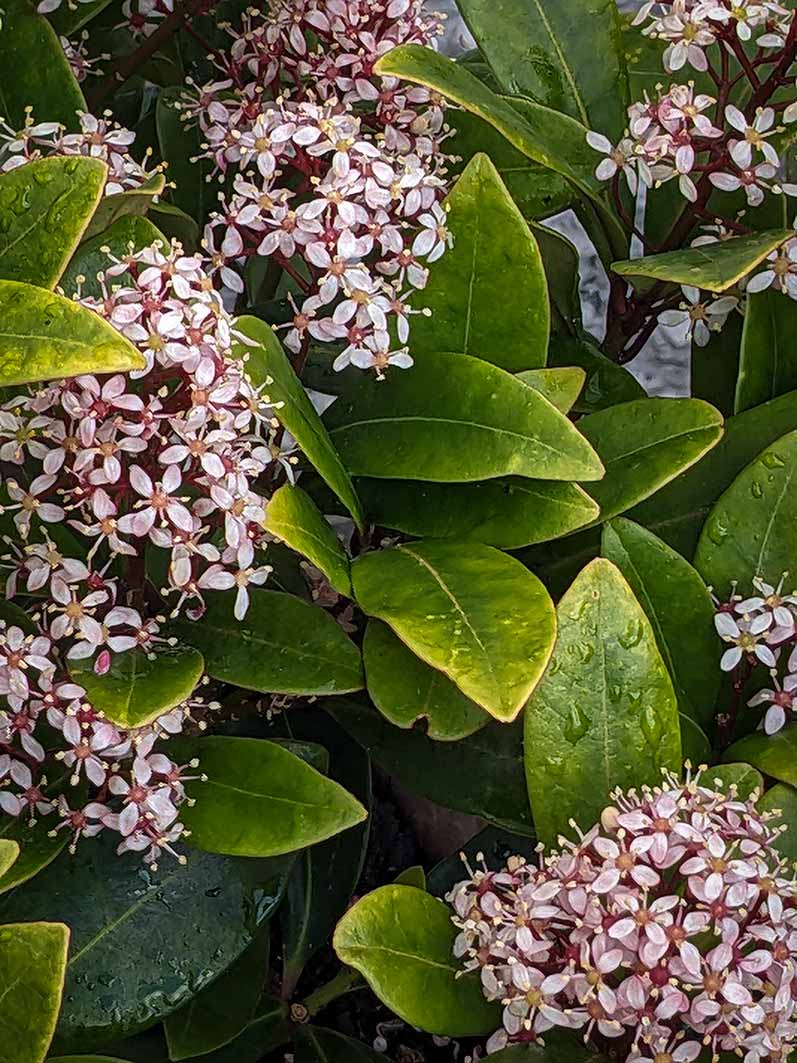
Tiny pink flowers against evergreen leaves of skimmia japonica plant.
Skimmia Japonica.

Somehow I have managed to have anemone  coronarai Bordeaux popping up in pots in amongst the plants I actually planted in the pots.  I don’t think they seeded themselves there so I must have re-used to compost that the anemones came from to top up the pots? Gardeners World had a bit about an anemone grower who said the corms get bigger with age but that you get the best flower from the smallest corms  – well I never knew that so I will keep that in mind.

And remember the marsh marigold being eaten by something – well I found the culprit and it totally demolished the plant!  Bloody wood pigeons!  This may also be the creature that has broken a few of my nepeta plants.  I have found a lot of broken off stems but nothing eaten.  It may well be a cat too as it is also known as cat mint but we get lots of cats in the garden and only this year has there been a problem.  I have had to put upturned baskets over them to protect them.  Such a pain.  But now, I am off to enjoy some sunshine while I can.
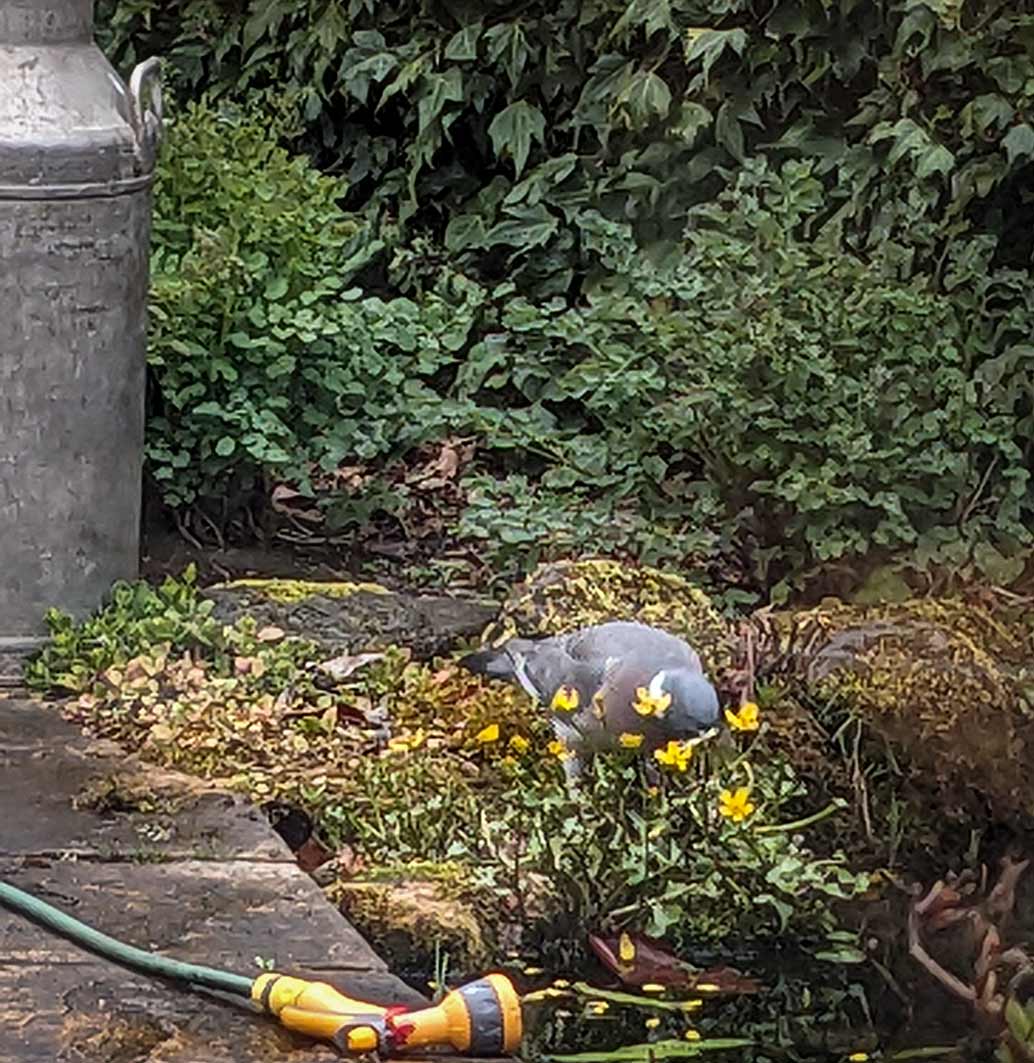
wood pigeon eating a marsh marigol plant at the edge of a pond.
Mystery solved – wood pigeon!


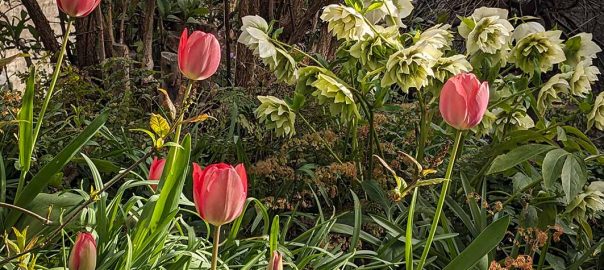
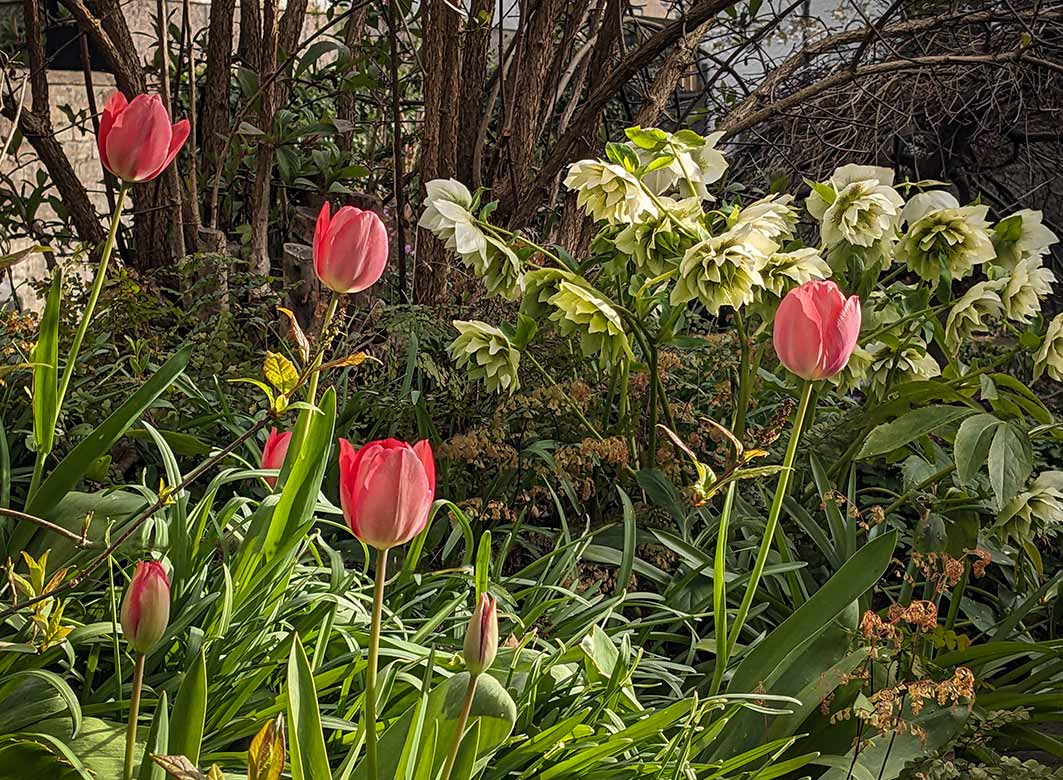
Dark pink tulips in front of white hellebore flowers speckled with dark purple.

Beginning of April 2026

Ahhh sunshine at last – it makes such a difference.  The birds are singing and there is lots of colour and fragrance in the garden now.  In the stumpery the sarcococca and the winter flowering Lonicera fragrantisima  are smelling lovely, as is the viburnum in the raised bed and the skimmia japonica on the patio.  In the front garden it is the mahonia giving the very strong scent.

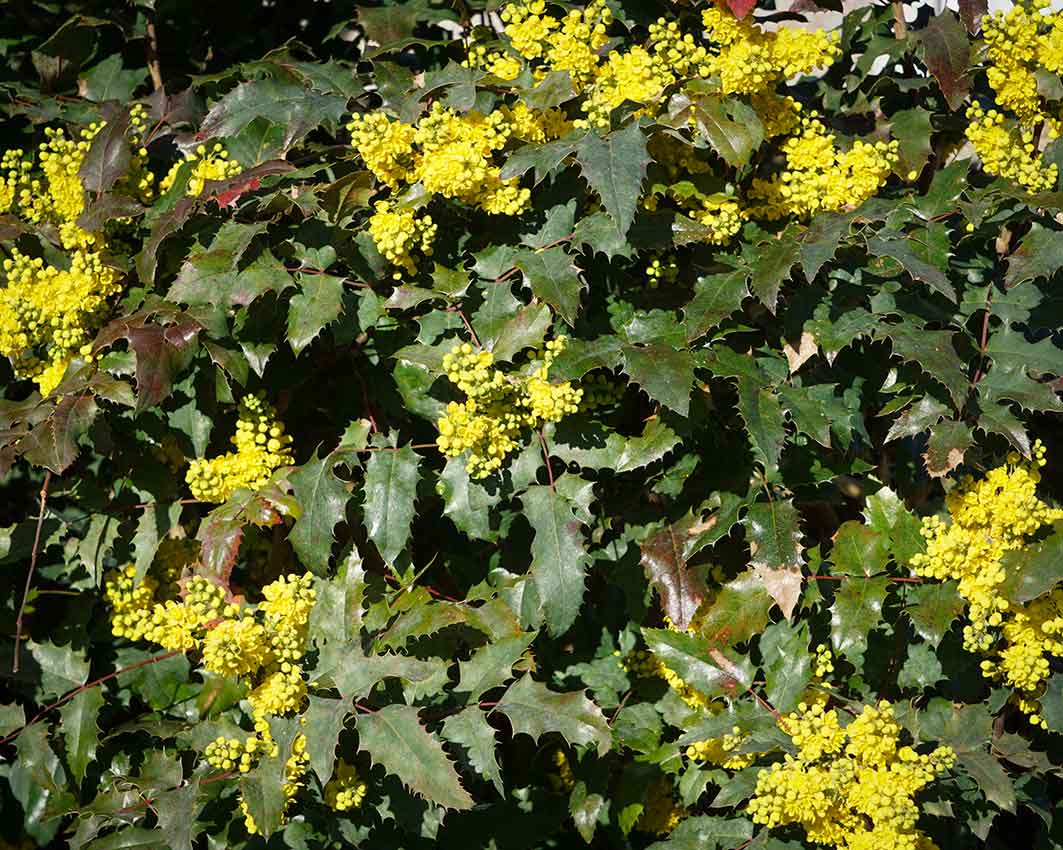
tiny bright yellow floers on a background of prickly dark green leaves of Mahonia shrub.
Mahonia
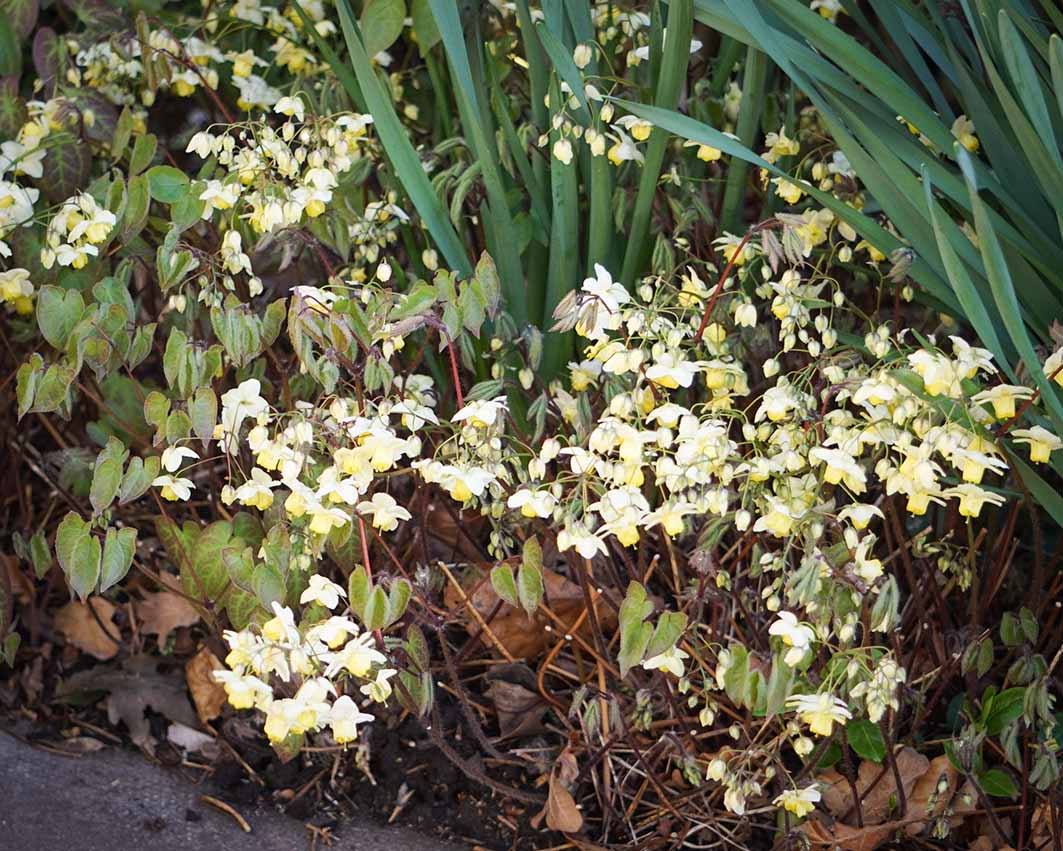
Dainty yellow flowers held on a wiry stem of the epimedium sulphureum plant.
Epimedium sulphureum

The leaves on the possibly dead witch hazel have finally tuned brown and shrivelled up.  There are flowers appearing everywhere now.  The epimedium sulphureum out the front is covered in tiny yellow flowers and although the big yellow daffodils have gone over,  the bright yellow mahonia is taking the spotlight.  The white periwinkle under the front hedge is covered in flowers and the odd little grape hyacinth is still hanging in there.  Out the back the pieris is looking good with all its little white bells, all the hellebores are in full flower now as are the fritillaria, some tulips, some narcissi, berberis, corydalis, wood anemone, pulmonaria and pink flowered heather.  The hebe always has a few flowers open.

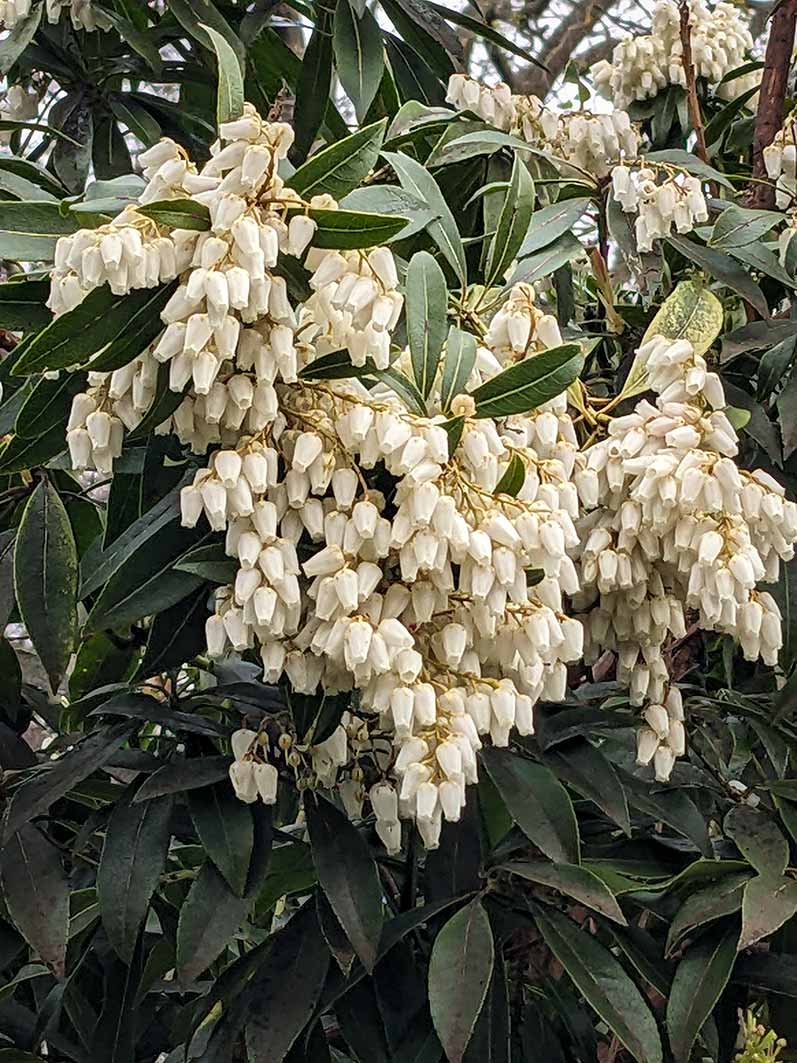
Tiny white bell shaped flowers of the Pieris shrub.
Pieris forest flame
Bright peachy orange coloured tiny flowers of the berberis shrub with tiny prickle dark green leaves.
Berberis darwinii
Dark pink tulips in front of white hellebore flowers speckled with dark purple.
Tulips in the sun.
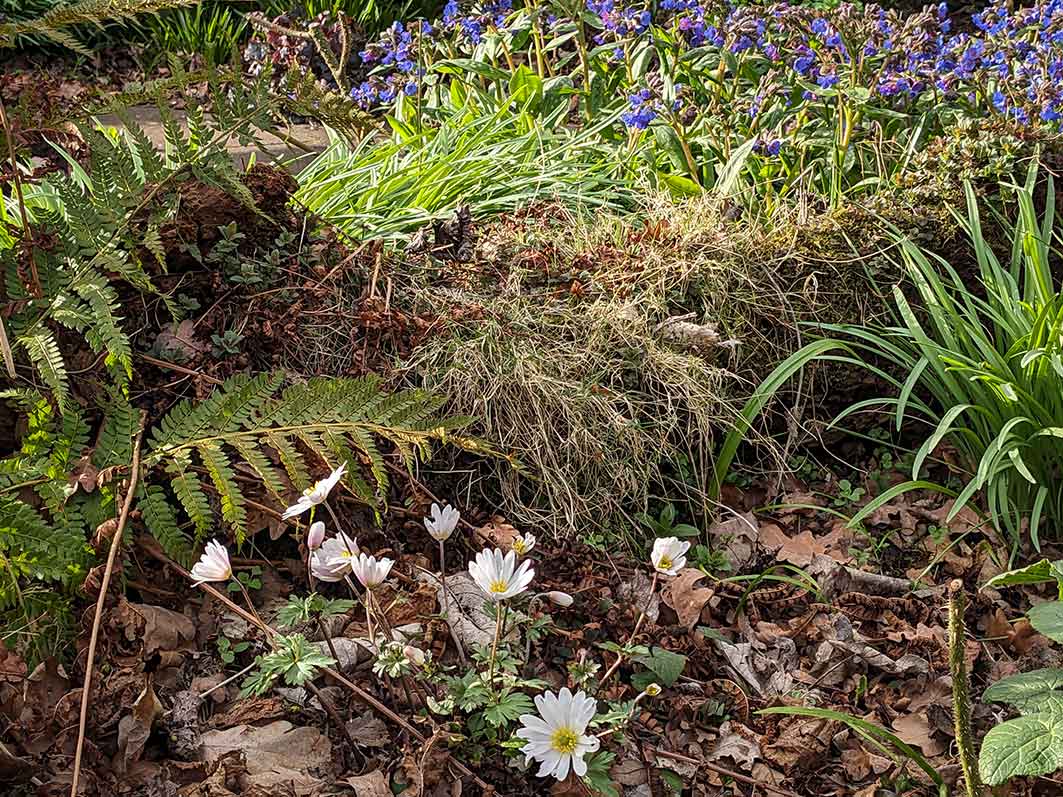
White wood anemone in front of a log on a woodland floor.
Wood anemone
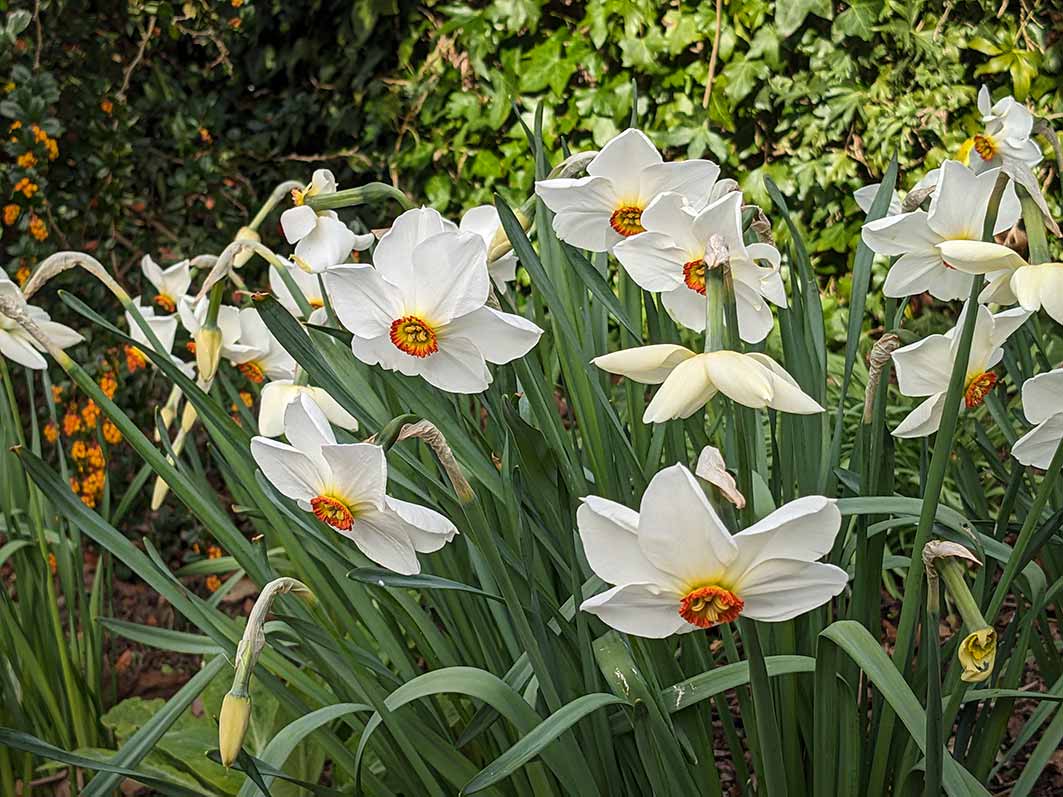
Narcissi Actaea with large pale petals and tiny dark orange corolla in the centre.
Narcissi Actaea with only one eaten so far.
Narcissi Segovia pale petals and small pale yellow corolla.
Narcissi Segovia in a pot.

There used to be three wood anemone plants there but now only one is left.  I have a few little ones growing in a pot so once they are a bit bigger I will plant them out.

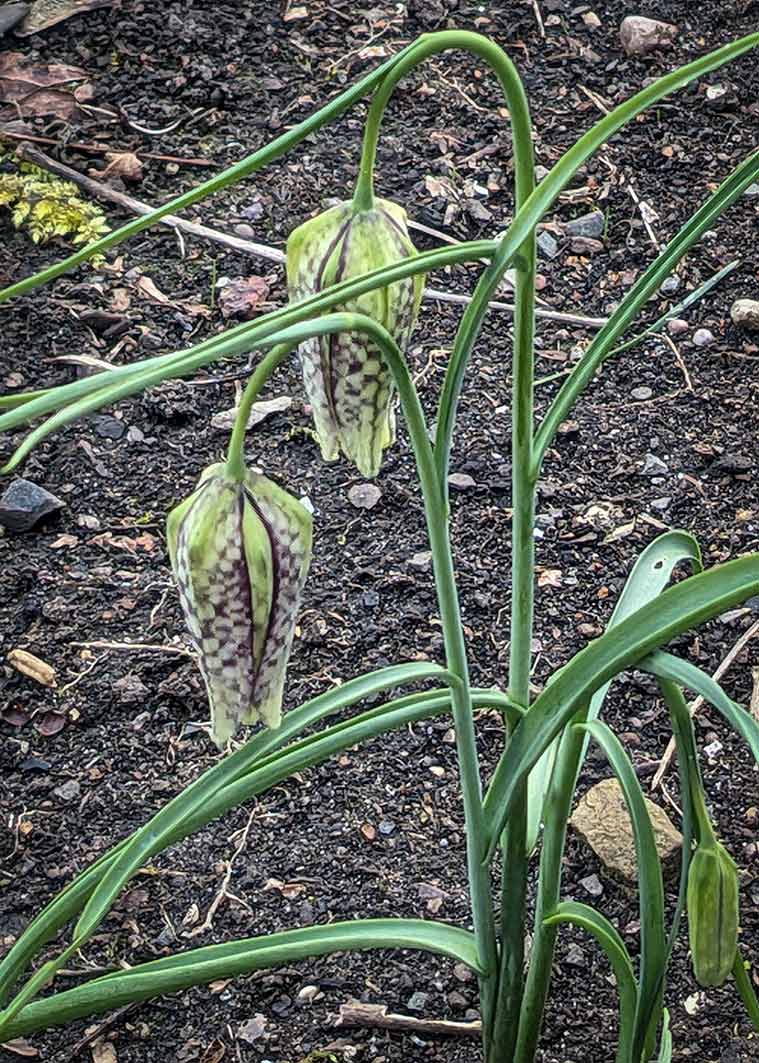
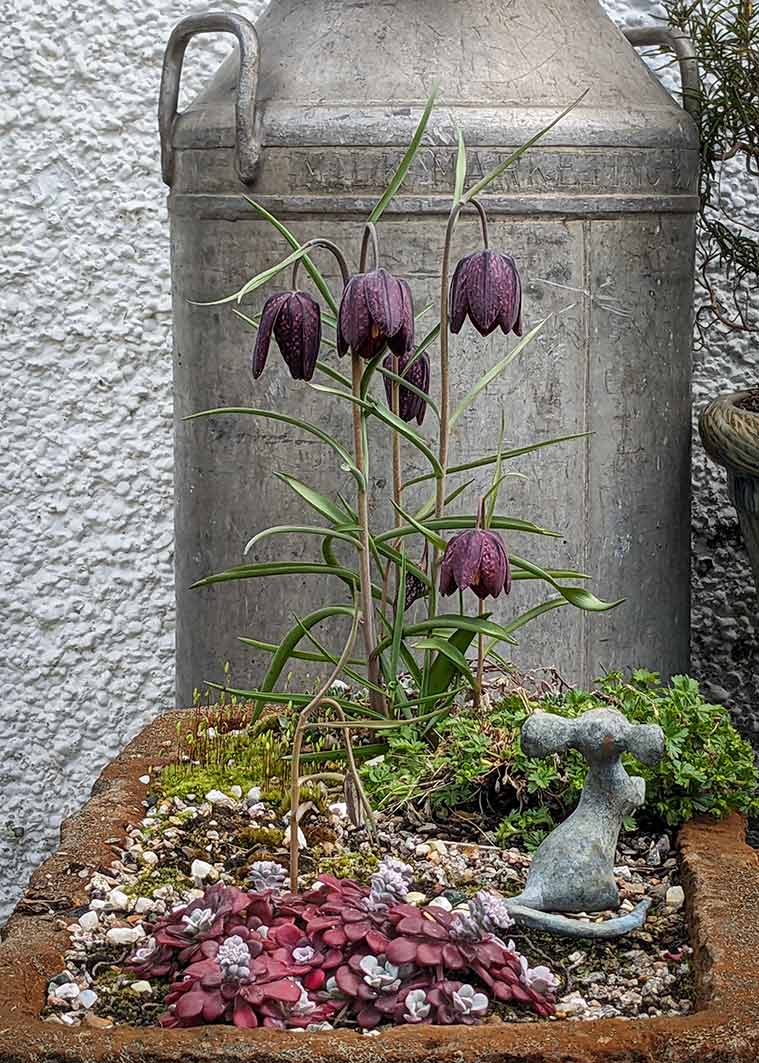
I learned the other day that the beautiful colouration on fritillaries is known as tessellation – a geometric pattern and they don’t have petals or sepals but instead has tepals like tulips and lilies!  They come in completely  white versions, pale, darker and very dark version and I have every variation in my garden somewhere even the pure white ones.

Mostly white with purple checkered pattern fritillary flowers.
Pale coloured version of fritillary.
Dark purple version of the fritillary flower against grey milk churn.
Dark purple version of fritillary.

I t hasn’t all gone according to plan though as it looks as though the choke berry  shrub has died and the beautiful flowering cherry (Shiroto Mount Fuji) is not looking very happy.  One whole limb is dead and I think it is very waterlogged and there may not be anything I can do to bring it back.

Large dead branch on a cherry tree Shiroto Mount Fuji.
Cherry tree Shiroto Mount Fuji with one dead limb.

The geum mai tai,  which is in a sunny position, is looking lush whereas the orange flowered geum, which is in a more shady site,  has been eaten down to the leaf margins.  One of the huge cyclamen out of a row has rotted so has left a large gap in the row.  There are smaller ones that I can put in its place but I am not sure why that one rotted yet none of the others did – they are all planted at the same depth and are slightly proud of soil level so they shouldn’t get waterlogged in theory.

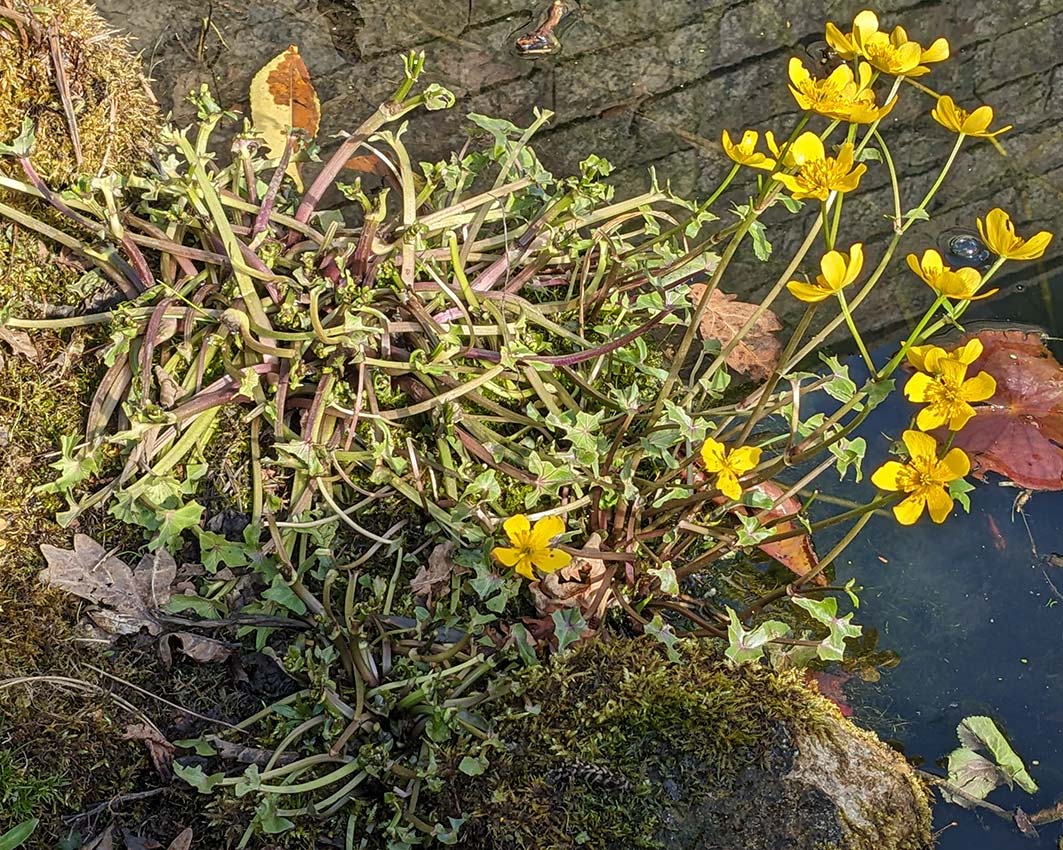
Something – possibly pigeons –  has been eating the marsh marigolds.

Yellow flowers of marsh marigold been eaten been by something.
Eaten march marigold.

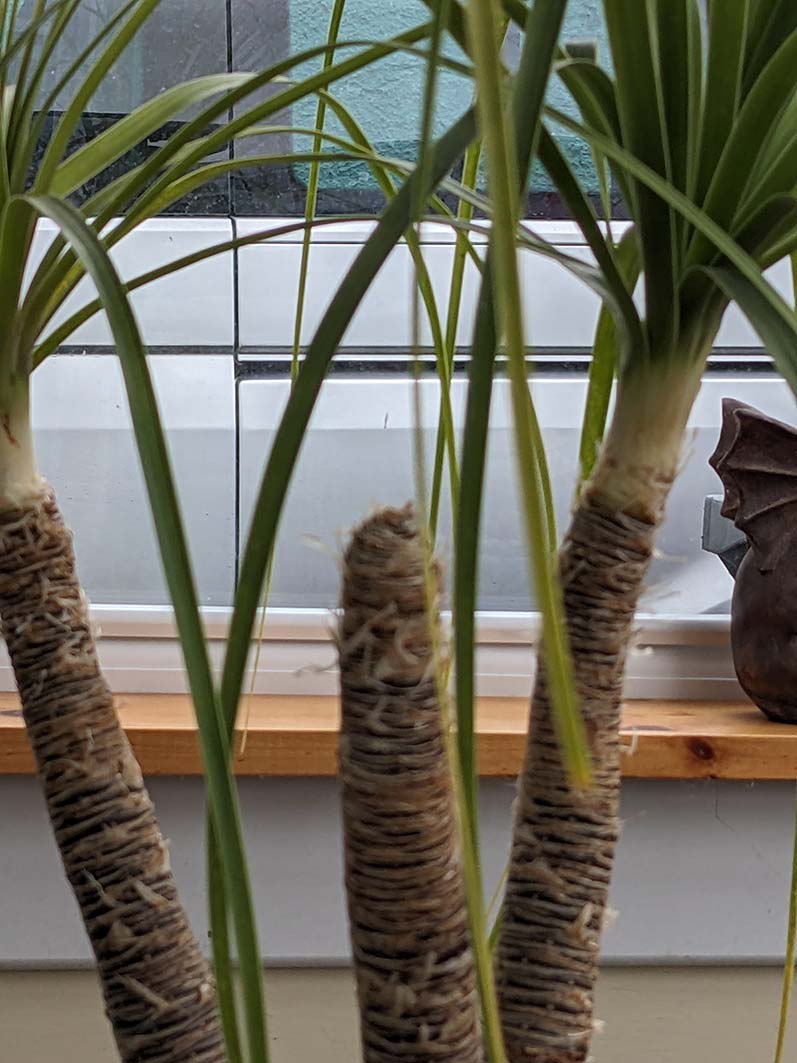
In the conservatory my ponytail plant has 3 branches and one of them suddenly dropped all of its leaves and I don’t know what to do about it.  I do know that it is pot bound and that may well be the cause but it is welded into that very large pot so it probably wouldn’t come out without damaging it further.

Ponytail plant that has lost its leaves from one branch out of 3 branches
Ponytail plant (Beaucarnea recurvata).

The good news is that in the conservatory my seedlings are doing ok and hopefully they will be big enough to sell at the plant sale in early May.  Our Duddingston Kirk Garden Club is folding but the Jock Tamson’s Gairden will be taking over the plant sale.